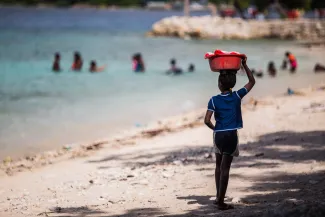
What Level 4 Means on the Ground
The advisory identifies a security environment where normal consular operations have ceased. According to NTD News, the Department of State ordered non-emergency U.S. government employees to depart Haiti on July 27, 2023, following a sustained deterioration in safety conditions. Emergency services for American citizens are unavailable, and evacuation options remain limited or nonexistent. The advisory specifies risks from crime, terrorism, kidnapping, unrest, and limited health care. Each of these categories represents an active, documented threat rather than theoretical concern. Gang violence has fractured governance across much of Port-au-Prince and surrounding areas, creating zones where neither police nor international aid organizations can reliably operate.The Human Cost: Displacement and Violence
The numbers reflect a country in freefall. In a January 21 post, the U.N. Office on Drugs and Crime reported that Haiti faces "unprecedented political, economic and security crises," with 16,000 individuals killed since January 2022, according to NTD News. More than 1.5 million individuals have been displaced, and more than half the population now lacks access to basic necessities. These figures describe conditions far beyond the scope of typical travel risks. Displacement at this scale indicates widespread territorial control by armed groups, infrastructure collapse, and the breakdown of systems that support civilian movement. For travelers, this translates to unpredictable roadblocks, extortion, and the absence of emergency medical care if something goes wrong. The kidnapping threat is not limited to high-profile targets. Gangs operate with territorial impunity, and ransom demands have become a routine tool of local finance. U.S. citizens have been targeted in past incidents, and the State Department's inability to provide consular assistance means that families negotiating for release do so without official support.Health Infrastructure Has Collapsed
Haiti's health care system, already fragile before 2022, no longer functions in most areas. Cholera outbreaks have returned, clean water is scarce, and electricity remains unreliable. For travelers, this means no fallback if illness or injury occurs. Private hospitals are shuttered or inaccessible, and medical evacuation flights face the same security constraints that limit commercial air traffic. This is not a destination where travel insurance or an emergency hotline will bridge the gap. The infrastructure required to support evacuation, treatment, or even basic communication has collapsed.Who This Advisory Affects
Adventure travelers, humanitarian workers, journalists, and anyone with family ties to Haiti all face the same calculus: the U.S. government will not be able to help if things go wrong. Cruise itineraries that once included Haitian ports have rerouted. Expedition operators avoid the country entirely. Photography assignments and documentary projects that relied on ground access now require security contractors, armored transport, and exit strategies that may not hold. For American passport holders considering travel to Haiti despite the advisory, the State Department's guidance is blunt: do not go. There is no consular safety net, no emergency response, and no reliable path out if security deteriorates further.The Erosion of Consular Protection
What separates a Level 3 advisory from Level 4 is not the severity of individual threats but the loss of U.S. government capacity to respond. Embassy staff operate under movement restrictions. Consular officers cannot travel to assist detained citizens, verify welfare checks, or coordinate evacuations. This is not a temporary posture; it reflects the reality that gang control over key infrastructure, including the airport and port facilities, makes routine diplomatic functions impossible. When non-emergency personnel were ordered out in July 2023, it signaled that the State Department assessed risks as too high for its own trained security professionals. That decision has not been reversed. The January 2025 update from the U.N. underscores why: violence continues, displacement grows, and the political vacuum shows no sign of filling.What Travelers Should Do
If you hold a ticket, reservation, or assignment involving Haiti, cancel it. This is not a situation where careful planning, local contacts, or risk mitigation strategies provide meaningful safety margins. The advisory exists because the conditions on the ground exceed the capacity of the U.S. government to manage risk for its citizens. For those with family in Haiti, the State Department recommends ensuring loved ones have up-to-date travel documents and contingency plans that do not rely on U.S. consular intervention. Remittances, communication apps, and virtual check-ins replace in-person visits for now. Journalists and NGO workers already operating in Haiti do so under private security arrangements and assume risks that fall outside the scope of typical travel advice. Those frameworks are not available to independent travelers, and attempting to replicate them without institutional backing is not viable. The travel advisory is not speculation. It describes a country where the mechanisms that support travel, from airport security to emergency medical response, have failed. Until those systems rebuild and U.S. consular operations resume, Haiti remains off-limits for American travelers who expect any form of official support.More travel news
State Department Warns Against Caribbean Travel
Port of Spain, Trinidad and Tobago - The State Department now warns travelers to reconsider visiting Trinidad and Tobago as violent crime and terrorism concerns escalate across the twin-island nation.
US Demands $15K Bond From Tourists in 50 Nations
WASHINGTON, D.C. — The U.S. expands its visa bond program to 50 countries, requiring tourist visa applicants to post fees up to $15,000 starting April 2.
US warns Americans about Turkey Cyprus terror risks
WASHINGTON — New U.S. travel advisories for Turkey and Cyprus highlight elevated risks from terrorism and regional armed conflict as Middle East tensions complicate security conditions.
Caribbean Vacation Scams You Need to Avoid Now
WASHINGTON — Federal agencies flag persistent fraud patterns across Caribbean destinations, urging travelers to slow down and verify before booking or paying.
About the Author

Jeff Colhoun
Jeff Colhoun is an acclaimed travel writer, photographer, and filmmaker, whose work is respected both in the United States and internationally.