Stay current with our airline news coverage.
Canary Islands Face Overtourism Backlash
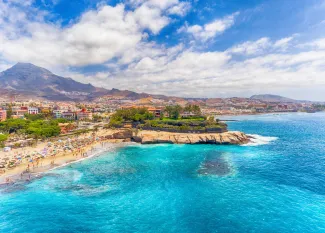
CANARY ISLANDS, Spain — Two of the Canary Islands' most popular destinations have landed on Fodor's Travel's "do not travel" list for 2025, marking a sharp escalation in the overtourism crisis gripping this Atlantic archipelago. Tenerife and Lanzarote, long-time favorites for European holidaymakers including significant numbers of Irish travelers, now join a select group of destinations the influential travel magazine actively discourages visitors from booking. The advisory reflects mounting tensions between residents and the tourism industry that sustains much of the islands' economy. What began as scattered local complaints has evolved into organized protests calling for hard limits on visitor numbers, a demand Fodor's Travel has amplified by placing both islands on its annual warning list.Record Visitor Numbers Fuel Infrastructure Crisis
The scale of tourism pressure on these volcanic islands is difficult to overstate. In the first six months of 2025 alone, the island group saw more than 7.8 million tourists visit, with more than 27 million airport passengers passing through Canary Islands airports, according to Travel magazine. That's a staggering concentration of humanity on islands with limited freshwater resources, aging infrastructure, and fragile ecosystems. The numbers tell only part of the story. Behind the statistics lies a daily environmental crisis that has become impossible to ignore. Wastewater equivalent to 40 Olympic-sized swimming pools is discharged each day into surrounding waters, according to Travel magazine. That's not a seasonal spike or temporary problem. It's the baseline reality of hosting millions of visitors in a concentrated geographic area without adequate treatment infrastructure. For context, 40 Olympic pools equals roughly 100 million liters of partially treated or untreated wastewater entering the Atlantic daily. That volume of pollution doesn't disappear. It accumulates in coastal zones, degrades marine ecosystems, and creates health risks for both residents and the very tourists the islands depend on economically.Resident Protests Gain International Attention
Local frustration has moved from social media grumbling to organized street protests. Residents have started demonstrating across both islands, demanding meaningful caps on tourist arrivals rather than the endless growth model that has defined Canary Islands tourism policy for decades. The protests signal a breaking point in communities where housing costs have soared, beaches have become overcrowded, and basic services strain under seasonal population surges. Fodor's decision to feature Tenerife and Lanzarote on its warning list gives these protests an international platform. The magazine's annual "no list" carries weight in the travel industry, influencing booking decisions among conscious travelers and putting pressure on destinations to address systemic problems. Being named to the list isn't a temporary travel advisory based on political unrest or natural disaster. It's a statement about the fundamental sustainability of a destination's tourism model.What This Means for Travelers
Fodor's isn't issuing safety warnings in the traditional sense. Visitors to Tenerife and Lanzarote face no immediate physical danger from crime, terrorism, or natural hazards. The advisory is ethical and environmental, asking travelers to consider whether their presence contributes to degradation of places and communities. For photographers and adventure travelers accustomed to seeking out less-traveled corners, the Canary Islands situation presents a familiar paradox. The volcanic landscapes, unique microclimates, and dramatic coastlines that make these islands compelling subjects are precisely what's under threat from mass tourism. The question becomes whether adding one more visitor to the 7.8 million makes a measurable difference, or whether individual choices aggregate into collective impact. The practical reality is more nuanced than a simple "do not go" directive. Travelers already booked for 2025 face cancellation penalties and lost deposits. Airlines and tour operators continue operating full schedules. Local businesses, many family-owned, depend on visitor spending for survival. A sudden tourism collapse would devastate the islands' economy without necessarily solving infrastructure problems that require government investment and political will.Broader Implications for Island Tourism
The Canary Islands crisis mirrors patterns playing out across island destinations worldwide. Limited land area, finite water resources, and fragile ecosystems create natural carrying capacity limits that tourism marketing rarely acknowledges. When visitor numbers exceed those limits, degradation accelerates faster than mitigation efforts can address. The wastewater discharge figure is particularly telling because it represents a quantifiable failure of infrastructure investment to keep pace with tourism growth. Sewage treatment isn't glamorous. It doesn't generate headlines or attract investors the way new resort developments do. But it's fundamental to environmental health and destination sustainability. Fodor's warning may force a reckoning the islands have avoided for years. Either authorities impose meaningful caps on arrivals and invest in infrastructure upgrades, or they watch their tourism product degrade to the point where travelers stop coming voluntarily. The magazine's decision accelerates that timeline, putting immediate pressure on Spanish national and Canary Islands regional governments to respond with more than vague sustainability pledges. For travelers weighing a Canary Islands trip in 2025, the question isn't whether these destinations are safe or accessible. They are. The question is whether adding to already unsustainable visitor numbers aligns with personal ethics around travel impact. That calculation is individual, but it's one more travelers are being asked to make as overtourism shifts from abstract concept to tangible crisis.More travel news
Spain Heatwave Forces Tourists to Scramble for Shade
MADRID, Spain - Popular tourist destinations across Spain face unusually high temperatures as the state weather service warns visitors to brace for extreme heat from Andalusia to the Mediterranean Coast.

Sweden Spain Launch Truecaller eSIM for Roaming Relief
STOCKHOLM, Sweden - Sweden and Spain jointly push Truecaller's new travel eSIM across 29 countries, aiming to end the roaming-fee headache that drains budgets the moment travelers land.

Spain Court Kills Airbnb Host Registry Requirement
MADRID, Spain - The court ruled the central government overstepped its authority, voiding a system that required Airbnb hosts to obtain state registration numbers as of July 2025.

Hantavirus Outbreak Forces Arctic Ship to Canary Islands
Cape Verde - The expedition vessel MV Hondius is heading to the Canary Islands after evacuating three people Wednesday night, as WHO confirms a seventh hantavirus case linked to the voyage.

About the Author

Jeff Colhoun
Jeff Colhoun is an acclaimed travel writer, photographer, and filmmaker, whose work is respected both in the United States and internationally.