Stay current with our travel events coverage.
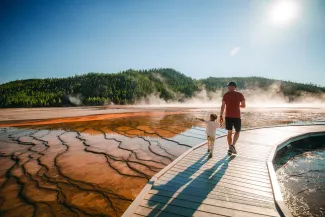
WASHINGTON, United States - Google and the National Park Service launched United Parks of America on April 15, 2023, positioning the interactive digital hub as an online gateway to the landscapes, history and culture held within U.S. national parks.
The collaboration was timed to National Park Week 2023. Project materials supplied for this report describe the platform as a Google Arts & Culture-style experience built around storytelling, education and trip inspiration. It was not presented as a booking platform or a substitute for official navigation tools.
That distinction matters. United Parks of America was designed to help users encounter park stories and imagery online, including people who cannot easily reach a park in person. It also offered travelers a way to build context before arriving, rather than simply choosing a destination from a map or photograph.
A Digital Showcase for U.S. National Parks
The basic idea was straightforward: bring park interpretation into a single interactive environment that could support travelers, classrooms and people exploring from home. The supplied research characterizes the project as a broad digital showcase, with curated stories, imagery and educational material intended to expand public access to national park history and culture.
For travelers, that kind of interpretation can provide a more useful starting point than promotional destination copy. National parks are not interchangeable scenic stops. Some preserve natural landscapes; others center on historic events, cultural resources or communities whose stories require more than a quick photo opportunity.
A digital hub can introduce those layers before a visitor reaches the entrance. It can also offer a measure of access to people facing financial, physical or geographic barriers to travel. The experience does not reproduce the scale, weather, sound or physical demands of being in a park, but it can make the underlying story more accessible.
The 2023 project was also framed in the supplied materials as part of a celebration of the National Park Service's 110th birthday. That description presents a verification problem. The research notes that the anniversary language does not align neatly with the agency's 1916 founding date, suggesting the 110th birthday reference may have been promotional shorthand or tied to a different milestone.
A Later Report Adds New Features and Timeline Questions
The public record becomes less tidy when compared with a later account. On Aug. 20, 2026, TravelPulse reported that Google and the National Park Service were launching United Parks of America ahead of the agency's 110th birthday and National Park Week, which runs from Saturday, Aug. 22, through Sunday, Aug. 30.
TravelPulse described a hub containing more than 150 curated stories, 30 virtual tours and up to 350 panoramic images from more than 60 national parks. The publication also reported that National Park Service entrance fees would be waived Tuesday, Aug. 25, for the agency's 110th birthday.
That 2026 account places the birthday against a timeline that matches the agency's 1916 founding. However, the supplied material does not establish whether the 2026 version was an expansion, relaunch or separate iteration of the project introduced on April 15, 2023. Treating the two announcements as the same launch would go beyond what the available sourcing confirms.
The later version also carried a strong U.S. history component during America's 250th anniversary. According to TravelPulse, Google Arts & Culture worked with Independence National Historical Park in Philadelphia to digitize 19 copies of the Declaration of Independence, 149 18th-century portraits and more than 2,000 pages of historic documents.
TravelPulse reported that the hub included Path to Independence, an AI storytelling experiment featuring an immersive 360-degree experience at Independence National Historical Park. Users could virtually explore the room where the Declaration of Independence was signed and ask Google's Gemini follow-up questions. Interactive 3D models also allowed users to spin and zoom into landmarks including Mount Rushmore and the Statue of Liberty.
Use the Hub for Context, Not Field Decisions
Digital park experiences are most valuable when travelers understand their limits. United Parks of America can help identify places, stories and historic resources worth exploring. It can also make a park visit more informed by showing why a site matters before the traveler arrives.
It should not be treated as an operational planning tool. The supplied research specifically describes the project as an education and inspiration initiative, not a booking or navigation service. Travelers still need to consult official National Park Service information for current access conditions, closures, entrance requirements and other trip logistics.
The launch-date conflict also deserves a blunt reading. The April 15, 2023, project and the more detailed 2026 TravelPulse report share a name and institutional partners, but the available material does not explain the gap. Readers should avoid assuming that every feature listed in the 2026 report was available in the 2023 hub.
For trip planning, the sensible approach is to use the platform in two stages. First, explore the digital stories and imagery to understand the park or historic site. Then move to official, current park information before making decisions on timing, access or travel arrangements.
Digital Access Does Not Replace the Park
No virtual tour can reproduce distance, elevation, cold, heat or the strain that remote landscapes place on travelers and equipment. It also cannot replace the judgment required when conditions change on the ground. That is not a criticism of the project; it is simply the boundary between interpretation and field reality.
United Parks of America is strongest as a doorway. It widens access to park stories, gives travelers more context and provides educators with digital material that does not require a physical visit. The unresolved anniversary and launch chronology should be acknowledged, but it does not erase the central value of the collaboration: making national park history and culture easier to explore before, after or instead of a journey.
More travel news
Iraq Travel Advisory Remains at Level 4 Do Not Travel
The Oct. 23 update did not change Iraq’s warning level: U.S. citizens are advised not to travel, while those there should prepare independent departure plans.

Blue Ridge Parkway reopens roads and campground loops
Recent reopenings restore uninterrupted driving from James River in Virginia to Little Switzerland in North Carolina; Julian Price Campground loops B and D are also open.

U.S. Customs and Border Protection to End Routine Passport Stamps
CBP announced routine passport stamping will end during primary inspection, with limited exceptions; foreign visitors can access admission and authorized-stay details through I-94 or CBP Link.
Rocky Mountain National Park Is Two Rangers’ October Pick
The rangers favor October for aspen color, the elk rut and varied scenery, but snow can close Trail Ridge Road before its usual mid-October closure.

About the Author

Jeff Colhoun
Jeff Colhoun is a photographer and filmmaker whose work has appeared in The Wall Street Journal, the Los Angeles Times, Matador Network and Barron’s.