Stay current with our hotel news coverage.
BANFF, Alberta — Hoping to glimpse glacier-fed lakes and towering peaks, millions of travelers are driving into Banff National Park this summer—and jamming its narrow valley highways in the process. The unprecedented surge, fueled in part by a nationwide free-entry promotion, has sparked two very different ideas to unclog Canada’s best-known park: reservable parking stalls and a potential surcharge aimed only at foreign visitors.
Why the 2024 season feels so crowded
Banff typically hosts about 4 million visitors each year, making it the busiest of Parks Canada’s 48 national parks. Even that hefty figure may look modest compared with this summer, when the new Canada Strong Pass waives park entrance fees from June 20 to September 2. For road-trippers, the pass is a windfall. For Park officials watching traffic back up from Lake Louise to the town of Banff, it compounds years of capacity concerns, especially on weekends between mid-May and mid-October.
Parking reservations: the leading proposal
With popular lots along the Icefields Parkway filling before sunrise, Parks Canada has confirmed it is studying a timed parking system similar to ones already in use at Yosemite and Arches in the United States. “Banff’s considering a parking reservation system to control vehicle congestion,” Bow Valley Insider wrote on Instagram, adding that early feedback ranges from enthusiastic support to calls for broader public consultation. If adopted, travelers would need to pre-book time slots for sought-after areas—most likely Lake Louise, Moraine Lake and Johnston Canyon—and show confirmation on arrival. Parks Canada has not released an implementation date or fee structure, and the agency says the plan is still under review.
How it might work
- Drivers would select an arrival window online or through an app.
- A bar-coded permit—digital or printable—would be scanned at lot entrances.
- Shuttle users and cyclists would remain exempt, encouraging car-free visits.
- Enforcement could include fines or re-routing to overflow parking in the town of Banff.
The other lightning-rod idea: an international visitor tax
Almost as soon as the parking proposal surfaced, locals floated an alternate fix: pricing. In a comment that quickly became the most liked on Bow Valley Insider’s post, a user suggested, “Maybe we make foreign tourists pay significantly more,” arguing that residents should not be priced out of their own backyard. Differential pricing is hardly novel. U.S. national parks charge international visitors the same entry rate as Americans but mark up backcountry permit fees for non-residents, while Thailand, Bhutan, and the Galápagos Islands all levy foreign-only surcharges. Still, Canadian officials have not formally endorsed the concept. Any change to the Parks Canada fee schedule would require approval from the federal government.
What is already free—and what is not
Even without the Canada Strong Pass, several groups enjoy complimentary entry:
- Youth ages 17 and under
- Newcomers to Canada and recently naturalized citizens
- Support persons accompanying visitors with disabilities
- Active members and veterans of the Canadian Armed Forces and their immediate families
Parking, shuttle rides, and campground reservations carry separate fees that remain in effect year-round.
Tips for Travelers: beating Banff’s bottlenecks
Parks Canada continues to push a “car-light” approach. In a bulletin on its website, the agency notes, “Taking shuttles and public transit is the best way to experience Banff National Park.” With that in mind, here are practical strategies for a smoother visit:
- Park and ride. Leave your vehicle in the 500-space Lake Louise Park and Ride lot on Highway 1 and board frequent shuttles to both Lake Louise and Moraine Lake.
- Start before sunrise. Arriving at trailheads before 7 a.m. often secures parking and rewards early risers with calmer trails.
- Explore after 5 p.m. Traffic drops dramatically late in the day, yet twilight lasts well past 9 p.m. in midsummer.
- Go mid-week. Tuesdays and Wednesdays historically record the lowest vehicle counts.
- Ride the rails. On certain dates, the Rocky Mountaineer and VIA Rail’s Canadian stop in Banff town site, eliminating highway driving altogether.
- Prepare for alpine weather. Snow is possible any month above the tree line. Pack layers, water, food, and a satellite communicator; cell service is spotty beyond the town site.
- Watch for wildlife. Slow down near dawn and dusk. Elk, bighorn shee,p and occasionally bears use roadside corridors.
Will I need a parking reservation this summer?
Not yet. Parks Canada says any system would be announced well in advance. For now, arrive early or use shuttles.
Is the Canada Strong Pass available to foreigners?
Yes. The temporary free-entry program applies to all visitors regardless of citizenship.
Could an international surcharge take effect soon?
Unlikely this year. Introducing a new fee would require amendments to federal regulations, a process that typically takes months.
Are shuttle tickets refundable?
Yes, if canceled more than 48 hours in advance; same-day no-shows forfeit the fare.
The road ahead
As Banff eyes another record summer, the twin proposals—metered parking and higher fees for foreign tourists—underscore a broader question facing iconic destinations worldwide: how to welcome the world without being overwhelmed by it. For travelers, the immediate takeaway is clear. Whether or not new rules roll out, flexibility, early planning, and a willingness to swap the steering wheel for a shuttle seat remain the surest ways to keep the Rockies on your itinerary—and out of gridlock. — as Bow Valley Insider wrote on Instagram.
Explore more North America travel →
More travel news
Banff Christmas light walk starts Nov. 12; reservations required
In Search of Christmas Spirit begins Nov. 12 at the Cascade of Time Garden and runs on selected dates through Jan. 3. Admission is free with advance reservations; the venue is inaccessible to mobility aids.
Canada updates France travel advisory for planned protests
Canadian travelers in France should avoid demonstrations and prepare for localized curfews and transport disruptions around planned protests on Oct. 31 and Nov. 5.
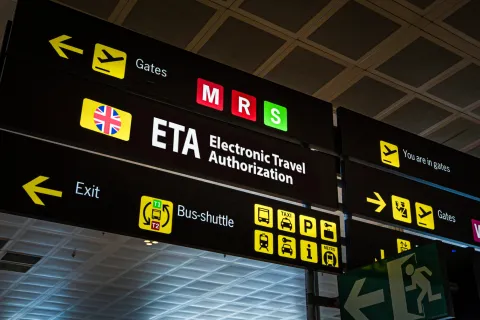
United Kingdom ETA checks require British-Canadian entry proof
Since Feb. 25, 2026, British-Canadian dual citizens flying to the UK need a valid British passport or a right-of-abode certificate in their Canadian passport.
Air Canada Teases Five New Global Routes for 2027
MONTREAL, Canada - Air Canada is teasing five international routes for summer 2027, turning airport codes, visual clues and a ticket contest into a guessing game.
About the Author

Bob Vidra
Bob Vidra is News Editor at Jetsetter Guide, covering airlines, airports and the travel industry since 2023.