Stay current with our travel industry news coverage.
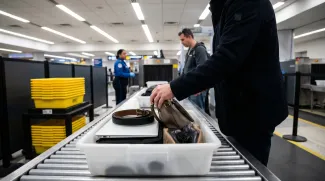
The airport security upgrade that lets your laptop stay in your bag comes with a catch: undeveloped film may not survive the same screening, and an overstuffed carry-on may not fit through the machine at all. TSA’s expanding use of computed tomography scanners is making packing decisions more consequential, according to a Nov. 5 report from Simple Flying.
The concerns stem from an ongoing technology rollout. In March 2022, the Transportation Security Administration awarded two orders totaling up to $781.2 million for base and full-size CT X-ray systems, with later procurement adding more units, Simple Flying reported. The equipment improves officers’ view inside carry-ons, but its effects on photographic film and its fixed tunnel openings create two distinct problems for travelers.
For a carry-on-only city break, the distinction matters: less unpacking at security does not mean every item should stay packed.
What TSA’s CT scanners change at security
Traditional checkpoint X-ray equipment produces two-dimensional images, which can make overlapping objects harder to distinguish. CT systems create three-dimensional views that officers can rotate on three axes to inspect potential threats, according to TSA information cited by Simple Flying.
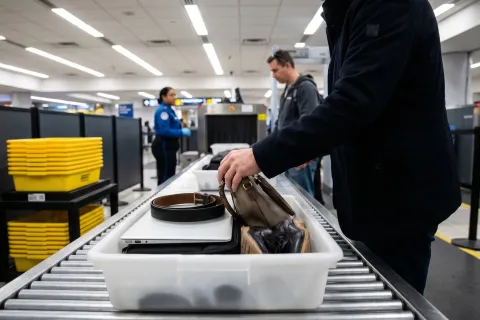
That clearer view allows laptops to remain inside bags under current CT-lane procedures. Simple Flying also cited airport announcements saying passengers using CT units can leave their 3-1-1 liquids packed. The convenience concerns removing compliant liquids for screening, not permission to bring larger containers.
Simple Flying identified Atlanta’s Hartsfield-Jackson, Chicago O’Hare and New York JFK among the airports with CT equipment. That does not establish that every checkpoint lane at those airports uses it. Older and newer machines can operate side by side, the publication noted, so travelers still need to follow the instructions for their particular lane.
The film risk is not a general electronics warning
The material at risk is undeveloped photographic film, rather than digital equipment broadly. Simple Flying reported that CT screening can fog unprocessed film, reduce image quality or cause permanent damage in a single pass. That includes loose rolls, film loaded inside cameras, disposable analog cameras and instant-film materials.
Digital cameras, lenses, batteries and memory cards are not affected in the same way, according to Simple Flying. There is no basis in that report for treating the rollout as a blanket warning that scanners destroy laptops or digital cameras.
The concern has a documented testing history. Camera Dojo described a 2020 Kodak Alaris test in which a single CT scan at JFK caused significant fogging in Kodak Portra 400 film, including smoky blacks and lost shadow detail. The publication also cited Fujifilm’s warning that instant film can suffer fogging, distorted shadows and poor image quality after one pass.
Film-speed advice associated with older X-ray machines should not be treated as protection against CT screening. Camera Dojo distinguished TSA guidance from 2020 about conventional carry-on X-rays from Kodak’s warning that CT scanners can fog all unprocessed film.
There is a useful exception for instant-camera fans: finished pictures. According to Polaroid guidance summarized by Camera Dojo, instant photos that have already emerged from the camera and developed can pass through X-ray screening. Unused packs and film still inside the camera need different treatment.
Ask for a hand inspection before the belt
TSA guidance recommends keeping undeveloped film and cameras containing it in carry-on baggage, or bringing the film to the checkpoint and requesting a hand inspection, Simple Flying reported. Keeping it in the cabin is only part of the solution; it must also be accessible before the bag enters the scanner.
Simple Flying recommended separating unprocessed rolls from cameras where possible and placing them in transparent, quart-sized zipper bags near the top of the carry-on. Travelers should explicitly tell the officer they have undeveloped photographic materials and want a manual inspection.
The publication described a process involving visual inspection and swabbing for explosive residue. It estimated that hand inspection typically takes three to 10 minutes and advised arriving around 15 to 20 minutes earlier. Those are the publication’s estimates, not a guaranteed TSA processing time.
A request is not an assurance of approval. Camera Dojo noted that TSA’s film guidance leaves the final checkpoint decision with the officer. Loaded instant cameras can also be harder to inspect manually; its advice is to finish the pack before flying and travel with the camera empty when possible.
Checked luggage is not the film workaround
Moving film into a checked suitcase does not solve the screening problem. Checked bags also pass through powerful screening equipment, and travelers generally lose the opportunity to request a hand inspection after handing over the bag, according to Simple Flying.
The publication recommended keeping film in an accessible personal item or small carry-on rather than deep inside a roller bag that might later require gate-checking. Camera Dojo likewise reported that Fujifilm advises against putting unprocessed film in checked baggage.
International connections require separate attention. TSA guidance applies in the United States; Simple Flying cautioned that foreign airport procedures vary and security staff abroad may handle hand-inspection requests differently. A successful outbound inspection does not establish how the return journey will work.
Expanded carry-ons face a physical limit
The luggage issue is mechanical rather than photographic: a bag that cannot fit through a CT scanner’s tunnel cannot be screened in that lane, Simple Flying reported. Expanded rollers and heavily stuffed soft-sided bags are particularly relevant to that constraint.
Travel + Leisure reported opening dimensions of 24.5 inches wide by 16.5 inches high for the newer scanners it discussed, compared with 25.2 inches wide by 16.9 inches high for older equipment. It also reported TSA’s acknowledgment that some larger carry-ons will not fit and its recommendation to check bigger, bulkier bags with the airline.
Those tunnel measurements are not an airline baggage allowance. The sensible packing calculation is to satisfy both constraints: keep the bag within the airline’s dimensions and avoid expanding it beyond its normal size, as Simple Flying advised.
The strongest response is targeted, not a wholesale gear replacement. Keep undeveloped film ready for a hand-inspection request, resist overstuffing the roller, and follow the lane’s instructions for laptops and liquids. The upgrade can remove some checkpoint friction, provided the things that need special handling are not buried beneath the weekend wardrobe.
Explore more North America travel →
More travel news
Packed Expandable Carry-Ons May Not Fit TSA CT Scanners
At TSA checkpoints with CT scanners, fully packed expandable carry-ons that cannot fit the tunnel may be hand-inspected, redirected to older equipment if available or checked with the airline.

TSA Considers Water Exception for Some PreCheck Passengers
The proposed exception would apply to PreCheck passengers at airports with suitable CT screening technology; initial participating airports were not identified.

TSA's New 3D Scanners Damage Electronics in Bags
WASHINGTON, D.C. - The same advanced scanners letting you keep your laptop in your bag are quietly frying other electronics at airport checkpoints nationwide.
TSA Uncovers Smoke Grenade Stashed in Peanut Butter
Indianapolis, United States - Security officers intercept live explosive devices in checked luggage, including one concealed inside a jar of peanut butter, raising fresh questions about traveler awareness of hazardous-material bans.
About the Author

James Anthony
James Anthony is a Travel Writer at Jetsetter Guide covering European city breaks and luxury travel on a budget.