Stay current with our travel industry news coverage.
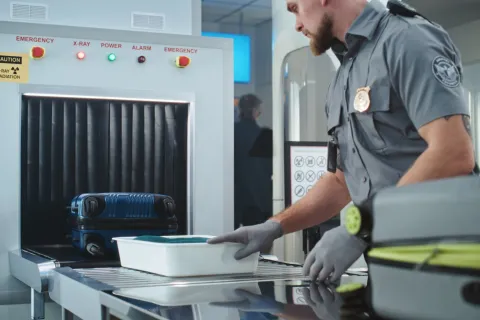
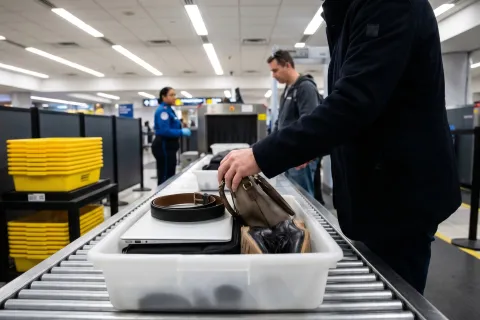
A rolling suitcase can be acceptable to an airline and still run into trouble before it reaches the gate. The obstacle? The opening on the security scanner.
According to a Sept. 9 report from Simple Flying, narrower tunnels on the Transportation Security Administration’s computed tomography scanners are sending some travelers with larger, fully packed rolling carry-ons back to airline counters to check their bags. The report describes a growing problem with expandable luggage, not a new airline baggage restriction.
That distinction matters. This isn’t a reason to retire an ordinary carry-on. But for travelers who routinely fill an expandable case to its limits, the suitcase’s packed shape deserves more attention than the carry-on label attached to it.
TSA’s CT scanner rollout reaches hundreds of airports
TSA had installed 1,162 CT scanners across 296 airports as of July 6, 2026, according to Simple Flying. Those figures describe the deployment at that date, rather than a fresh installation count for September.
The rollout has been years in the making. Simple Flying reports that limited testing began in 2018, followed by a $781.2 million technology contract awarded in 2022. The current baggage issue is emerging during that broader transition from older X-ray equipment, not from an overnight change at every airport.
There’s a useful upgrade behind the inconvenience. According to Simple Flying, CT units generate rotatable, high-resolution 3D images that let officers examine a bag’s contents more thoroughly. That capability allows laptops and permitted travel-size liquids to stay inside bags and reduces the need to open luggage for hand searches.
Leaving electronics packed is a welcome improvement. The catch, the publication reports, is that the new equipment has a smaller entry opening than the machines it replaces. Better imaging doesn’t necessarily come with more room for luggage.
Which rolling carry-ons have a fit problem?
Simple Flying says a standard carry-on measuring about 22 by 14 by nine inches still fits through the new CT tunnel with room to spare. Its reporting points instead to larger, expandable models marketed as maximum-capacity carry-ons, especially once travelers fill the expansion compartment.
The important measurement is the bag’s actual size when packed. According to the publication, expandable luggage can become wider or taller as it fills, using up the clearance it previously had in an older X-ray machine. A case sold as carry-on-compliant can therefore present a different shape at security than it did when empty.
There are two separate questions here: Will the airline accept the bag as cabin luggage, and will that packed bag pass through the checkpoint equipment? Simple Flying’s report describes a gap between those tests. Airline acceptance doesn’t resolve a physical fit problem at the scanner.
The publication identifies travelers using hard-shell expandable cases and families consolidating their belongings into one oversized shared bag as particularly exposed to this issue. By contrast, it says owners of typical soft-sided 22-inch rollers will rarely notice a difference. The concern is specific; it isn’t a blanket rejection of wheeled luggage.
What happens when a bag won’t fit?
Being unable to pass a bag through the tunnel doesn’t leave officers with only one possible response. According to Simple Flying’s account of TSA guidance, an officer can hand-inspect an oversized bag, direct it to a lane using older equipment where one is available, or advise the traveler to check it with the airline.
Those alternatives are worth understanding, but they aren’t a promise that a traveler can choose another scanner. The older-equipment option depends on that equipment being available. Hand inspection is described as a possible response, not a guaranteed workaround.
Simple Flying reports that checking the bag is becoming the default outcome at many CT-equipped checkpoints. The supplied report doesn’t provide a count of affected passengers or a checkpoint-by-checkpoint breakdown, so it doesn’t establish how likely an individual traveler is to encounter the problem.
When checking is necessary, the inconvenience extends beyond surrendering the suitcase. Simple Flying describes travelers having to leave the security area, return to the ticket counter and potentially pay a same-day checked-bag fee while their boarding deadline approaches. The scanner problem happens before the gate; resolving it can require retracing part of the airport journey.
Measure the packed bag, not the label
The most useful response is also the least glamorous: pack first, then measure. Simple Flying recommends checking the bag’s actual packed dimensions rather than relying on the manufacturer’s carry-on designation, particularly when an expansion section is full.
I wouldn’t read this report as a shopping list for replacement luggage. Its own distinction between standard rollers and larger expandable cases argues for checking what you already have before assuming it needs replacing. The feature worth paying attention to is how much the case changes shape when loaded.
There’s also a separate CT-related concern for photographers. Simple Flying reports that the imaging can fog or ruin undeveloped photographic film, including film inside analog cameras, and advises travelers to specifically request a hand inspection. That’s a different issue from suitcase clearance, but it matters even when the camera bag fits perfectly.
For most travelers, the central lesson is narrower than the headline might suggest: ordinary carry-ons aren’t suddenly obsolete. An expandable bag pushed to maximum capacity, however, may face a limit that has nothing to do with the airline’s overhead bin.
More travel news
TSA Considers Water Exception for Some PreCheck Passengers
The proposed exception would apply to PreCheck passengers at airports with suitable CT screening technology; initial participating airports were not identified.

TSA's New 3D Scanners Damage Electronics in Bags
WASHINGTON, D.C. - The same advanced scanners letting you keep your laptop in your bag are quietly frying other electronics at airport checkpoints nationwide.
TSA Uncovers Smoke Grenade Stashed in Peanut Butter
Indianapolis, United States - Security officers intercept live explosive devices in checked luggage, including one concealed inside a jar of peanut butter, raising fresh questions about traveler awareness of hazardous-material bans.
TSA Warns Soccer Fans Ranch Dressing Banned in Carry-Ons
BOSTON, Massachusetts - As international soccer fans flood New England for the World Cup, TSA issued an unexpected warning about packing America's favorite condiment in carry-on bags.

About the Author

Jeff Colhoun
Jeff Colhoun is a photographer and filmmaker whose work has appeared in The Wall Street Journal, the Los Angeles Times, Matador Network and Barron’s.