Stay current with our travel events coverage.
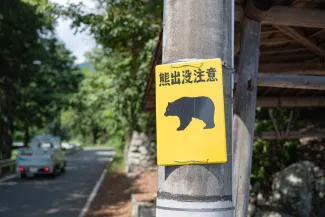
TOKYO, Japan - Japan's Environment Ministry has confirmed what local communities in the country's northern regions have been witnessing firsthand: bear encounters have reached an unprecedented level. From April 2025 to March 2026, the nation recorded 238 bear attacks and 13 deaths, according to The Straits Times. For travelers planning trips to Japan's mountainous north, these numbers represent more than statistics; they signal a fundamental shift in how wildlife and human activity intersect in regions that have long drawn visitors for their natural beauty and cultural heritage.
Where the Risk Is Concentrated
The incidents cluster primarily in the Tohoku region, the mountainous northern section of Honshu, Japan's main island, and parts of Hokkaido. What makes this particularly relevant for travelers is proximity: Tohoku sits roughly 90 minutes from Tokyo by bullet train, according to The Straits Times. This isn't remote wilderness accessible only by expedition. These are areas where visitors come for onsen towns, sake breweries, autumn foliage, and some of the country's most celebrated regional cuisine. Japan hosts two main bear species: the medium-sized Asiatic black bear and the larger Ussuri brown bear. Both populations have been expanding, and the geographic overlap between bear habitat and human settlement has narrowed dramatically.
Comparing the Trajectory
Context matters when assessing risk. From April 2024 to March 2025, Japan recorded 85 casualties and three deaths due to bear encounters, according to The Straits Times. The jump to 238 casualties and 13 deaths in the following year represents nearly a threefold increase in incidents and more than quadruple the fatalities. This isn't a marginal uptick; it's a pattern that demands attention from anyone planning rural or mountain travel in affected prefectures. Research data indicates over 50,000 bear sightings nationwide in fiscal 2025, the highest count in five years. What's more troubling for travelers and residents alike: approximately 70% of attacks since summer 2025 occurred in urban zones or near residential neighborhoods, not deep in backcountry terrain. Bears have been documented entering towns, rifling through garbage, and appearing in areas previously considered safe from wildlife encounters. The Tohoku region led the nation in both sightings and injuries, with Akita Prefecture particularly hard-hit. Kenta Suzuki, Akita's governor, noted that "the psychological impact on urban security has been significantly higher," reflecting how these incidents have shifted public perception of safety even in developed areas.
Government Response and Cull Plans
The Ministry of the Environment has moved beyond observation to intervention. For fiscal 2026, the government approved a bear cull targeting between 8,800 and 10,054 bears nationwide, a significant escalation from previous years. In Hokkaido, authorities set a 10-year brown bear reduction target of 12,540 animals starting in 2025. From April to October 2025 alone, nearly 10,000 bears were captured, the highest number recorded since tracking began in 2006. Wildlife researcher Masahiro Ohnishi framed the severity bluntly: "We didn't know that they are capable of killing 13 people, even with the increase in population size." Current estimates place Japan's black bear population on Honshu between 20,000 and 40,000 animals, with roughly 12,000 brown bears in Hokkaido.
The Food Angle You Won't Find in Travel Guides
Rural depopulation has created a paradox that directly affects the regions I've spent years exploring for their culinary traditions. As young people leave mountain villages for cities, abandoned orchards and farmland revert to forest, creating ideal corridors for bears to move closer to remaining settlements. The same demographic shift that has shuttered family-run soba shops and heritage ryokan has also removed the human presence that once created a buffer between wildlife and populated areas. Food scarcity plays a central role. Failed acorn and beechnut crops in recent seasons have pushed bears to seek alternative food sources, often bringing them into direct contact with human food supplies. The cycle intensifies as bears learn that human settlements offer reliable calories: garbage bins, agricultural storage, even restaurant waste areas in small towns. For travelers seeking authentic food experiences in places like Yamagata, Akita, or rural Hokkaido, this creates a new calculus. The izakaya serving charcoal-grilled mountain vegetables, the morning market where vendors sell foraged mushrooms, the remote onsen town famous for its wild game cuisine, all exist in landscapes where bear presence has become routine rather than exceptional.
What Food-Focused Travelers Should Consider
Timing matters more than it used to. Late summer through autumn, when bears are actively foraging before hibernation, coincides with some of the best culinary travel windows in northern Japan: mushroom season, new sake releases, autumn harvest festivals. This overlap now requires additional awareness. If you're planning a food-focused itinerary in Tohoku or Hokkaido, direct communication with accommodations and local tourism offices has become essential. Many regions have implemented alert systems that track recent sightings. Some rural areas now restrict certain hiking trails or mountain access roads during high-activity periods, which can affect access to remote restaurants or farm visits that might anchor a culinary itinerary. The practical reality: don't walk alone at dawn or dusk in rural areas, make noise when moving through forested paths to farm-to-table restaurants or mountain lodges, and reconsider solo food market visits in towns near forested boundaries. These aren't measures that eliminate risk entirely, but they acknowledge the changed landscape in regions where exceptional food culture and expanding wildlife populations now share the same space.
More travel news
United Adds Okinawa and Osaka Flights in Japan Push
San Francisco, United States - United Airlines is expanding beyond Tokyo with new nonstop service to Okinawa and a daily Los Angeles-Osaka route beginning in March 2027.

Farr East Unveils Complete Tokyo Guide for New Visitors
Tokyo, Japan - Brothers raised in Japan launch comprehensive travel guide with Google Map integration, cultural primers, and flexible itineraries for 10,000+ first-time visitors.

Tokyo Airlines Push Baggage Deadline to 30 Minutes
TOKYO, Japan - Japan Airlines, ANA, and four other carriers move baggage cutoffs earlier in response to record-low on-time departures at Haneda.

Windstar Unveils Spain Mystery Cruise with Port Clues
Barcelona, Spain – Windstar Cruises has announced two new Mystery Cruises for 2027, sailing to Northern Europe and Japan, alongside a Spanish coastal voyage in November 2026 where travelers discover each port just days before arrival.

About the Author

Andy Wang
As our Asia Editor and a first-generation American, Andy Wang brings a unique dual perspective to Jetsetter Guide.