Stay current with our travel events coverage.
ROMULUS, Mich. — Two separate discoveries of illegal bushmeat at Detroit Metropolitan Airport in the span of a single week have U.S. Customs and Border Protection officials reminding international flyers that some food souvenirs can cost far more than they are worth—financially and medically—according to a press release by U.S. Customs and Border Protection.
Back-to-back bushmeat seizures at Detroit Metro
CBP agriculture specialists found the first haul while screening luggage on an incoming flight from Togo late last month. Tucked inside a traveler’s checked bag were 11 pounds of rodent meat. Just days later, officers opening baggage from Gabon uncovered 52 pounds of primate meat that the passenger had tried to label as antelope. In both cases, the travelers also carried other undeclared agricultural items. All prohibited products were seized on the spot and turned over to the Centers for Disease Control and Prevention for destruction in line with federal biosecurity protocols. Each traveler received a $300 penalty for failing to declare the items on the required customs form. “These recent bushmeat interceptions are significant in bringing attention to the illegal importation of bushmeat through our ports of entry,” Port Director Fadia Pastilong said.
Why bushmeat is banned in the United States
Bushmeat is a broad term that covers meat from wild animals—including bats, non-human primates and cane rats—commonly harvested in parts of Africa, Asia and South America. While it can be considered a cultural delicacy abroad, the meat often travels without refrigeration, undergoes minimal cooking and can harbor viruses or parasites unfamiliar to North American public-health systems. The CDC lists Ebola, mpox and several emerging hemorrhagic fevers among the diseases that can spread through contact with contaminated bushmeat. Because some pathogens remain viable even in dried or smoked tissue, U.S. regulations ban the importation of bushmeat in any form. Travelers caught bringing it into the country face seizure of the product, civil penalties and, in extreme cases, criminal charges.
Detroit’s agriculture desk: everyday oddities, rare primate meat
The airport’s agriculture specialists routinely pull aside luggage full of unexpected items—from live giant snails to animal skulls and exotic produce. Although rodent meat appears sporadically in Detroit, officials say primate meat is a far rarer discovery. Finding 52 pounds in a single suitcase therefore set off alarms well beyond the Great Lakes region. All animal products arriving at U.S. borders must meet Animal and Plant Health Inspection Service guidelines, but bushmeat—especially from non-human primates—falls under even stricter rules because of its high zoonotic-disease potential.
The declaration requirement most travelers overlook
Every person entering the United States must complete a declaration that specifically asks about food, plant and animal items. The form may feel routine, yet failure to answer honestly can trigger fines that often dwarf the original value of the items. In last month’s Detroit incidents, a single unchecked box cost each passenger $300 and the complete loss of their “souvenirs.” A forgotten mango or a wedge of cheese is unlikely to reach the news cycle, but agriculture specialists will still confiscate undeclared products. Meat, seeds, soil, live animals and certain plants fall under a web of regulations managed by CBP, the U.S. Department of Agriculture and the CDC. The rules aim to keep pests and pathogens from damaging U.S. agriculture and public health.
What travelers should know before packing food from abroad
Global gourmands and homesick expats often use their suitcases as portable pantries. Before doing so, CBP recommends checking the agency’s “Know Before You Go” guidelines, available on cbp.gov, and consulting the USDA’s Animal Product Manual for meat and dairy restrictions. Countries under active disease alerts—such as regions reporting outbreaks of African swine fever, foot-and-mouth disease or avian influenza—may face blanket bans on specific foods.
Tips for Travelers
- Declare every food item, no matter how small. If you are unsure, check the “Yes” box and speak with an officer on arrival.
- Understand that “cultural delicacy” is not an exemption. Bushmeat and other high-risk products remain illegal even for personal consumption.
- Keep receipts or original packaging whenever possible; they help officers quickly determine admissibility.
- Factor in wait times for secondary inspection if you are transporting any agricultural goods. Missing a connection because of confiscation is a costly inconvenience.
- Remember that civil fines can start at $300 and escalate into the thousands for repeat or egregious violations.
Health implications beyond the baggage carousel
A single tainted piece of meat can transmit viruses to airport staff, airline cleaners or even sniffer dogs before reaching a dinner table. The threat is not hypothetical: epidemiologists trace multiple past Ebola outbreaks to the butchering of infected wildlife. By seizing bushmeat, CBP and the CDC aim to break the chain of transmission at the country’s front door. Travelers also should consider local consequences. Introducing a new pathogen into the United States could devastate native wildlife populations, disrupt agriculture and trigger expensive eradication campaigns funded by taxpayers. The public-health cost of containing an outbreak would eclipse any pleasure derived from sharing a rare stew.
Detroit Metropolitan Airport as a frontline of biosecurity
Detroit may be known for Motown, automobiles and a resurgent downtown, but its airport plays a quiet role in national defense—one focused on microbes rather than missiles. The facility processed more than [Not specified in release] international arrivals last year, making it a logical choke point for disease control. CBP’s agriculture team receives specialized training in x-ray image interpretation, biological risk assessment and the safe handling of potentially infectious material. Seizures like the 11-pound rodent and 52-pound primate caches illustrate the breadth of the job. Officers can move from clearing commercial cut flowers to pulling bushmeat in a matter of minutes, each action a step in securing the homeland’s food supply and public health.
Planning ahead: resources for a smoother arrival
- CBP One app: Travelers eligible for Mobile Passport Control can submit declarations in advance and receive clarity on prohibited items.
- USDA Plant Hardiness and Animal Health hotline: A quick call can clarify whether a particular fruit, plant or meat is admissible.
- CDC Travelers’ Health notices: Stay informed about disease outbreaks in your destination country; certain alerts may trigger temporary import restrictions.
Bottom line for globetrotters
Exotic street food may be part of the adventure overseas, but packing it for the flight home can invite substantial fines, lengthy delays and health risks for everyone on your aircraft and beyond. Detroit’s recent seizures serve as a tangible reminder: when in doubt, declare—or better yet, leave it behind. — Source: U.S. Customs and Border Protection press release
More travel news
Trump Blocks US-Canada Bridge Over Payment Dispute
DETROIT, Michigan — Trump's demand for payment on a Canadian-funded bridge connecting Detroit to Windsor escalates U.S.-Canada tensions at North America's busiest commercial crossing.
Delta Jet Skids in Des Moines, Shuts Airport on Turkey Rush
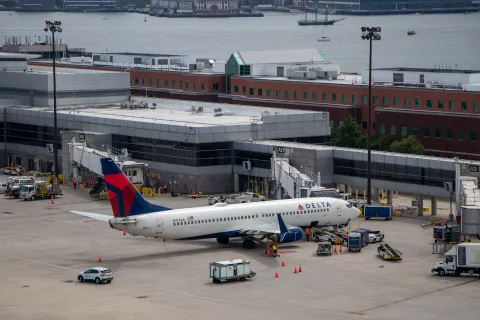
Des Moines, Iowa — Delta Connection Flight 5087 slid off the runway amid a snowstorm, briefly shutting Des Moines International Airport and disrupting Thanksgiving travel.
Airlines to override ‘X’ passport marker with M or F
New York travelers now face a policy shift as airlines must convert X gender markers to M or F on international flights to and from the United States.
Airline junk fees hit record, as cheap tickets vanish
United States air travelers face record ancillary airline fees, topping $148 billion in 2024—learn what junk fees cover and how to avoid them.
About the Author

Jennifer Wilmington
Jennifer Wilmington is a distinctive voice in the world of family and luxury travel, offering unique perspectives derived from her diverse background and experiences.