Stay current with our cruise news coverage.
WELLINGTON, New Zealand — A tourist carrying measles moved through some of Wellington's most visited sites in late February, hitting Te Papa museum, the botanical gardens, Parliament tours, and multiple transport corridors. Health New Zealand confirmed the case after the traveller had already left the country, triggering exposure alerts across 13 locations spanning February 23 to 27.
The infected person visited Te Papa Museum on February 26 between 10am and 1pm and Wellington Botanical Gardens on the same day, according to Health New Zealand. Both locations draw heavy foot traffic from international and domestic travellers, raising the potential exposure window across thousands of visitors during those hours.
Where Exposure Occurred
Health officials identified trains, tourist destinations, Parliament tours, and both Wellington and Auckland airports as locations of interest. The timeline stretches across five days, covering a period when the traveller was infectious and in contact with public spaces before symptoms may have been recognized or before the individual departed.
This is the kind of scenario that underscores the fragility of tourism infrastructure when a highly contagious disease enters the travel corridor. Te Papa is a national draw. The botanical gardens are a standard stop for cruise passengers and regional visitors. Add trains and airports to the mix, and you have exposure points threading through the entire visitor ecosystem.
Measles Risk for Travelers
"We remind everyone that measles is one of the most highly contagious illnesses of all infectious diseases and spreads very easily. Anyone who was at a location of interest should monitor for symptoms of measles," said Dr Emma Sherwood, a health specialist at Health NZ, according to the agency.
Measles is not subtle. It spreads through airborne droplets and can linger in a space for up to two hours after an infected person has left. Anyone without immunity who passes through a contaminated area during that window is at risk. That includes unvaccinated travellers, those who skipped their second MMR dose, and anyone born before widespread vaccination programs.
According to Health NZ, two doses of the MMR vaccine protects 99% of people when given after 12 months of age and provides the best long-lasting protection. That level of efficacy is high, but it requires completion of the full series. A single dose does not offer the same shield.
What This Means on the Ground
For anyone who visited Te Papa or the botanical gardens on February 26, the window for symptom onset runs roughly 7 to 21 days post-exposure. Symptoms typically begin with fever, cough, runny nose, and red eyes, followed by a distinctive rash that starts on the face and spreads downward. If you were there during the exposure period and develop these symptoms, isolation and medical consultation are immediate priorities.
The Parliament tour inclusion is notable. Political and institutional tours attract organized groups, school visits, and international delegations. That means potential exposure could ripple into educational groups, diplomatic circuits, and professional travel networks. The train system adds another layer, connecting regional travellers and commuters across the greater Wellington area.
Auckland Airport's inclusion expands the geographic concern. Anyone transiting through Auckland during the identified dates could have crossed paths with the infected traveller, potentially carrying exposure risk onward to other destinations within New Zealand or internationally.
Photography and Proximity
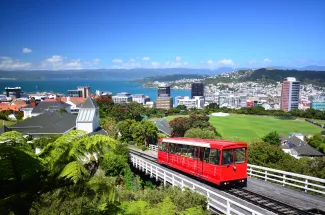
From a field perspective, Te Papa is a confined environment. Crowded galleries, narrow corridors, interactive exhibits. You're shoulder to shoulder in some sections, particularly on weekends or school holidays. The botanical gardens offer more open space, but popular viewpoints, the cable car station, and visitor centers funnel people into tighter zones.
If you shoot in these environments regularly, you know the flow. Tourists cluster at key photo ops. Families congregate at rest stops. Groups bottleneck at entrances and exits. All of that creates sustained proximity, the exact condition measles exploits.
Broader Implications
This case highlights a recurring challenge in international travel: infectious disease doesn't respect borders, and tourism infrastructure is built for movement, not containment. A single infected traveller can seed exposure across multiple regions before anyone realizes there's a problem.
New Zealand has generally maintained strong immunization coverage, but pockets of under-vaccination exist, particularly in communities skeptical of routine childhood vaccines. Measles outbreaks tend to hit hardest in those gaps, spreading rapidly through schools, workplaces, and public gatherings.
For travellers, this is a blunt reminder that vaccination records matter. If you're heading to regions with recent measles activity or planning extended time in high-traffic tourist zones, confirming your MMR status before departure is a baseline precaution. It's not exotic disease prep; it's standard risk management.
Health New Zealand has not released further details on the traveller's origin or destination, but the fact that the case was confirmed after departure suggests the individual may have been asymptomatic or early in the illness during the visit. That's typical for measles; people are contagious before they know they're sick.
Anyone who visited the identified locations during the exposure window should watch for symptoms and seek medical advice if illness develops. For those planning visits to Te Papa or other Wellington attractions in the coming weeks, there's no ongoing risk from this specific case, but the incident is a useful prompt to check vaccination status and stay current on regional health advisories.
Explore more Australia travel →
More travel news
Cruise Ships Might be Banned as Environmental Costs
AUCKLAND, New Zealand - Growing evidence suggests cruise tourism's environmental damage now exceeds economic benefits in fragile destinations worldwide, prompting policy reconsideration across multiple nations.
Three Nations Warn Against South Africa Travel
JOHANNESBURG, South Africa — Three major Commonwealth nations warn citizens about travel risks to South Africa, days after a high-profile American golfer promoted the destination.

Fiji Airways overhauls service to join world-class elite
Nadi, Fiji — Fiji Airways revamps onboard dining, service rituals and storytelling to move into the world-class airline tier.

NZ to charge tourists $12–24 at famed nature sites
Wellington, New Zealand — Foreign visitors could pay NZ$20–40 to hike Tongariro Crossing, Milford Track and other bucket-list sites by 2027.
About the Author

Jeff Colhoun
Jeff Colhoun is a photographer and filmmaker whose work has appeared in The Wall Street Journal, the Los Angeles Times, Matador Network and Barron’s.