Stay current with our cruise news coverage.
AUCKLAND, New Zealand - The conversation around cruise tourism has shifted from growth to reckoning. Across multiple continents, governments are confronting an uncomfortable calculus: the environmental toll of cruise ships calling on fragile coastlines and marine ecosystems is beginning to eclipse the economic rewards these vessels once promised.
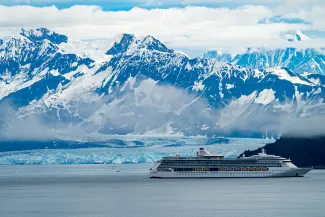
New Zealand, Australia, the United States, Greece, Spain, and Türkiye are among the nations now examining whether the cruise industry's footprint, measured in emissions, sewage discharge, waste generation, and sheer human volume, can be justified by the spending and employment these voyages generate. The debate is particularly acute in iconic destinations where natural beauty has made them cruise magnets: Milford Sound's primordial fjord landscape, the Great Barrier Reef's coral systems, Alaska's glacial waterways, and the white-washed cliffs of Santorini and Mykonos.
The Scale of Environmental Impact
The numbers paint a sobering picture. According to Seatrade Cruise News, 214 cruise ships operating around European ports in 2022 emitted 509 tonnes of sulfur oxides, 19,125 tonnes of nitrogen oxides, and 448 tonnes of fine particulate matter. Barcelona's cruise port, which handled 3.6 million passengers in 2023, was Europe's most sulfur-polluted cruise port in 2022, releasing 18,277 kilograms of SOx into the atmosphere.
The pollution extends beyond airborne emissions. The US Environmental Protection Agency estimates that a single 3,000-passenger cruise ship generates 176,400 gallons of sewage per week. For destinations like the Great Barrier Reef or Milford Sound, where marine ecosystems are already under stress from climate change, this waste burden compounds existing threats.
Venice offers a case study in what happens when a destination draws a line. The city banned large cruise ships from its lagoon in 2021, and the results were measurable: sulfur oxide concentrations dropped by roughly 80%, according to Seatrade Cruise News. The move demonstrated that removing cruise traffic could yield immediate environmental benefits, though it came at the cost of tourism revenue and port employment.
The Economic Question
The industry has long argued that cruise calls create broad economic ecosystems, with passenger spending rippling through local businesses, taxi services, tour operators, and restaurants. Yet the actual economic contribution per passenger often falls short of expectations. Unlike land-based tourists who book multi-night accommodation and dine locally for days, cruise passengers typically spend a few hours ashore, many on pre-purchased ship excursions that funnel revenue back to the cruise line rather than local operators.
MedCruise, representing Mediterranean cruise ports, has launched a comprehensive economic impact study involving over 12 ports in Greece, Spain, Türkiye, and other nations, with results expected at Seatrade Cruise Global 2027. "Robust data is essential, but its true value lies in how it is communicated. Cruise tourism is multifaceted, with many perspectives and only a holistic approach can do justice to its real impact," said Theodora Riga, president of MedCruise, according to Seatrade Cruise News.
The study signals a shift toward evidence-based policy rather than blanket acceptance of cruise growth. For destinations like Santorini, where thousands of passengers can disembark in a single morning, overwhelming narrow streets and heritage sites, the question is not simply whether cruises generate revenue, but whether that revenue compensates for degraded visitor experiences, strained infrastructure, and environmental harm.
Industry Mitigation Efforts
Some cruise operators are investing in cleaner technology. Skift reported that one cruise line achieved a 90% emissions reduction on a 12-day voyage using alternative fuels, demonstrating that technical solutions exist. Australia now requires cruise ships to use low-sulfur fuel with a maximum sulfur content of 0.10% mass by mass, or equivalent emission control technology, according to Seatrade Cruise News.
Yet critics argue these measures remain insufficient. "Cruise operators are currently claiming they are going greener while still using damaging fossil fuels. To future-proof the sector, we need to move ships towards green-hydrogen based fuels," a Transport and Environment report noted, according to Seatrade Cruise News.
"People and communities around the globe are stepping up to demand limits on cruise pollution and protect their health, yet the industry fights them over each new rule," said Marcie Keever of Friends of the Earth, according to Seatrade Cruise News.
The industry also faces softening demand. Royal Caribbean adjusted its 2026 Mediterranean net yield forecast downward, according to Travel Weekly, suggesting that consumer enthusiasm for cruise travel may be cooling amid heightened awareness of environmental and overtourism concerns.
What Thoughtful Travelers Should Consider
For travelers drawn to the regions under scrutiny, the emerging policy landscape suggests several considerations. First, expect access to change. Destinations like Milford Sound and Santorini may impose stricter limits on cruise ship calls, cap daily passenger numbers, or ban vessels above certain tonnage. These restrictions, while disruptive to itineraries, reflect genuine efforts to preserve ecosystems and cultural sites for the long term.
Second, the environmental credentials of cruise operators matter more than ever. Ships employing shore power in port, operating on low-sulfur or alternative fuels, and investing in advanced waste treatment systems cause measurably less harm. Travelers concerned about their footprint should research operators' environmental performance before booking, rather than relying on marketing claims alone.
Third, consider the alternative. Land-based travel to these destinations, though often more expensive and logistically complex, distributes economic benefit more broadly across local communities and typically involves lower per-person environmental impact. A multi-day stay in Hobart or Queenstown, a small-ship expedition in Alaska, or a ferry-based Greek island journey allows deeper engagement with place while avoiding the concentrated pressure cruise tourism imposes.
The reckoning underway is not simply about vilifying cruise ships. It is about acknowledging that certain environments, from coral reefs to alpine fjords, cannot sustainably absorb the intensity of visitation that mass cruise tourism delivers. The data now being gathered across Mediterranean ports, the policy shifts in New Zealand and Australia, and the precedent set by Venice all point toward a future where access is earned through demonstrated environmental responsibility, not assumed as a right of passage. For travelers who value the integrity of the places they visit, that future cannot arrive soon enough.
More travel news
September Becomes the New August for Luxury Villas
ATHENS, Greece - Haute Retreats says wealthy families are choosing September over August, prompting earlier bookings and sell-outs of fully staffed Mediterranean villas.

Armed Mob Storms Greek Hotel Targeting Israeli Guests
MALIA, Greece - Claims of an armed mob targeting Israeli tourists at a Crete hotel remain unverified by major news outlets, while separate security incidents underscore volatility in popular Greek destinations.
Uber Boats Transform European Island Travel
EUROPEAN COAST - Uber expands its mobility platform to coastal waters, bringing app-based boat booking to island destinations across Europe.

UK Travelers Face New Greece Entry Rules Starting May 2026
LONDON, United Kingdom - The European Union Entry and Exit System went live May 4, 2026, triggering a UK Foreign Office update for all travelers flying to Greece and its islands.
About the Author

Wilson Montgomery
Wilson Montgomery is a British-born travel writer who has carved a niche for himself with his compelling narratives about African travel and safari experiences.