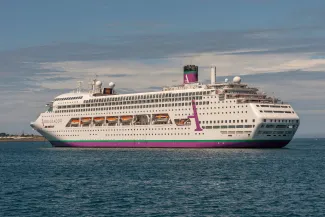
Stay current with our cruise news coverage.
From Observation Deck to Conservation Database
The multi-year partnership transforms standard cruising into a working marine research platform. ORCA, a UK charity founded in 2001 and dedicated to protecting whales, dolphins and porpoises, conducts systematic line-transect surveys from Ambassador's ships, collecting data on species, behaviour and environmental conditions across European and North Atlantic waters. Last year's programme demonstrated the scale of opportunity. According to Ambassador, ORCA conservationists recorded 6,766 animals during sailings in the previous season, building a dataset that feeds directly into cetacean mapping efforts, marine protected area identification and shipping route planning. "The collaboration will see ORCA ocean conservationists join selected sailings aboard both Ambience and Ambition," Ambassador and ORCA stated in partnership materials. The extension into 2028/29 cements what has become one of the longest-running conservation partnerships in the mainstream cruise sector. By the time the new season concludes, Ambassador and ORCA will have completed six consecutive years of joint operations, a sustained collaboration rare in an industry often criticised for shallow environmental commitments.What Passengers Actually Experience
For travellers, the presence of ORCA conservationists aboard transforms sea days from passive transit into active wildlife encounters. Beyond conducting their own research, ORCA teams deliver expert-led talks, host deck watches during prime sighting windows and guide passengers through identification techniques, turning guests into citizen scientists contributing real observations to the database. The itineraries selected for ORCA coverage typically transit wildlife-rich corridors: Norwegian fjords, North Atlantic crossings, Arctic approaches and the Bay of Biscay, all known cetacean hotspots. Passengers on these sailings gain access to expert interpretation of fin whales breaching off the coast of Spain, minke whales feeding in Norwegian waters or orca pods transiting Scotland's Hebrides. It's a value-add with credibility. ORCA doesn't just brand the experience; conservationists live and work aboard, collecting data that informs actual marine policy. That grounding in real science sets the programme apart from generic "eco-cruising" marketing language common elsewhere in the industry.Why This Model Matters Beyond Ambassador
Six years is a milestone worth unpacking. Most cruise-line conservation partnerships are announced with fanfare, deliver a season or two of photo-ready deck watches, then quietly fade. Ambassador and ORCA have instead built something durable, expanding from a handful of sailings in the early years to 22 itineraries and 308 days at sea in 2028/29. That consistency matters for marine research. Cetacean populations shift with seasons, water temperature and prey availability; a multi-year dataset offers far more value than a one-off survey. For ORCA, sustained access to Ambassador's ships means tracking changes over time, identifying emerging threats and building the kind of longitudinal evidence base that regulators and policymakers actually use. For passengers, it's a lens into how responsible tourism can work when structured correctly. You're not offsetting carbon from a cruise with a token donation. You're sailing on a working research vessel that happens to also be your holiday, contributing observations that will shape marine protected areas and shipping lanes long after you've disembarked. Ambassador operates from UK ports like London Tilbury, Newcastle and Liverpool, positioning itself as a regional, no-fly alternative to the mega-ship market. The ORCA partnership fits that positioning cleanly: smaller scale, deeper engagement, less spectacle and more substance. It's a model that resonates particularly well with British passengers who want the convenience of domestic departure ports and the reassurance of a tangible environmental contribution. Does that make Ambassador perfect? Not by a long shot. Cruising remains one of the most carbon-intensive forms of travel, and no amount of whale-watching erases the fuel burned or waste generated. But within the constraints of the industry, this partnership represents one of the more credible attempts to integrate conservation into core operations rather than bolt it on as an afterthought.Planning Around ORCA Sailings
If marine wildlife is a priority, booking one of the 22 ORCA-partnered itineraries is the move. Ambassador publishes its ORCA schedule well in advance; these sailings book faster than standard departures, particularly for cabins with unobstructed deck access. Expect longer stretches at sea and routing through known cetacean corridors. These aren't port-intensive Mediterranean hops; they're voyages designed around transit through productive waters. Pack binoculars, layer for wind on deck and arrive ready to scan horizons during daylight hours. The conservationists will cue you to sightings, but the best encounters often go to passengers who put in deck time between talks. And crucially, understand what you're signing up for. This isn't a guaranteed whale show. Some crossings deliver daily sightings; others yield distant blows and fleeting dorsals. The value lies in the expert framing, the contribution to research and the understanding that you're participating in something beyond your own Instagram feed. That's the offer: a cruise that doubles as a floating research station, staffed by conservationists who turn passengers into collaborators. After six years, Ambassador and ORCA have built a model worth watching, and worth sailing.More travel news
UK Flight Delays Continue After NATS Fixes System Fault
More than 2,000 flights were canceled, with delays affecting 15 UK airports and beyond; Heathrow said to travel only if a flight was confirmed operating.

Turkey Leads Global Cosmetic Surgery Tourism at $3.5B
DALLAS, Texas - Medical Tourism Corporation reveals Turkey performs 1.1 million aesthetic procedures annually, generating USD 3.5 billion and capturing market share with dramatic cost advantages.

UK Travelers Face New EU Entry Rules This Year
BRUSSELS, Belgium — The European Travel Information and Authorisation System launches this year, requiring UK travelers to obtain advance clearance before visiting Spain, Greece, and 28 other European destinations.

UK Bars Dual Citizens Without British Passport
LONDON, UK — The Home Office confirms new documentation requirements for dual nationals entering Britain, rejecting calls for a grace period despite cost and logistical concerns.
About the Author

Andy Wang
Andy Wang is Asia Editor at Jetsetter Guide, covering Southeast Asian travel and food from his base in Singapore. A first-generation American, he brings a dual perspective to the region.