Stay current with our airline news coverage.
Passport Rule Enforcement Continues During Historic Travel Decline
WASHINGTON, D.C. — Even as international arrivals to the United States hit historic lows throughout 2025, U.S. Customs and Border Protection continues enforcing a little-known passport rule that has denied entry to travelers who assumed their documentation was in order. The enforcement comes during a year when U.S.-bound travel reached its lowest possible levels, driven by a combination of geopolitical tensions, trade frictions, and stricter visa policies, according to Travel EIN News. While fewer people are arriving at U.S. borders, federal agencies including CBP and the Department of Homeland Security are maintaining and modernizing entry protocols to ensure strict adherence to federal rules. The irony is stark: at a moment when the U.S. is already experiencing a sharp drop in international visitors, enforcement of lesser-known passport regulations is creating additional barriers at the exact time the tourism and business travel sectors can least afford them.What Travelers Are Missing
The specific passport rule being enforced relates to documentation requirements that many international travelers simply don't know exist. Unlike the widely understood need for a valid passport or the more publicized six-month validity rule required by many countries, this particular regulation operates in the background until it doesn't. CBP officers at ports of entry have limited discretion when documentation fails to meet federal standards. That means travelers who arrive after long-haul flights or cruises believing they've checked all the boxes can find themselves turned away, forced to book immediate return travel, and left scrambling to understand what went wrong. This isn't a new rule. It's been on the books for years. What's changed is the environment in which it's being applied. With international travel already suppressed by broader political and economic factors, each individual denial has outsized consequences for traveler confidence and industry recovery.Context: Why 2025 Was a Breaking Point
The steep decline in international arrivals during 2025 wasn't the result of a single policy or event. It was the compounding effect of several forces converging at once. Geopolitical tensions between the U.S. and key trading partners created uncertainty for business travelers and tourists alike. Trade frictions added cost and complexity to cross-border movement. And stricter visa policies, implemented in response to political pressure and security concerns, made obtaining permission to enter the U.S. more difficult, more expensive, and more time-consuming. For countries whose citizens once enjoyed relatively straightforward access to the U.S., the tightening of visa requirements marked a significant shift. Processing delays, increased denials, and heightened scrutiny all contributed to a chilling effect on inbound travel. At the same time, alternative destinations with simpler entry requirements and more welcoming messaging began capturing market share. Travelers who might have chosen the U.S. for a vacation, conference, or family visit instead turned to Canada, Mexico, Europe, or Asia-Pacific destinations where the path to arrival felt less fraught.Federal Agencies Hold the Line
Despite the drop in arrivals, CBP and DHS have continued to enforce and modernize entry protocols. The rationale is clear: border security and immigration compliance don't pause during downturns in travel volume. If anything, maintaining consistency in enforcement is seen as essential to the integrity of the system. But the practical result is that travelers who do make the trip face a regulatory environment that has, if anything, become more rigid. Officers are expected to apply rules uniformly, and the technology systems supporting passport scanning, biometric verification, and background checks are being updated to catch discrepancies that might previously have gone unnoticed. For travelers caught off guard by the lesser-known passport rule, the experience is jarring. There's no grace period, no appeals process at the gate. The decision is immediate, and the consequences are real: missed connections, forfeited hotel bookings, lost conference registrations, and the financial and emotional cost of an aborted trip.What This Means for Travelers
If you're planning travel to the U.S., assume nothing. The standard advice, check that your passport is valid for the duration of your stay, is no longer sufficient. You need to understand the full scope of documentation requirements for your specific nationality, visa status, and point of entry. That means consulting official CBP guidance well in advance of your departure, not relying on airline staff or travel agents to catch potential issues. It means double-checking that any previous travel history, visa overstays, or passport irregularities won't flag your entry. And it means building buffer time into your plans in case something does go wrong. For photographers, journalists, and expedition travelers working in or transiting through the U.S., the stakes are even higher. Gear, assignments, and tight schedules leave little room for error. A passport issue that results in denial of entry can derail weeks of planning and significant financial investment.Industry Implications
The enforcement of obscure passport rules during a period of already suppressed travel sends a signal, intentional or not, about priorities. At a time when tourism boards, airlines, and hospitality groups are desperate to rebuild inbound traffic, every additional friction point matters. International travelers have long memories. A denial of entry, especially one that feels arbitrary or poorly explained, doesn't just affect that individual trip. It shapes future decisions, influences word of mouth, and contributes to a broader perception that the U.S. is a difficult destination to access. For the business travel and conference sectors, the combination of strict visa policies and rigid passport enforcement creates a competitive disadvantage. Event organizers are increasingly choosing locations where international attendees face fewer barriers. That shift has long-term consequences for cities and regions that rely on convention and meeting revenue. The question facing policymakers is whether the current approach strikes the right balance. Security and compliance are non-negotiable, but the execution and communication around these rules can make the difference between a traveler who understands and accepts a decision and one who feels blindsided and unwelcome. As 2026 unfolds, the travel industry will be watching closely to see whether enforcement continues on its current trajectory or whether there's room for recalibration that maintains security without further suppressing a sector still struggling to recover.More travel news
$20000 Visa Bonds Put US Trips Out of Reach
WASHINGTON, United States - A permanent visa-bond program could put U.S. trips beyond reach for families and business travelers from 50 designated countries.
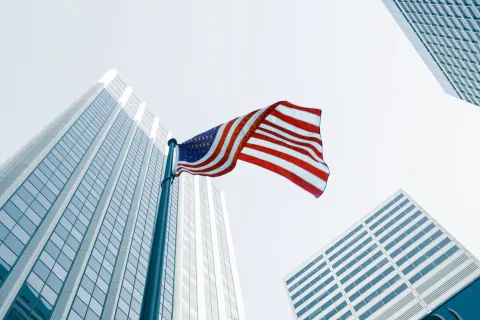
Cracks Prompt FAA Checks of 1,429 Boeing 737 MAX Jets
WASHINGTON, United States - The FAA has ordered inspections of 1,429 Boeing 737 MAX jets worldwide, targeting structures near the fuselage and forward galley door.
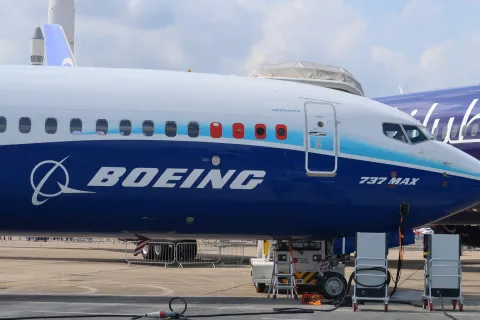
American Airlines Barefoot Ban Catches Flyers Off Guard
FORT WORTH, Texas - American Airlines passengers may be surprised by its barefoot rule, but the evidence points to an existing contract provision, not a new ban.
AI Hotel Mirage Masks Poorly Rated Vegas Stay
Las Vegas, United States - A Booking.com listing for Palette Las Vegas allegedly used altered images to direct guests to OYO Hotel and Casino Las Vegas.
About the Author

Jeff Colhoun
Jeff Colhoun is an acclaimed travel writer, photographer, and filmmaker, whose work is respected both in the United States and internationally.