Stay current with our airline news coverage.
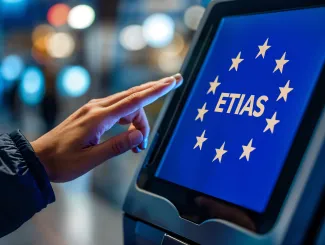
BRUSSELS, Belgium - Europe’s long-delayed ETIAS travel authorization remains offline, and visa-exempt travelers should not attempt to apply or pay for an authorization ahead of upcoming trips.
As of Aug. 12, 2026, the European Travel Information and Authorisation System was not operating and no applications were being collected, according to the European Union’s official Travel Europe website. The European Commission had not announced a new ETIAS launch year.
The EU says it will announce a specific start date several months before the system launches. That leaves travelers, airlines, tour operators and border authorities waiting for a firm implementation schedule after earlier EU material placed the expected start in the last quarter of 2026.
The current notice does not formally move ETIAS into 2027. It also no longer puts the same emphasis on the previous late-2026 timetable. For travelers trying to separate an official border requirement from years of shifting implementation dates, the only useful status is the present one: ETIAS is unavailable, and it is not currently required.
Visa-Exempt Travelers Do Not Need ETIAS Yet
ETIAS is planned as an electronic pre-travel authorization for visa-exempt third-country nationals making short visits to much of Europe. It is intended to cover travel to 30 European countries and apply to nationals of 59 visa-exempt countries and territories, according to EU information.
Once operational, ETIAS will apply to qualifying short stays of up to 90 days in any 180-day period. An authorization will cost €20.
None of that creates an application requirement today. The EU is not accepting submissions, so travelers with existing European bookings should continue preparing under the rules currently in force rather than treating the previous last-quarter target as a confirmed deadline.
This distinction matters because ETIAS has been discussed for years as an approaching requirement. A planned system, however, is not the same thing as an active border rule. Until the EU publishes a start date and opens the application process, visa-exempt visitors do not have an ETIAS step to complete.
Earlier Late-2026 Timeline Is No Longer Firm
Earlier official EU material said ETIAS was expected to begin in the last quarter of 2026. The latest status does not confirm that timetable, and the European Commission had not announced a replacement launch year as of Aug. 12.
ETIAS was expected to follow the EU’s separate Entry/Exit System. EES was progressively launched from October 2025 and became fully operational in April 2026, according to Travel Europe.
The two systems serve different functions. EES is part of border processing, while ETIAS will add a pre-travel authorization for eligible visa-exempt visitors. For passengers, the immediate difference is straightforward: EES is operational, but ETIAS is not.
The absence of a confirmed ETIAS date also complicates planning beyond individual vacations. Airlines and tour operators eventually will need to communicate the authorization requirement to affected customers, while border authorities will need a clear transition schedule. The EU’s commitment to provide several months of advance notice should prevent an overnight change, but it does not resolve the current uncertainty.
The Sensible Booking Strategy Is to Follow the Live Rule
Travel policy gets messy when projected implementation windows circulate longer than the official status itself. In my view, travelers should ignore speculative start dates and work from the EU’s live notice. Right now, that notice says the system is not operating and applications are not open.
That means there is no reason to delay a European booking solely because an ETIAS application cannot be completed. It also means travelers should not build a trip checklist around the earlier late-2026 expectation. The commission has said the specific date will be announced several months before launch, giving travelers a defined signal to watch for rather than a guessed deadline.
People with travel planned later in 2026 should check the official EU page again before departure, particularly if a trip falls near the end of the year. The same approach applies to 2027 bookings because the commission has neither confirmed a 2026 launch nor formally postponed the system into 2027.
The cleanest approach is to keep the issues separate. Confirm the passport, entry and stay rules that apply now; monitor the official ETIAS page for a dated implementation announcement; and apply only after the EU says applications are being accepted. Anything beyond that is planning around a system that does not yet exist in operational form.
What Travelers Should Watch Next
The next meaningful development will not be another broad target window. It will be a specific launch date from the European Union, followed by instructions on when eligible travelers can begin applying.
Until that happens, ETIAS remains a future requirement. Visa-exempt travelers can continue entering participating European countries under current rules without ETIAS approval, provided they otherwise meet the applicable entry conditions.
The EU’s latest notice offers less certainty about timing, but it removes one immediate point of confusion: there is no ETIAS application to complete today. Travelers should treat any eventual rollout as a policy change requiring fresh verification, not as a deadline that has already arrived.
More travel news
Italy fast-tracks facial recognition despite outcry
Rome, Italy - New biometric surveillance rules permit police to retain facial data for seven days before a crime occurs, shifting Italy's security framework toward preemptive monitoring.

Europe Unveils Biometric Travel App for Faster Borders
LISBON, Portugal - Portugal joins Sweden in full digital border adoption as the EU's Travel to Europe app rolls out across Schengen states, promising faster entry checks amid operational challenges.

EU Bans Airline Fees for Carry-On Bags
Brussels, Belgium - After a decade of negotiations, European lawmakers finalize passenger protections that will eliminate carry-on fees and family seating charges starting next year.

Armenia Unlocks EU Visa-Free Travel in 2026
YEREVAN, Armenia - Armenia moves toward visa-free travel with the European Union, a shift that could reshape backpacker routes through the Caucasus if the reforms actually stick.

About the Author

Jeff Colhoun
Jeff Colhoun is a photographer and filmmaker whose work has appeared in The Wall Street Journal, the Los Angeles Times, Matador Network and Barron’s.