
Stay current with our airline news coverage.
CHICAGO, United States - United Airlines is struggling with widespread Wi-Fi failures on its Pacific long-haul network, and the issue isn't going away anytime soon. Recent weeks have seen a surge in reports that internet service on United's widebody flights crossing the Pacific is either unusable or completely offline for extended stretches, particularly on routes operated by Boeing 777 and 787 aircraft. The culprit appears to be network saturation rather than a contract breakup, though passenger frustration is real and growing. According to One Mile at a Time, citing internal communications via aviation insider JonNYC, United pilots recently received a memo explaining that "the long haul satellite provider (Panasonic) was basically saturated at certain times of the day, especially over the Pacific." The message confirms what many travelers have experienced firsthand: legacy geostationary satellite systems that once handled email and light browsing are now buckling under bandwidth-hungry streaming, video calls, and cloud collaboration tools.
Starlink Marketing Meets Panasonic Reality
United has spent months promoting its partnership with SpaceX and the coming availability of fast, free Starlink Wi-Fi across its mainline fleet. The airline has positioned the rollout as a competitive advantage, openly criticizing rivals for patchy connectivity while promising passengers seamless internet at cruising altitude. That messaging has driven results: internal data cited by One Mile at a Time shows United's Net Promoter Score increased after the Starlink announcement and doubled on flights already equipped with the new system. But roughly 90 percent of United's mainline fleet still lacks Starlink and continues to rely on legacy providers like Panasonic, according to commentary referenced in coverage. The airline's Starlink rollout targets more than 800 aircraft equipped by the end of 2026, according to external reporting, leaving a multi-year gap during which most international passengers, especially those crossing the Pacific, will continue to experience the old systems. That gap is most acute on transpacific routes, where United operates a dense network to destinations including Tokyo, Hong Kong, Shanghai, and Seoul. Many of these services last between 12 and 17 hours, placing them among the world's longest regularly scheduled flights. When Wi-Fi goes dark halfway across an ocean, passengers have few options and plenty of time to register their dissatisfaction.
Clearing Up the Breakup Rumors
Speculation circulated among frequent flyers that United had terminated or failed to renew its contract with Panasonic as part of the Starlink transition. One Mile at a Time addressed the claim directly, stating that "what's rumored above, about United ending its contract with Panasonic, isn't correct." The relationship remains intact contractually, but the performance issues tied to satellite congestion mean passengers are experiencing service levels that feel like a de facto breakup. The problem isn't unique to United. Panasonic's geostationary satellite network serves multiple carriers, and capacity constraints at peak usage times affect whoever happens to be flying through congested orbital windows. What sets United apart is the scale of its Pacific operation and the dissonance between its high-profile Starlink messaging and the day-to-day reality on most of its long-haul fleet. Industry observers note that United's own coverage maps and documentation acknowledge patchy or limited Wi-Fi service across parts of the Pacific, undercutting the airline's competitive positioning versus rivals it has publicly faulted for similar shortcomings. For passengers, the distinction between network saturation and contractual status is irrelevant. Either way, they're offline.
The Capacity Crunch Nobody Advertised
Legacy satellite Wi-Fi was designed for an era when most passengers wanted to check email or browse news headlines. Today's cabin is a different environment. A Starlink executive claimed that on a 25 minute Emirates demo flight, nearly 100 percent of passengers connected and consumed more data than passengers typically use over seven hours on legacy systems, according to industry coverage. That shift in usage patterns is overwhelming older networks built for lower throughput and higher latency. Panasonic's geostationary satellites orbit at altitudes that introduce inherent latency and limit bandwidth scalability. As more passengers stream video, join work calls, and run cloud-based applications simultaneously, the finite capacity of those satellites gets exhausted. The Pacific, with its mix of business-heavy routes and long flight times, is a perfect storm for saturation. United is caught managing a transition it can't accelerate unilaterally. Starlink installation is a complex, aircraft-by-aircraft process involving certification, hardware integration, and coordination with regulators across multiple countries. Until that work is complete, the airline must operate with systems it knows are inadequate for current demand.
Where This Leaves Pacific Travelers
If you're booked on a United transpacific flight in the coming months, the odds are high you'll be flying on a Panasonic-equipped aircraft, and your connectivity experience will be inconsistent at best. The airline has been transparent with crews about the saturation issue, but passenger-facing communications have not kept pace with the marketing emphasis on Starlink's future availability. For business travelers who depend on VPN access, cloud tools, or real-time collaboration during long flights, this is more than an inconvenience. It's a material downgrade from the service United has been promoting. Leisure passengers expecting to stream entertainment or stay connected with family will face similar disappointment. The timeline matters. United's end-of-2026 target for fleet-wide Starlink installation means at least another year and a half of uneven service for most international routes. In the interim, the airline's competitive position on the Pacific hinges on factors beyond Wi-Fi: schedule, route network, premium cabin product, and pricing. But connectivity has moved from nice-to-have to table stakes, and United is losing ground in a category it chose to highlight. This situation also raises broader questions about how airlines communicate known limitations during technology transitions. United benefits from Starlink's positive halo effect on customer sentiment, as evidenced by the Net Promoter Score bump. But if passengers board expecting Starlink performance and encounter Panasonic blackspots, the gap between promise and reality erodes trust faster than any score can recover. The Pacific Wi-Fi mess is a preview of what happens when passenger behavior evolves faster than infrastructure can follow. United isn't abandoning Panasonic out of choice; it's being forced into a costly, multi-year upgrade by demand it can no longer ignore. Until Starlink coverage is universal across the fleet, travelers crossing the ocean should plan as if connectivity won't be available, because increasingly, it isn't.
More travel news
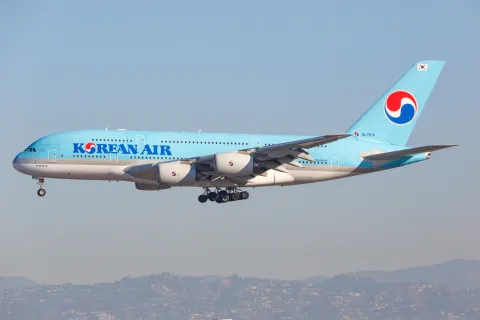
Korean Air Adds Free Starlink Wi-Fi to Four Aircraft
The Sept. 15 launch covers three Airbus A350-900s and one Boeing 777-300ER; passengers in every cabin on those equipped aircraft get free access.
O’Hare Led U.S. Airports With 43 Delays Wednesday
Wednesday’s figures put O’Hare first among U.S. airports for delays and United first among U.S. carriers; they are not a live flight-status report.
United passenger says she was locked in Vancouver jet bridge
A disabled traveler expecting wheelchair assistance says she waited alone for 20 to 30 minutes after landing in Vancouver on Sept. 9; United says an agent checked frequently while an escort was arranged.
United Tests Gate Delivery for Select Newark Flights
Passengers notified by United before select flights departing from or connecting through nine designated Terminal C gates at Newark can order in the app; United charges no service fee.
About the Author

Jeff Colhoun
Jeff Colhoun is an acclaimed travel writer, photographer, and filmmaker, whose work is respected both in the United States and internationally.