
Stay current with our airline news coverage.
WASHINGTON — Reports circulating on social media have reignited confusion over which forms of identification Transportation Security Administration officers will—or can—accept at airport checkpoints. The latest flap centers on federally recognized tribal identification cards, which several Native American travelers say were recently turned away in Washington and other U.S. airports even though the cards meet the federal Real ID standard that took effect on 7 May 2025.
Why legitimate IDs are sometimes refused
The complaints surfaced in the r/TSA forum on Reddit, where one traveler wrote that officers “swipe the ID, look at the screen and tell me ‘nothing is popping up,’ ” then demanded another credential. Similar anecdotes poured in from military personnel and Cherokee citizens who said their legitimate documents failed to scan. In a prepared statement, the TSA says the impasse is often technical, not legal. “TSA accepts IDs from federally recognized tribes,” the agency explains on its Tribal and Indigenous Travelers page, but older or less-sophisticated cards “cannot be scanned by technology,” in which case officers may ask for a second document.
When technology stalls the line
Checkpoint computers verify identity by reading a credential’s barcode or embedded chip. Cards that lack the newest security features or whose barcodes are damaged will not populate the agency’s Secure Flight system, triggering manual inspection. A self-described officer commenting under the handle TheOneAndOnlySOS told Reddit readers that some tribal and military IDs “do not read well in the scanners,” advice that echoes TSA’s own guidance. Travelers caught in that scenario are entitled to escalate. “Ask to see the Transportation Security Manager and request that they review Real ID procedures,” the Reddit poster advised—words that echo standard escalation steps detailed in TSA’s public handbook.
Real ID: What changed on 7 May 2025
The Real ID Act, originally passed in 2005, finally became mandatory for U.S. domestic flights this spring after a series of extensions. As of 7 May 2025, every adult passenger must present a compliant identification document—recognizable by the star in the upper right corner or, in the case of tribal nations, by federal certification. The law applies to security screening but does not supersede tribal sovereignty; tribal IDs remain valid so long as they meet Department of Homeland Security standards.
Acceptable documents at a glance
Below is TSA’s current list of Real ID-compliant documents. Officers may ask to see any of them if your primary card will not scan.
- U.S. passport
- U.S. passport card
- Permanent resident card
- Driver’s license or other state photo ID issued by a Department of Motor Vehicles
- State-issued Enhanced Driver’s License
- Photo ID issued by a federally recognized Tribal Nation or Indian Tribe, including Enhanced Tribal Cards
- DHS Trusted Traveler cards (Global Entry, NEXUS, SENTRI, FAST)
- Veteran Health Identification Card
- U.S. Department of Defense ID, including dependent IDs
- U.S. Citizenship and Immigration Services Employment Authorization Card (I-766)
- Border Crossing Card
- U.S. Merchant Mariner Credential
- HSPD-12 PIV card
- Canadian provincial driver’s license or Indian and Northern Affairs Canada card
- Transportation Worker Identification Credential
- Foreign government-issued passport
A temporary driver’s license, by contrast, is not accepted.
Tips for travelers carrying tribal IDs
- Carry a backup. Even though the tribal card is valid, a second Real ID-compliant document—such as a U.S. passport card or state driver’s license—can keep a tight connection on schedule if the first card fails to scan.
- Ask for a supervisor. If a front-line officer refuses the card, calmly request a supervisory Transportation Security Officer. Supervisors can override the kiosk and conduct a manual verification against the Federal Register.
- Know your rights. TSA policy states that officers must treat members of Tribal Nations “with respect and dignity.” Sacred items like eagle feathers may be hand-inspected, but passengers can ask for gloves and a separate bin to preserve cultural protocols.
- Allow extra time. Mechanical hiccups can add 10–15 minutes. Arriving earlier than the standard two hours for domestic flights is wise if your only ID is a tribal card.
The bigger picture: tech upgrades on the horizon
TSA has pledged to replace aging credential authentication technology with units capable of recognizing a broader array of barcodes and security chips. The rollout schedule has not been published, but the agency has tested next-generation scanners in Phoenix, Las Vegas and Washington-Dulles. Until the upgrade is complete, travelers can expect occasional glitches. Officers processed more than 2,400,000 passengers nationwide on the Sunday after Memorial Day; even a one-percent scanner failure rate could disrupt thousands of journeys.
What to do if you are still denied boarding
If every escalation fails, TSA’s Identity Verification Call Center can compare your answers to publicly available databases—addresses, voter registrations or vehicle records—to confirm identity. The process typically takes 10–15 minutes and does not require a second photo ID, but it does involve personal questions. Refusal to answer truthfully can bar you from security.
FAQ: Real ID and TSA screening
Does a Real ID replace my passport for international travel?
No. A passport is still required to cross international borders.
Can children use a tribal ID?
Travelers younger than 18 generally do not need identification for domestic flights if they are with a compliant adult. However, a tribal card is acceptable for minors when required.
What if my name has legally changed?
Bring certified proof, such as a marriage certificate or court order, to match the name on your ticket to your identification document.
Will a digital driver’s license on my phone work?
Only in a handful of pilot airports and only if it originates from an Apple Wallet or state-approved app. Always pack the physical card as well.
The bottom line for travelers
Real ID compliance has added a new layer of complexity to domestic air travel, but the fundamentals remain unchanged: carry official photo identification, arrive early, and know how to escalate if technology falters. For members of federally recognized tribes—and anyone whose credential happens to baffle the scanner—back-up documents and calm persistence are the surest ways to keep moving toward the gate. — as TSA officials said in a prepared statement.
More travel news
$20000 Visa Bonds Put US Trips Out of Reach
WASHINGTON, United States - A permanent visa-bond program could put U.S. trips beyond reach for families and business travelers from 50 designated countries.
Cracks Prompt FAA Checks of 1,429 Boeing 737 MAX Jets
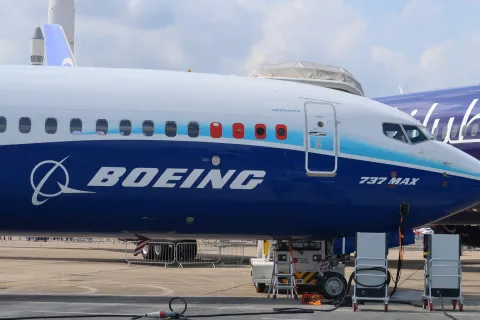
WASHINGTON, United States - The FAA has ordered inspections of 1,429 Boeing 737 MAX jets worldwide, targeting structures near the fuselage and forward galley door.
American Airlines Barefoot Ban Catches Flyers Off Guard
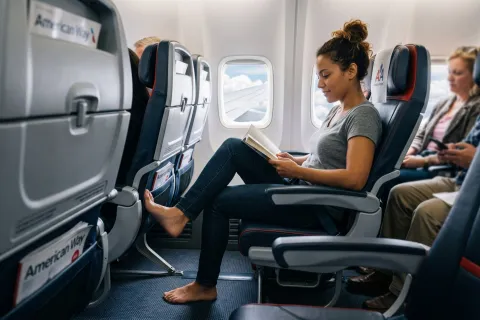
FORT WORTH, Texas - American Airlines passengers may be surprised by its barefoot rule, but the evidence points to an existing contract provision, not a new ban.
AI Hotel Mirage Masks Poorly Rated Vegas Stay
Las Vegas, United States - A Booking.com listing for Palette Las Vegas allegedly used altered images to direct guests to OYO Hotel and Casino Las Vegas.

About the Author

Dana Lockwood
Dana Lockwood is a rising journalist who specializes in budget-friendly solo travel.