Stay current with our airline news coverage.
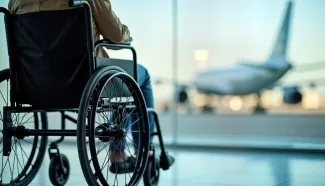
DALLAS, United States - Assigned seating was supposed to close one of Southwest Airlines’ most debated loopholes. Instead, the carrier has found that moving some wheelchair users into better seats can help solve a very practical problem: getting flights boarded and unloaded on time.
Gary Leff reported Aug. 25 in Simple Flying that Southwest call centers are contacting some passengers who requested wheelchair assistance and asking whether they’d like to move into blocked seats closer to the front of the cabin. The article describes those seats as extra-legroom premium seats that Southwest otherwise charges passengers to select.
There’s no additional charge for the move. So, yes, a wheelchair request can still result in a free premium seat under Southwest’s assigned-seating system. But the mechanics are different from the airline’s open-seating days, and the reason has as much to do with operational efficiency as seat perks.
Assigned seating changed Southwest’s wheelchair equation
Southwest switched its seating policy Jan. 27, 2026, according to Simple Flying. Under the former system, passengers were assigned boarding positions rather than seats. Travelers using wheelchairs generally boarded early and could choose front-row, bulkhead or other desirable seats without paying a premium.
Assigned seating reduced the advantage attached to boarding first. It also created a new headache. Wheelchair users can now be assigned seats throughout the cabin, increasing the time required to help them board and deplane.
“[Y]ou might say, “Well, Andrew, I thought we’re supposed to have fewer wheelchairs.” And it’s true. We have fewer wheelchairs than we did before. But before, when someone was in a wheelchair, under open seating they would generally be in the front of the cabin, and so it was a shorter process. Now, with assigned seats, the wheelchairs are seated throughout the cabin, so there’s more process time to bring them further back in the cabin,” said Andrew Watterson, chief operating officer at Southwest Airlines, according to Simple Flying.
That extra time matters at an airline built around aircraft utilization and quick turns. Southwest boards flights 35 minutes before departure, and Watterson discussed why the airline doesn’t want to add five minutes to that process, according to the publication.
Blocked Southwest seats become an operational tool
Southwest doesn’t make every seat available for advance purchase or reservation. Some remain blocked, and Watterson said those seats have been underused. The airline is now trying to put them to work by offering them to passengers who requested wheelchair assistance.
“Now, we do have blocks of seats. We don’t let every seat be purchased or reserved in advance, and those are being underutilized. So what we’re doing is we’re having our call centers outbound-call customers and see if they would be interested in moving up in the cabin to these blocks,” said Andrew Watterson, chief operating officer at Southwest Airlines, according to Simple Flying.
The arrangement lets Southwest place some wheelchair users closer to the aircraft door. For eligible passengers, it can also deliver an extra-legroom seat near the front without the usual selection charge.
That doesn’t mean every wheelchair request automatically produces an upgrade. The reported process involves Southwest contacting customers and offering available blocked seats. Availability, the passenger’s needs and the airline’s seating controls still matter.
Wheelchair requests have fallen, but the issue hasn’t disappeared
The move to assigned seating appears to have reduced at least some wheelchair demand. Wheelchair requests on Southwest flights serving San Juan reportedly fell 80%, according to a manager at Baltimore/Washington International Airport cited by Simple Flying.
Southwest doesn’t publicly disclose its total volume of wheelchair requests, so there’s no systemwide figure showing how much demand has changed. For context, American Airlines had 8 million wheelchair requests in 2023, according to the publication. That figure belongs to American and shouldn’t be treated as a proxy for Southwest, but it illustrates the scale of assistance airlines may need to coordinate.
The sensitive part is separating legitimate accommodation from suspicion about abuse. Frequent flyers have long debated whether some passengers request wheelchairs primarily to board earlier or obtain better seats. At the same time, disability advocates emphasize that priority boarding and particular seating locations can be necessary for mobility, dignity and safety.
U.S. law, including the Air Carrier Access Act and Transportation Department regulations, requires airlines to provide necessary preboarding and seating accommodations to passengers with disabilities without additional charges. Southwest’s effort to sell premium seat locations doesn’t erase that obligation.
A premium seat isn’t the same as a free upgrade strategy
Here’s my read: travelers shouldn’t view wheelchair assistance as another fare hack. The reported offer exists because Southwest needs to accommodate passengers with disabilities while managing boarding time under a seating system that now disperses those passengers around the cabin. The premium-seat benefit is real, but it’s attached to an operational and accessibility need.
Southwest could still help itself with clearer communication. A separate passenger complaint highlighted by Simple Flying involved extra-legroom seats appearing unavailable with a higher-priced fare, then becoming visible when the traveler selected a cheaper fare. Whether the issue involves blocked inventory, fare-specific displays or another booking quirk, that sort of inconsistency makes customers suspicious about how premium seats are being allocated.
For passengers who genuinely need wheelchair assistance, the sensible move is simple: request it and discuss seating needs directly with Southwest. If the airline calls with an offer to move closer to the front, ask whether the new seat meets those needs before accepting. For everyone else, assigned seating has ended the old first-to-board scramble. It hasn’t eliminated the airline’s legal duty to accommodate disabled travelers, nor should it.
Southwest wanted to monetize seat location while keeping its operation moving. Those goals were always going to collide occasionally. In this case, an otherwise paid premium seat may be more valuable to the airline as an accessibility and time-saving tool than as a line item on someone’s receipt.
More travel news
Southwest Plans Lounges at Four Airports From Late 2027
Southwest plans lounges at AUS, BWI, HNL and BNA from late 2027, with access included for holders of a new premium Southwest Rapid Rewards card launching in 2027.

United Flight Attendants Can Refuse ICE Questions
Washington, United States - United flight attendants were told they may remain silent when ICE asks about passengers or coworkers as airport arrests increase nationwide.
Airlines Put Elite Status on a Higher Price Tag
NEW YORK, United States - Delta, United and other major airlines are raising elite status hurdles, leaving frequent flyers on discounted fares with less credit.
Carnival Rewards Sets Sail With Spending Based Status
Carnival Rewards ties cruise status to eligible spending while keeping separate recognition for lifetime sailing days.
About the Author

Bob Vidra
Bob Vidra, based in scenic Tahoe, is an esteemed tech editor known for his deep understanding of the dynamic intersection of technology, travel, and the outdoors.