Stay current with our airline news coverage.
DALLAS, United States - A smoking laptop is unnerving almost anywhere. In an airplane cabin, with 133 people aboard and the aircraft descending toward Dallas, it becomes an emergency in a hurry.
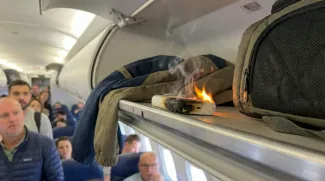
American Airlines Flight 2398 landed safely at Dallas Fort Worth International Airport on Friday, Aug. 21, after a passenger’s laptop battery caught fire during the flight from Hartsfield-Jackson Atlanta International Airport, according to the BBC.
Flight attendants contained the device, the pilot declared an emergency and emergency personnel met the Airbus A321 after it arrived. One passenger received medical attention at the airport and was released at the scene, the BBC reported.
Laptop fire contained before landing at DFW
The laptop reportedly began smoking and caught fire about 30 minutes before landing. Passenger Jessica Irgens provided that timeline to the BBC.
Flight attendants secured the burning laptop inside a thermal containment bag, which is designed to isolate an overheating or burning electronic device. That response allowed the crew to keep the situation contained as the flight continued toward Dallas rather than diverting, according to the BBC.
The aircraft touched down at DFW at about 6:55 p.m. local time and taxied to its gate under its own power. American Airlines said the flight landed safely after smoke was reported from a customer’s device during landing, and it credited the crew’s quick response and professionalism.
The pilot initially reported that four to five passengers may have been burned. Air traffic control audio cited by Simple Flying likewise indicated that about four to five passengers may have suffered burns from the laptop. Authorities later confirmed that only one passenger required medical attention, according to the BBC.
That difference matters. The initial radio call reflected what the cockpit understood during a fast-moving cabin emergency; the airline’s later account reflected the medical response after landing. What remained consistent was the central fact: the aircraft landed safely, and the device had been contained.
Why lithium-ion battery fires are taken seriously
Lithium-ion batteries are used in everyday travel gear, including laptops, phones and power banks. If one is damaged, overheated, overcharged or improperly packed, it can enter thermal runaway, according to background information reported by the BBC. That process can produce smoke, extreme heat or fire.
This is also why U.S. aviation rules generally require spare lithium batteries and power banks to travel in cabin baggage rather than checked luggage. A problem in the cabin can be spotted by a passenger or crew member, giving flight attendants an opportunity to respond. A battery buried in the cargo hold presents a very different challenge.
In this case, the fire occurred in the back of the cabin, according to the pilot’s report cited by the BBC and Simple Flying. Flight attendants worked to contain the laptop while the flight crew declared an emergency and continued the approach into Dallas.
The Federal Aviation Administration is investigating the battery fire and the crew’s response, the BBC reported. No finding from that investigation was included in the available reporting.
The lesson for travelers is refreshingly simple
This isn’t really a fares, routes or frequent flyer points story. It’s a reminder that the electronics we casually toss into a carry-on aren’t entirely passive pieces of luggage. Most of the time, a laptop is just a laptop. When a battery starts smoking, though, quick access and a trained cabin crew make all the difference.
Travelers should follow the cabin-baggage rules for spare batteries and power banks, even when those rules feel fussy. The logic is plainly visible here: the crew could reach the device, place it in a containment bag and manage the emergency before landing. From a passenger’s perspective, promptly alerting a flight attendant to smoke or unusual heat from a device is the sensible move. This is not the moment to troubleshoot it yourself at 30,000 feet.
The conflicting early reports about injuries also show why first details from an aviation emergency can change. Pilots relay the best information available while flying the aircraft and coordinating with controllers; medical personnel can make a clearer assessment once everyone is safely on the ground. In this incident, the alarming initial estimate ultimately narrowed to one passenger treated and released.
There’s nothing glamorous about a thermal containment bag, but on Flight 2398 it was a particularly useful piece of cabin equipment. The laptop fire was serious, the crew treated it that way, and the airplane reached its gate safely. Sometimes the best aviation news is that a bad situation stayed manageable.
More travel news
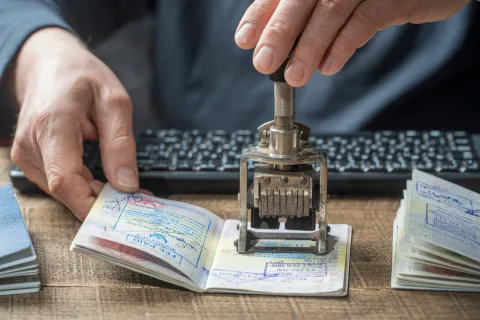
U.S. Customs and Border Protection to End Routine Passport Stamps
CBP announced routine passport stamping will end during primary inspection, with limited exceptions; foreign visitors can access admission and authorized-stay details through I-94 or CBP Link.
American Airlines may adjust capacity if fuel prices stay high
American Airlines says persistently high fuel prices may force further capacity changes, while United Airlines has cut capacity roughly 5% and Southwest Airlines has modified schedules.
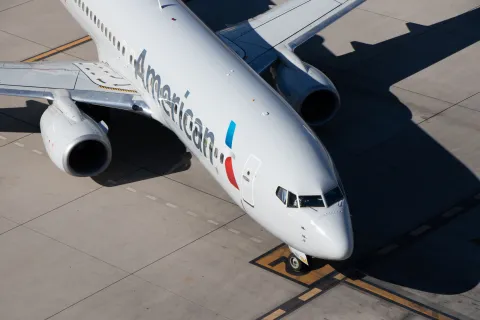
American Led Bag Mishandling Rates on Reportable Domestic Flights in Early 2026
For January through June 2026, the DOT data covers checked bags in airline custody on reportable domestic nonstop scheduled passenger flights; mishandled includes lost, delayed, damaged or pilfered bags.
United Flight Attendants Can Refuse ICE Questions
Washington, United States - United flight attendants were told they may remain silent when ICE asks about passengers or coworkers as airport arrests increase nationwide.
About the Author

Bob Vidra
Bob Vidra is News Editor at Jetsetter Guide, covering airlines, airports and the travel industry since 2023.