Stay current with our airline news coverage.
SEOUL, South Korea — Travelers flying through Seoul will soon have a new middle-ground option between cramped economy cabins and big-ticket business seats. Korean Air plans to begin retrofitting 11 Boeing 777-300ER aircraft in September, carving out an entirely new “Premium Class” that promises more personal space, wider cushions and upgraded service without the eye-watering fares of business class.
Why Korean Air Is Betting on Premium Economy
Korean Air’s forthcoming cabin layout includes 40 premium economy seats that replace the jets’ first-class section and reduce business class to 40 seats. According to details published by Korea Bizwire, the airline is targeting travelers who value elbow room but remain price-sensitive. Seat specifications back up the pitch: a 39- to 41-inch pitch and 19.5-inch width, compared with roughly 32 inches and 17-18 inches in standard economy. The airline intends to match many soft-product perks of business class—think upgraded blankets and meals—while keeping fares only 10 to 15 percent higher than baseline economy. On heavily trafficked city-pairs such as Incheon–Bangkok and Incheon–Singapore, that premium still prices at less than half of a business-class ticket. “Passengers increasingly want extra comfort without crossing the psychological fare barrier into business,” Professor Kim Gyu-wang of Hanseo University said in comments reported by Korea Bizwire — as Kim told the outlet.
Where and When Travelers Will See the New Seats
• Rollout: Retrofitting starts mid-September on 11 Boeing 777-300ERs.
• Routes: Medium- and short-haul services across Japan and Southeast Asia.
• Seat map changes: First-class cabins disappear; business scales back to 40 seats; premium economy gains 40 seats; economy remains the highest-density section.
• Hard product: 39-41 inches of pitch, 19.5-inch width, leg- and foot-rests.
• Soft product: Premium meals, amenity blankets, priority boarding, and increased baggage allowance.
How Korean Carriers Have Evolved the Cabin Hierarchy
Asiana Airlines was the first domestic operator to embrace the middle-seat segment, installing “Economy Smartium” on Airbus A350 aircraft back in 2017. Those wider seats quickly became popular on trans-Pacific and Europe services, setting a template for full-service carriers across the peninsula. With Korean Air and Asiana now deep into a government-approved merger process, flyers can expect the two premium-economy brands to merge into a single, standardized product in the coming years. Low-cost competitors have also experimented. Jeju Air introduced “Business Light” seats in 2017. Air Premia entered the market in 2021 with its own premium economy, while Jin Air and T’way Air have incorporated similar features on select frames. The common denominator: charging a modest upsell for more pitch while retaining the airline’s core low-fare identity.
Global Context: Premium Economy Becomes a Profit Engine
Internationally, carriers such as EVA Air, British Airways and Delta have offered premium economy for decades. The segment now sits at the sweet spot where incremental revenue aligns with tangible passenger benefit. Delta, for example, disclosed a 6 percent rise in premium-economy revenue in the first half of this year, even as standard economy fell 4 percent, and projects that the cabin will overtake traditional economy in revenue by 2027. Industry analysts say the strategy balances two key metrics: higher yield per square foot and better load factors. Airlines sell the same square footage for more money without cannibalizing business-class demand—especially on leisure-heavy or shorter routes where lie-flat seats matter less.
Tips for Travelers Considering Korean Air’s New Cabin
- Watch for booking code “W” or “R” classes—Korean Air has not yet announced the specific fare bucket, but many SkyTeam carriers use those letters for premium economy.
- Advance seat-selection fees may be waived, offering additional value over standard economy.
- Priority check-in and earlier boarding can shave minutes off ground time at busy Incheon International Airport.
- On SkyPass redemptions, expect an award surcharge that slots between economy and business; exact mileage tables remain pending.
- If you’re chasing loyalty status, premium economy usually earns a higher mileage accrual rate than standard coach.
What This Means for the Future of Flying From Seoul
Professor Kim argues the trend is reshaping how airlines structure cabins: “By expanding premium economy—even among low-cost carriers—airlines can lift revenue while offering a clearly differentiated product,” he said, as reported by Korea Bizwire. As first-class cabins shrink or disappear on many medium-haul jets, the emerging hierarchy looks set to follow a three-tier model: business for fully flexible corporate travelers, premium economy for comfort-seeking leisure and economy for pure price competition. For travelers eyeing upcoming holiday or business jaunts through Seoul, that means more ways to match comfort to budget. With Korean Air’s retrofit schedule kicking off in a few weeks, flyers on Japan and Southeast Asia routes will likely be among the first to test-drive the extra inches—plus the bragging rights of being early adopters of the airline’s new cabin.
Frequently Asked Questions
When can I book? Korean Air has indicated a mid-September debut, but seats may appear in the reservation system earlier.
Will lounge access be included? The carrier has not confirmed lounge privileges for premium-economy passengers; historically, such access is reserved for business-class flyers or elite-tier frequent-flyers. [Not specified in release]
Do these seats qualify for complimentary upgrades from economy? Upgrade policies have not yet been detailed. Travelers should monitor Korean Air’s website for SkyPass upgrade charts.
Is the product available on long-haul flights to North America or Europe? Initial deployments are limited to medium- and short-haul routes. A wider roll-out could follow based on customer response and retrofit progress.
How does this compare to Asiana’s Economy Smartium? Both products offer similar pitch, but Korean Air’s version eliminates first class to free cabin real estate, while Asiana’s fits within the A350’s existing layout. Consolidation plans remain under review as the two airlines merge.
Bottom Line for Jetsetters
Whether you’re a Seoul-based expatriate making frequent hops to Japan or a holidaymaker plotting a Southeast Asia adventure, Korean Air’s new premium economy cabin offers a comfortable middle ground. Expect a sharper focus on personal space, a price point hovering just above economy and a product that could reshape cabin hierarchies across Asia. — as Kim told Korea Bizwire.
Explore more North America travel →
More travel news
Korean Air Premium Cabins Now Sell Out Before Economy
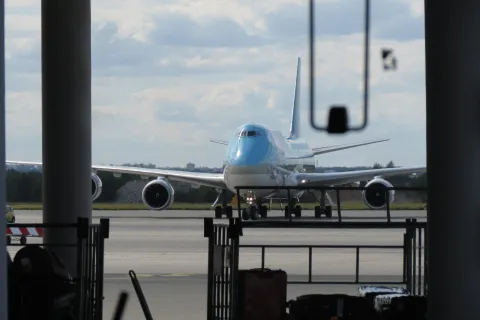
The post-pandemic booking reversal has prompted investment in meals, service and crew training; flexible meal timing applies on long-haul Prestige Suites 2.0 services.
Korean Air Adds Free Starlink Wi-Fi to Four Aircraft
The Sept. 15 launch covers three Airbus A350-900s and one Boeing 777-300ER; passengers in every cabin on those equipped aircraft get free access.
United Adds Okinawa and Osaka Flights in Japan Push
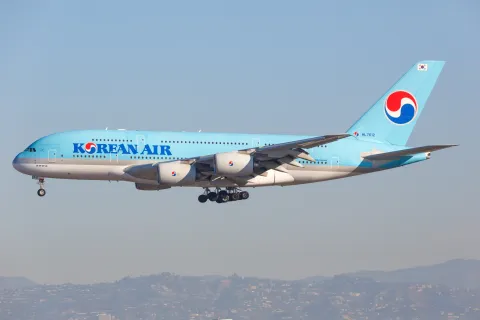
San Francisco, United States - United Airlines is expanding beyond Tokyo with new nonstop service to Okinawa and a daily Los Angeles-Osaka route beginning in March 2027.

Air India Jet Plunges 300 Feet in Turbulence Storm
Delhi, India - Flight AI2379 from Phuket encountered violent turbulence 90 minutes into its journey, throwing unsecured passengers into the air and damaging cabin fittings across the aircraft.

About the Author

Andy Wang
Andy Wang is Asia Editor at Jetsetter Guide, covering Southeast Asian travel and food from his base in Singapore. A first-generation American, he brings a dual perspective to the region.