Stay current with our airline news coverage.
REYKJANESBAER, Iceland - Iceland's west coast is bracing for an unprecedented surge of eclipse chasers ahead of the Aug. 12, 2026 total solar eclipse, but the country's infrastructure is already buckling under the weight. Hotels that were operating near capacity during normal summer months are now essentially locked out for late bookers, and limited flight availability means the country can't simply scale up to meet demand.
The path of totality crosses western Iceland, where observers can expect almost two minutes of totality, according to the Associated Press. This is the first total solar eclipse visible from Iceland since 1954, and the next won't arrive until 2196, according to Skift. That once-in-several-lifetimes rarity has driven global interest, but Iceland's small-scale tourism infrastructure was never designed to absorb a spike like this.
How Many Are Coming, and Where They'll Go
"Roughly 75,000 foreign tourists are expected in Iceland for the eclipse, with another 53,000 making a stop from cruise ships," said Dagbjartur Brynjarsson, Icelandic Tourist Board safety specialist, according to Skift. Those numbers are roughly in line with last year's levels, according to Skift, but the difference is geographic concentration. Normal summer traffic spreads across the country; eclipse travelers are converging on a narrow corridor along the west coast, placing extreme pressure on specific municipalities.
Reykjanesbaer, a west-coast municipality positioned squarely in the path of totality, is the focal point. In Iceland's western Reykjanesbaer municipality, anticipation is high, with sun gazers expected to glimpse almost two minutes of totality, the Associated Press reported. That duration is long enough to make the trip worthwhile for serious eclipse chasers, but short enough that every cloud or weather shift matters.
The problem is accommodation. Hotels in Iceland were already running near capacity during summer months before the eclipse, Skift reported. That baseline constraint, combined with the geographic specificity of the eclipse path, means there is no slack capacity to absorb late demand. Flight availability is equally tight; Skift noted that "with limited flight capacity and hotels already running near capacity in the summer months, there's only so much room for a tourism boom."
Infrastructure Strain in a Narrow Viewing Corridor
Eclipse tourism is uniquely challenging because it concentrates demand in places that may not have the infrastructure to handle it. Iceland's west coast has limited road networks, small towns, and a relatively narrow range of lodging options compared to Reykjavik or other established tourist zones. Visitors who can't secure hotels are likely to turn to campers, rental cars, and improvised accommodations, all of which add pressure to local services, parking, and waste management.
Tourism leaders are framing the eclipse as an opportunity to promote year-round tourism rather than seasonal peaks, according to Skift. Iceland has been pivoting away from maximizing inbound travel numbers toward promoting responsible, high-value tourism, a shift driven by years of over-tourism complaints and infrastructure stress in popular areas like the Golden Circle and South Coast.
The eclipse, in that context, is both a boon and a test. It's a high-value event that draws educated, engaged travelers willing to plan and spend. But it also risks replicating the same crowding and strain that led to the policy shift in the first place.
Should You Rethink That Reservation?
If you don't already have confirmed lodging in western Iceland, your options are limited. The window for securing hotel rooms in the path of totality has effectively closed. Travelers still hoping to witness the eclipse should focus on flexibility: consider staying in Reykjavik and driving west on eclipse day, or look into camper rentals if you're comfortable with that level of self-sufficiency. Weather is the other variable; Iceland's summer climate is unpredictable, and cloud cover could obscure the event entirely.
The 53,000 cruise passengers expected to make a stop are in a different position. Most will be viewing from ships or on shore excursions coordinated by their lines, insulating them from the hotel crunch but adding to day-use pressure on coastal viewing sites.
This isn't a destination where you can improvise. Iceland's infrastructure doesn't absorb last-minute surges well, and the eclipse-driven demand is compressing months of normal travel into a single 48-hour window. If you're locked in with confirmed accommodations and transport, you're set. If not, your best bet is managing expectations or watching the next one in 170 years.
More travel news
Spain Warns Eclipse Chasers as Wildfire Danger Soars
MADRID, Spain - Authorities urge travelers heading to see Wednesday's total solar eclipse to avoid sparking wildfires as nearly half a million visitors converge on dry, fire-prone regions already scorched by a record season.
Iceland Tackles Highland Road Dangers With Safety Push
REYKJAVIK, Iceland - Iceland introduces new tourism safety measures targeting Highland F-Road preparation gaps among international visitors, tightening standards as research reveals rising misuse and rescue risk.

Icelandair Retires Iconic 757 Fleet Years Early
Keflavik, Iceland - The Icelandic flag carrier is accelerating the retirement of its Boeing 757 fleet to this winter, ending plans to keep the iconic type in service until summer 2027.

Melting Wonders Draw Thrill Seekers to Doomed Glaciers
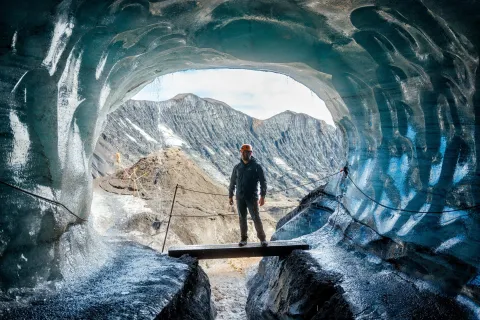
Vatnajökull National Park, Iceland — The disappearance of Iceland's famed Crystal Ice Cave reveals the precarious future of glacier tourism as ice formations melt away beneath visitors' feet.
About the Author

Jeff Colhoun
Jeff Colhoun is a photographer and filmmaker whose work has appeared in The Wall Street Journal, the Los Angeles Times, Matador Network and Barron’s.