Stay current with our airline news coverage.
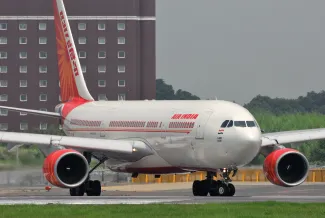
NEW DELHI, India - Air India is moving from random drug tests to mandatory screening for every pilot after a Phuket to Delhi flight abruptly lost about 300 feet during cruise and injured at least 24 people.
The expanded policy, reported Aug. 13, follows the Aug. 4 incident involving an Air India Airbus A320neo flying over Odisha in eastern India. The aircraft was carrying 137 passengers and eight crew members and landed safely in Delhi, according to Reuters.
A source familiar with the matter told Reuters that the flight’s captain later tested positive for cannabis use in a confirmatory drug test. Authorities are investigating both the altitude loss and the captain’s conduct. Cabin crew reportedly alleged that the captain was not in complete control of himself during the flight.
That’s the sort of detail that gets everyone’s attention quickly. Turbulence can be unsettling enough; questions about whether a pilot may have used a prohibited substance bring an entirely different level of scrutiny.
Every Air India Pilot Will Face Substance Screening
Under the new policy, every pilot at Air India and its Air India Express subsidiary must undergo screening for substances and medications prohibited by aviation regulations, Reuters reported.
The change goes beyond India’s existing requirement that airlines randomly test at least 10% of their flight crew for psychoactive substances each year. Instead of drawing from a limited annual sample, Air India intends to screen its full pilot workforce.
Testing may be conducted during training at Air India’s academy in Gurugram, at pilot briefing centers, in company offices after flights or at locations determined by a pilot’s home base. That gives the airline several opportunities to carry out the program without relying on a single centralized testing site.
There are still some rather important blanks. Air India’s internal memo did not specify how frequently pilots would be tested, when the program would be fully implemented or what consequences would follow a positive result, according to Reuters.
Those details matter. A universal testing order sounds sweeping, but its real strength will depend on how consistently screening occurs and how the airline handles confirmatory testing, prohibited medications and potential violations.
What Happened on the Phuket to Delhi Flight
The Airbus A320neo lost about 300 feet of altitude while cruising over Odisha. At least 24 passengers and crew members were injured, although the jet continued to Delhi and landed safely, Reuters reported.
The event has been treated as a serious incident and is under investigation by India’s Aircraft Accident Investigation Bureau. The Associated Press also reported that the captain was being investigated following the flight that injured 24 people.
Air India characterized the episode as a brief turbulence-related event that caused a momentary change in altitude. Investigators, however, will have to determine exactly what happened aboard the aircraft and whether the captain’s condition played any role. The available reporting does not establish that connection, and the investigation remains active.
That distinction is worth keeping in view. A positive drug test is serious, particularly for a pilot in command, but it does not by itself explain an aircraft’s sudden altitude change. The technical sequence, crew actions and conditions in flight still need to be examined.
Regulatory Pressure Is Building Around Air India
The testing decision arrives while Air India is already facing elevated scrutiny over safety. Reuters noted that the airline came under increased regulatory attention after a Boeing 787 Dreamliner crash in 2025 killed 260 people.
Air India is majority-owned by Tata Group, while Singapore Airlines holds a stake of about 25%, according to Reuters. That ownership structure places the carrier’s safety response under an international spotlight, not merely a domestic one.
For the airline, ordering tests for every pilot is a visible accountability measure. It also raises an obvious question: Could this approach influence screening rules elsewhere in Indian aviation? No broader regulatory change has been announced in the reporting provided, so for now this remains an Air India and Air India Express policy rather than an industrywide mandate.
How Travelers Should Read the New Policy
Passengers don’t need to make an immediate booking change based solely on this announcement. Reuters reported no accompanying changes to routes, fares or loyalty programs, and the Phuket to Delhi aircraft landed safely despite the injuries aboard.
Still, traveler confidence isn’t built by a memo alone. Air India will need to show that the screening program is more than a one-time response to an alarming headline. Clear implementation dates, testing frequency and enforcement standards would make the policy easier for passengers and employees to evaluate.
From an airline safety perspective, testing every pilot is a stronger posture than screening a random 10% each year. It reduces the chance that a pilot simply avoids selection. But universal coverage and frequent testing aren’t necessarily the same thing; until Air India explains the schedule, it’s difficult to judge how rigorous the program will be in day-to-day operation.
Travelers considering Air India or Air India Express should watch the investigation rather than jump to conclusions about its outcome. The key findings will be whether investigators link crew conduct to the altitude loss and how Air India turns its new screening promise into a durable procedure.
For now, the carrier has chosen the broadest possible group to test: everyone in the pilot ranks. That’s a consequential first step. The harder part, as always in aviation safety, is proving that the system works long after the immediate spotlight moves on.
More travel news
ETIAS Stays Offline as EU Holds Back Launch Date
BRUSSELS, Belgium - The EU has left visa-exempt travelers in limbo after confirming ETIAS is not operating and applications remain closed without a launch date.
Hurricane Watch Threatens Big Island Saturday Flights
HILO, Hawaii - Tropical Storm Lala could approach the Big Island near hurricane strength Saturday, raising flood, surf and flight disruption concerns.

US Visa Bonds for 50 Nations Alarm Tourism Industry
WASHINGTON, United States - A permanent U.S. visa bond program covering 50 countries has alarmed tourism leaders after visa issuance fell 83% during its pilot.

Delta Unveils First Austin Paris Nonstop for 2027
AUSTIN, Texas - Delta's first long haul route from Austin will add daily seasonal flights to Paris, new European connections and a 281-seat Airbus A330-900neo.
About the Author

Bob Vidra
Bob Vidra, based in scenic Tahoe, is an esteemed tech editor known for his deep understanding of the dynamic intersection of technology, travel, and the outdoors.