
Stay current with our airline news coverage.
The Federal Aviation Administration is warning airlines to exercise extreme caution when flying into Saudi Arabia or through its airspace, citing ongoing military activity and interference with navigation systems. The warning follows deadly weekend strikes at Riyadh’s international airport, according to a NewsNation report published by Yahoo on Oct. 12.
The FAA notice lasts until Dec. 10 and identifies potential threats at all altitudes, including during arrival, departure and overflight, Yahoo reported. Its scope also includes operators of U.S.-registered airplanes. This is not only a concern for passengers landing in the kingdom; the warning explicitly reaches flights passing overhead.
Yahoo reported that Riyadh’s airport remained closed to flights through at least 5 p.m. EDT Monday. That is a reported minimum closure period, not confirmation that flights will resume at that hour.
FAA warning extends beyond Riyadh airport
The FAA’s warning addresses two hazards: military activity and navigation-system interference, according to Yahoo. The notice’s inclusion of overflight, arrival and departure is an important distinction. Its concern does not end when an aircraft clears the airport or reaches cruising altitude.
The action described in Yahoo’s report is an extreme-caution warning, not a blanket FAA prohibition on Saudi flights. That distinction matters, but it should not be read as reassurance. The agency is identifying potential danger across Saudi airspace while Riyadh is also dealing with an airport closure.
An airport’s operating status and an airspace safety warning answer different questions. A reopening would address whether flights can use the airport; it would not, by itself, resolve the military and navigation hazards cited in the FAA notice. For travelers assessing a Saudi itinerary, those are separate considerations.
Deadly strikes follow earlier airport attacks
Yahoo reported strikes at Riyadh’s international airport on Saturday and Sunday. Its account put the Saturday death toll at 13, including one American, with more than 300 people wounded.
The weekend violence followed attacks earlier in the week. According to Reuters, Saudi Arabia’s civil aviation authority said three Saudi nationals were killed and several people injured in two attacks on King Khalid International Airport on Thursday. Reuters reported that Yemen’s Iran-aligned Houthis claimed they had struck the airport with two cruise missiles and renewed threats against airlines flying to Saudi Arabia.
BBC News Pidgin also reported that the Houthis warned aviation companies and passengers against using Saudi airports and airspace. Its account described smoke rising from the airport terminal and extensive damage inside, along with hospitals under pressure from casualties.
The sequence matters: the FAA warning followed a weekend escalation at an airport that had already been attacked, rather than an isolated disruption.
European warning widened before the weekend
The European Union Aviation Safety Agency had already expanded its response before the latest strikes. Reuters reported on Oct. 9 that EASA widened the area of Saudi airspace where it recommended airlines not operate, adding an area in northwestern Saudi Arabia.
That update revised a conflict-zone bulletin first issued Sept. 30. According to Reuters, EASA said the attacks demonstrated the Houthis’ ability and intent to hit targets deeper inside Saudi territory, including Riyadh.
The European assessment also explained why the danger extends beyond a missile’s intended target. Reuters reported that EASA identified risks from missile and drone activity, interceptions and falling debris. The activation of air-defense systems also increased the risk of civilian aircraft being misidentified.
OPSGROUP, an aviation flight-risk information organization, went further in guidance to its members on Friday. According to Reuters, it recommended avoiding operations in Saudi Arabia entirely, including using Saudi airports as en route alternates.
These are distinct actions: an FAA caution notice, an expanded EASA recommendation and separate guidance from OPSGROUP. They should not be collapsed into a single claim that all Saudi airspace has been closed.
Airline cancellations were already underway
Reuters reported that Lufthansa Group and three Indian airlines said they would suspend upcoming Riyadh flights following Thursday’s attacks. Etihad Airways canceled six flights between Abu Dhabi and Riyadh on Friday and two planned for Saturday, citing operational disruption at Riyadh airport.
Flydubai’s response extended beyond the capital. Reuters reported cancellations to Riyadh and Yanbu through Oct. 10, and to Abha through Oct. 11.
Those cancellation periods document the airlines’ response before the FAA report published Monday. They are not evidence that those services resumed after the listed dates. Likewise, the earlier airline announcements should not be treated as a current, comprehensive list of affected flights.
Delta’s planned Riyadh launch faces a safety decision
The disruption comes just ahead of Delta Air Lines’ planned Oct. 23 launch of direct service from Atlanta to Riyadh, according to Yahoo. The report said Delta CEO Ed Bastian told CNBC the previous week that safety would determine whether the airline proceeds.
That leaves a clear distinction for anyone considering the new route: Oct. 23 is the reported launch plan, not confirmation that the service will operate despite the attacks. Yahoo also reported that other major U.S. airlines serve Riyadh through codeshare partners, so the exposure is not limited to Delta’s proposed direct flight.
The FAA warning reaches beyond passenger schedules as well. Yahoo reported that FedEx began its first dedicated Saudi Arabia flight in September 2025, with a Boeing 777 freighter operating six times per week and connecting the Americas and Europe with Riyadh.
For travelers, the central issue is not simply when the airport reopens. It is whether the airline operating their flight will proceed amid the wider airspace risks. The FAA’s warning covers the approach, the departure and the airspace overhead; Riyadh airport’s operating status is only one part of that assessment.
More travel news
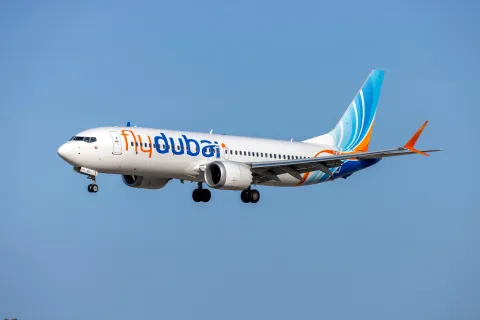
Flydubai passengers reach Tel Aviv after cockpit attack
Passengers reached Tel Aviv after Israeli officials said passengers and crew stopped a co-pilot’s attempt to crash Flight FZ1073.
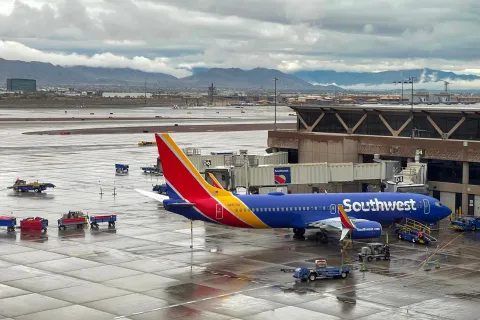
Southwest, United seek older software on new 737 MAX jets
Southwest and United want earlier software on new 737 MAX deliveries as the FAA reviews a glitch that can block automated guidance after a missed approach if pilots alter the flight path.
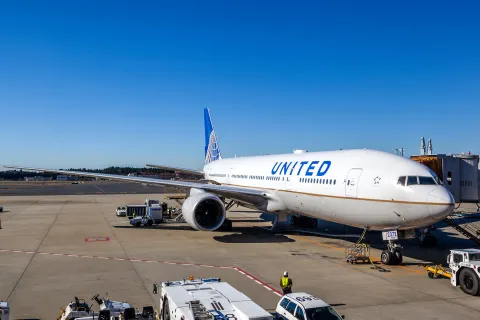
United investigates in-flight sexual misconduct allegation
The passenger said she reported the alleged misconduct before a crew on the Republic Airways-operated flight required her to sit beside the man again for landing.
U.S. Keeps Saudi Arabia at Level 3, Adds Government Employee Curbs
U.S. government employees cannot travel within 20 miles of the Yemen border or make nonessential trips to Qatif; Americans are advised not to visit Level 4 border areas.

About the Author

Jeff Colhoun
Jeff Colhoun is a photographer and filmmaker whose work has appeared in The Wall Street Journal, the Los Angeles Times, Matador Network and Barron’s.