Stay current with our airline news coverage.
ATLANTA, Georgia - Ed Bastian didn't waste his victory lap. Delta's CEO could have spent the airline's July 10, 2026 earnings call simply celebrating a very strong quarter. Instead, he delivered what amounts to a eulogy for the low-cost airline model.
Speaking to investors after Delta reported adjusted earnings of $1.56 per share on revenue of $17.7 billion, Bastian made it clear he believes the days of rock-bottom airfares are over. According to Reuters, he told analysts that low-fare carriers need to raise fares by about 5% just to break even at current fuel prices. That's not a competitive disadvantage; that's an existential threat.
The backdrop makes his comments all the more pointed. Delta's fuel expense more than doubled to $4.4 billion in the second quarter, up nearly $2 billion from the year-ago period, according to Reuters. Yet the airline still posted an operating margin of 8.8% and grew revenue 14% year over year on just about 1% capacity growth. Translation: Delta didn't fly much more; it simply charged more and people paid.
Higher Fuel Costs, Higher Fares, Fewer Seats
Bastian's argument rests on a simple equation. "Higher fuel costs are a powerful catalyst for change," he said on the call, according to One Mile at a Time. When jet fuel more than doubles, airlines that built their entire business on razor-thin margins and $39 base fares suddenly find themselves underwater.
Delta, meanwhile, has spent years building a very different machine. Premium revenue grew about 17% in the quarter while economy revenue rose about 8%, according to One Mile at a Time. The airline is banking on travelers willing to pay more for extra legroom, priority boarding, and lie-flat seats, and so far that bet is paying off handsomely.
The company reaffirmed its full-year 2026 adjusted earnings guidance of $6.50 to $7.50 per share and projected third-quarter adjusted EPS of $2.00 to $2.50, according to Skift. Delta management said "with continued revenue momentum, measured capacity, and a more stable fuel environment, we expect to return to earnings growth on double-digit operating margins in the second half of this year," Skift reported.
That phrase, "measured capacity," is doing a lot of work. Delta isn't flooding the market with cheap seats. It's flying less and charging more, and apparently that strategy is working just fine.
What Happens to Spirit, Frontier, and the Rest
Bastian's warning lands squarely on carriers like Spirit, Frontier, and Allegiant. These airlines built empires on the promise of $50 coast-to-coast flights, monetizing every bag, every seat selection, every can of soda. When fuel was cheap and labor costs manageable, the math worked. Fly full planes at razor-thin margins, multiply by volume, collect your profit.
But when fuel costs spike and wages rise, volume doesn't save you if each ticket loses money. Reuters noted that Delta recovered 60% of its quarterly fuel-cost increase and warned that fuel-price volatility remains a major risk. If Delta, with its premium cabins and corporate contracts, is feeling the pinch, imagine the pressure on an airline selling $79 fares in a market where fuel just doubled.
Bastian's 5% breakeven figure is particularly brutal. For an ultra-low-cost carrier, raising base fares by 5% might sound small. But when your entire brand is built on being the cheapest option, and you're now asking customers to pay nearly as much as a legacy carrier, what's your value proposition? Spirit at $84 isn't nearly as compelling as Spirit at $79, especially when Delta is running sales at $129 with two free checked bags.
Are These Fare Levels Permanent?
Here's the gamble Bastian is making: he's betting that travelers have already adjusted to higher fares and won't revolt when prices stay elevated. According to Reuters, despite several recent rounds of price hikes, airfares remain 10 to 15 percentage points below overall inflation since the COVID pandemic.
That's a remarkable claim. It suggests there's still room for airlines to push fares higher before hitting consumer resistance. And if Bastian is right, then the industry is entering a new equilibrium where $400 domestic round-trips are normal and budget carriers either adapt or disappear.
But there's a catch. Reuters pointed out that fuel-price volatility still clouds the outlook. If oil prices drop sharply, Delta's pricing power evaporates. Suddenly those "sustainable" fares look opportunistic, and travelers start hunting for deals again. Low-cost carriers, battered but still breathing, could swoop in with aggressive pricing and rebuild market share.
Delta's capacity discipline only works if everyone plays along. The moment one major carrier floods the market with cheap seats to grab share, the whole house of cards wobbles. And history suggests airlines are terrible at maintaining discipline when revenue growth slows.
The Booking Calculus Just Changed
If you're planning travel for the rest of 2026 or into 2027, Bastian's comments should inform your strategy. The days of waiting until the last minute for a budget carrier fire sale may be over, at least for now. If low-cost airlines are genuinely struggling to break even, they're not going to be dumping $49 fares to fill seats. They'll either raise prices or cut routes, and neither outcome benefits bargain hunters.
Meanwhile, Delta and its legacy peers are leaning into premium products. If you've been on the fence about splurging for Comfort Plus or Premium Select, the gap between economy and premium pricing might actually narrow as base fares rise. A $150 difference between main cabin and extra legroom feels steep; a $75 difference feels reasonable. Watch for that dynamic to play out over the next year.
Also, keep an eye on capacity. Delta grew by just 1% year over year, and if other carriers follow suit, seat availability will tighten. That means fewer flights, fuller planes, and less flexibility for travelers who need to change plans. Book earlier, build in buffer time, and don't assume you'll have five flight options on your route. You might have two.
Bastian's warning to low-cost carriers is really a message to travelers: the cheap flight era is on life support. Whether that's a temporary condition or a permanent shift depends on fuel prices, economic conditions, and whether airlines can resist their historic urge to undercut each other. For now, the math favors higher fares and fuller premium cabins. Plan accordingly.
More travel news
Delta Flight Faces Rogue Wi-Fi Scare After DEF CON
LAS VEGAS, United States - Delta Flight 591 lost passenger Wi-Fi for about 30 minutes after an unauthorized network appeared aboard the post-DEF CON flight to Atlanta.
Atlanta Airport Halts Flights as Storms Trigger Floods
ATLANTA - Severe thunderstorms halted departures at Hartsfield-Jackson and prompted flash flood warnings for metro counties, creating a double whammy for travelers trying to navigate one of the nation's busiest hubs.
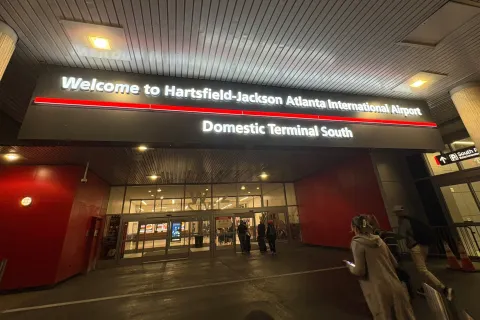
Delta CEO predicts higher airfares are here to stay
ATLANTA, Ga. - Delta CEO Ed Bastian tells investors that U.S. airlines will hold the line on elevated ticket prices despite falling jet fuel costs, signaling a structural shift in industry pricing.

Massive Flight Chaos Hits Five States on July 7
NATIONWIDE, United States - Storm systems sweeping through the South and Eastern Seaboard triggered 667 cancellations and more than 4,300 delays, disrupting Delta, Republic, PSA, and Endeavor Air operations across five states.
About the Author

Bob Vidra
Bob Vidra, based in scenic Tahoe, is an esteemed tech editor known for his deep understanding of the dynamic intersection of technology, travel, and the outdoors.