Stay current with our airline news coverage.
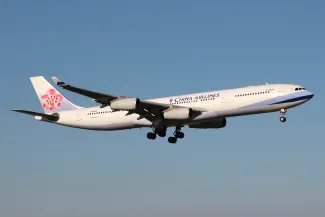
China Airlines is moving ahead with a sweeping fleet-renewal plan that will introduce next-generation Airbus A350-1000s and Boeing 777-9 passenger jets while phasing out its veteran Boeing 747 freighters, a shift that promises quieter cabins, longer nonstop routes and a smaller carbon footprint for anyone booking a seat on the Taiwanese flag carrier.
Why the China Airlines fleet shake-up matters to travelers
China Airlines’ board has approved the purchase of as many as 18 new aircraft—five Airbus A350-1000s, five Boeing 777-9s, four 777-8F freighters and two 777F freighters, with an option for two more 777Fs—at a ceiling price tag of $7.85 billion. An additional $229 million is earmarked for four spare engines: Rolls-Royce Trent XWB models for the A350s and GE Aerospace GE9X units for the 777X family. Although the headline numbers seem aimed at investors, the move has direct implications for globetrotters:
- Longer legs without layovers: Both the A350-1000 and 777-9 are designed for ultra-long-haul missions. Destinations on China Airlines’ wish list—think New York, Vancouver, Milan or even potential new routes to the eastern United States—could become viable nonstop options, saving travelers several hours in transit.
- Cabin quiet and pressurization: The A350-1000 and 777-9 feature lower cabin-altitude settings and advanced airflow systems, making long flights noticeably less fatiguing.
- Fresh interiors: China Airlines has not released seat-count figures, but both aircraft families support the latest lie-flat business-class suites, wider economy seats and enhanced mood lighting. The airline’s recent A321neo cabins debuted 4K monitors and Bluetooth audio pairing; passengers can reasonably expect similar upgrades on the wide-bodies.
- Eco credentials: Fuel burn per seat will drop by roughly 25 percent compared with the models being replaced, trimming the carrier’s carbon emissions and helping eco-minded travelers lower their footprint.
Timeline: when will the new jets enter service?
China Airlines has not yet published delivery slots, but industry lead times mean the first A350-1000s could start arriving in the second half of the decade, followed by the 777-9s as Boeing clears its certification backlog. Travelers booking the busy trans-Pacific season in 2027-28 are the most likely early beneficiaries.
Farewatch: will ticket prices change?
New, more efficient aircraft typically reduce unit costs, and airlines often channel part of that saving into competitive fares on marquee routes. Expect introductory promotions on Taipei–Los Angeles, Taipei–San Francisco and any newly launched cities as the airline showcases its next-gen cabins. Loyalty program members should watch for double-mileage offers tied to the inaugural flights.
Goodbye, Queen of the Skies: four 747 freighters leave the flock
While passenger comfort gets most of the attention, the other half of China Airlines’ plan involves divesting four Boeing 747-400F cargo aircraft, a type that once formed the backbone of Asian air freight. The first two freighters are earmarked for Luxembourg-based Cargolux in a transaction valued at about $260 million. Negotiations for the remaining pair continue. Last year the Taiwanese carrier sold five 747-400Fs to Air Atlanta Icelandic and Asiana Airlines, signaling a gradual retreat from four-engine freighters in favor of the twin-engine Boeing 777F and upcoming 777-8F. For leisure travelers, cargo fleet changes might seem remote, but freight revenue subsidizes passenger operations. More fuel-efficient freighters can improve the airline’s balance sheet, freeing capital for cabin upgrades or new route experiments.
How the order stacks up against regional rivals
Cathay Pacific and Singapore Airlines have already bet heavily on the A350 and 777X families. By aligning with the same aircraft types, China Airlines ensures cross-fleet commonality, easier pilot recruitment and competitive passenger amenities. Once all Asian flag carriers are flying comparable jets, the differentiators shift to soft-product details—think meal styling, indigenous design elements and Wi-Fi pricing—areas China Airlines has been quietly refining on its A321neo fleet.
Tips for Travelers: navigating China Airlines during the transition
- Check aircraft type before you book. On the airline’s website or apps such as ExpertFlyer, look for “A35K” (A350-1000) or “77W/779” (777-9) in the equipment code. These will offer the newest seats and inflight entertainment.
- Monitor cargo surcharges. Lower fuel burn on new freighters could soften fuel surcharges hidden in your ticket taxes, especially if you’re shipping sports gear or musical instruments.
- Leverage loyalty promotions. Dynasty Flyer Program often marks fleet milestones with bonus-mile offers and limited-edition amenity kits. Sign up for email alerts as soon as delivery dates firm up.
- Expect schedule tweaks. Aircraft induction and 747 retirements may cause seasonal flight-number changes. Double-check connections if you’re booking more than six months ahead.
FAQ: China Airlines fleet modernization
How many new planes has China Airlines approved?
Up to 18: five Airbus A350-1000 passenger jets, five Boeing 777-9 passenger jets, four Boeing 777-8F freighters and two Boeing 777F freighters, with options for two additional 777Fs.
What is the investment figure?
No more than $7.85 billion for the aircraft plus $229 million for four spare engines.
Which aircraft are leaving the fleet?
Four Boeing 747-400F cargo aircraft; the first two go to Cargolux for about $260 million, while buyers for the remaining two are still being finalized.
Will the airline retire its passenger 747-400s?
China Airlines ended 747 passenger service in 2021, so the current exits concern only freighters.
When will travelers notice the change?
Deliveries of A350-1000s and 777-9s are expected later this decade. Cabin upgrades and route expansions will roll out gradually from the first delivery.
The bottom line for JetsetterGuide readers
China Airlines’ decision to pour billions into state-of-the-art aircraft underscores its ambition to be a heavyweight on long-haul corridors connecting North America, Europe and Southeast Asia through Taipei. When the A350-1000s and 777-9s debut, expect quieter rides, mood-lit cabins and the possibility of new city pairs that skip traditional hubs. Budget watchers should keep an eye on inaugural-flight deals, and mileage collectors can start plotting sweet-spot redemptions once seat maps become public. For now, if your journey still lists the classic 777-300ER or A350-900, rest assured—the airline already fields respectable cabins. But the next wave of twins promises to nudge the experience closer to world-leading standards and might just make that 14-hour haul feel (almost) short. — as company officials detailed during board filings surfaced this week.
More travel news
Taiwan Drafts China Travel Guidance Amid Possible Device Checks
Taiwan’s guidance is not final, and random device inspections have not begun; an adviser urged caution for civil servants, religious workers and professionals in semiconductors, quantum science, advanced materials and defense.

China Eastern A350 Crashes Into Jet Bridge Multiple Times
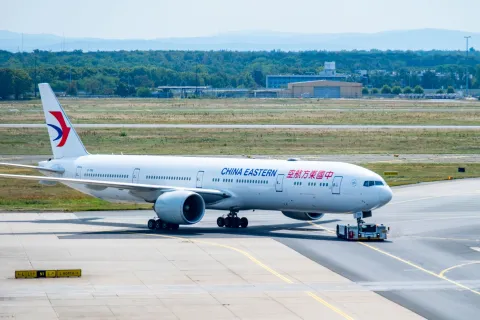
Shanghai, China - A China Eastern A350 rammed a jet bridge not once but twice at Shanghai Hongqiao on May 2, leaving passengers shaken and investigators puzzled.
EVA Air Captain Suspended After Cockpit Assault
LOS ANGELES — A Taiwan-based carrier opened an investigation after its Boeing 777 captain allegedly assaulted a Malaysian first officer who warned about excessive taxiing speed.

Japan Airlines CFO Reports Minimal China Tension Impact
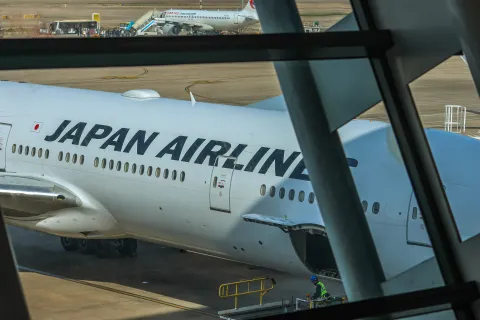
TOKYO, Japan — JAL's chief financial officer reports minimal business impact as Chinese airlines slash 40% of December flights following diplomatic crisis.
About the Author

Bob Vidra
Bob Vidra is News Editor at Jetsetter Guide, covering airlines, airports and the travel industry since 2023.