Stay current with our airline news coverage.
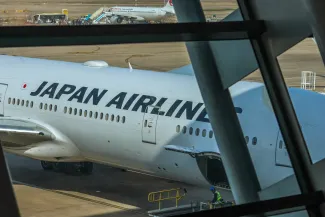
Here's something you don't hear every day: an airline saying it's doing just fine while a massive diplomatic crisis unfolds right in its backyard. On December 11, 2025, Japan Airlines' Chief Financial Officer Yuji Saito told Nikkei that the carrier's aviation business remains strong despite declining revenue from China routes, even as tensions between the two nations have triggered one of the biggest flight cancellation waves in recent memory. It's a surprisingly calm assessment given what's actually happening in the skies between China and Japan right now.
The Scope of What's Being Cut
Let's put some numbers to this. By December 1, China Central Television reported that more than 1,900 flights from mainland China to Japan for December had been cancelled; that's 40% of the total flights scheduled, according to multiple sources. We're not talking about a minor schedule adjustment here. Chinese carriers had originally filed 1.85 million two-way seats and 9,813 flights for December 2025 on routes to and from Japan as of November 3. Updated filings published on December 1 showed capacity falling to 1.42 million seats and 7,432 flights, representing cuts of 23.2% and 24.3%, respectively, according to Aviation Week Network. China Eastern Airlines, the largest operator in the market, trimmed its December capacity by 13%, while Air China cut nearly 10%. China Southern reduced capacity by 24%, Spring Airlines by 36.3%, Juneyao Airlines by 41.1%, and Shenzhen Airlines by almost half, according to Aviation Week's analysis of OAG Schedules Analyser data. At least 12 routes operated by Chinese airlines have been reportedly axed, including those to popular destinations like Sapporo Chitose, Osaka Kansai, Niigata, Kobe, Nagoya Chubu, and Fukuoka.
What Started All This
Relations between China and Japan entered crisis mode in November 2025, after Japanese Prime Minister Sanae Takaichi made comments in parliament that Beijing found highly provocative. On November 7, Takaichi responded to questions by saying that "warships with the use of military force" against Taiwan could lead to a "survival-threatening situation" for Japan, according to the Center for Strategic and International Studies. Beijing viewed her comments as suggesting that Japan Self-Defense Forces would be legally allowed to engage in collective self-defense activities in the event of a conflict over Taiwan. That interpretation didn't sit well. On November 14, China's Ministry of Foreign Affairs and Ministry of Culture and Tourism advised Chinese citizens to avoid traveling to Japan; China is the largest source of tourists to Japan. The Chinese government has since instructed the country's airlines to reduce flights to Japan through March 2026, according to people familiar with the matter cited by Bloomberg, signaling Beijing is braced for a protracted spat.
The Human Side of the Numbers
Behind those flight cancellation statistics are real travelers with disrupted plans. Nearly 491,000 tickets from China to Japan were cancelled in just a few days, representing about 32% of total bookings on those services by November 17. Some routes saw particularly dramatic impacts; as many as 65% of flights between Tianjin and Kansai International Airport were cancelled, while the cancellation rate for services between Nanjing and Kansai reached nearly 60%. Chinese airlines did offer some relief. Air China (including Air Macau), China Southern Airlines, China Eastern Airlines, Hainan Airlines, Sichuan Airlines, and XiamenAir announced that tickets for flights to Japan with travel dates before December 31 could be refunded or changed free of charge.
Why JAL's Confidence Matters
So how is Japan Airlines maintaining that everything's fine? The key might be in understanding the difference between Chinese carriers cutting their service to Japan and Japanese carriers maintaining their operations to China. While Chinese airlines are dramatically reducing capacity, Japan's two major carriers have said they're not reducing service to mainland China, though both JAL and All Nippon Airways stated they will be "closely monitoring" the situation. Japan Airlines and ANA haven't seen any significant decline in demand on mainland China operations, at least not in the immediate days following Beijing's travel advisory. That's a notable contrast to the situation facing Chinese carriers.
The Bigger Economic Picture
The stakes here extend well beyond airline balance sheets. According to the Japan National Tourism Organization, 8.2 million mainland Chinese visitors arrived from January to October 2025, representing nearly one-quarter of all international arrivals. China was Japan's largest source of inbound tourists in the first nine months of 2025, with about 7.49 million Chinese travelers visiting the country over that period. Economic analyses have estimated losses between $500 million and $1.2 billion to the Japanese economy from the cancellations; if the travel boycotts persist, those losses could balloon from $9 billion to over $11 billion. Nomura Research Institute puts the potential annual economic losses as high as 2.2 trillion yen (roughly $14.23 billion). Japan's tourism sector felt the impact immediately, with some tour operators losing over 80% of bookings.
What This Means for Travelers
If you're planning travel between China and Japan anytime soon, expect continued disruption through at least March 2026. Major Japanese tourist destinations including Osaka, Tokyo, Kyoto, Sapporo, Nagoya, and Fukuoka have all seen significant flight reductions. For those already holding tickets, Chinese carriers have been relatively accommodating with refunds and changes. But if you're looking at booking new travel, keep in mind that schedule reliability remains questionable as long as the diplomatic situation stays tense. JAL's optimistic assessment suggests Japanese carriers might be your more stable option right now, though prices could reflect reduced competition on these routes. The airline clearly believes its diversified business model and non-Chinese passenger base can weather this storm. Whether that confidence holds if tensions extend beyond March remains to be seen.
More travel news
Tourist Japan inquiries beyond Golden Route rise 65%
The provider’s inquiries beyond Tokyo, Kyoto and Osaka rose 65% year over year, while more than 95% of its package travelers still started in Tokyo.

China’s New Exit-Entry Rules Took Effect Sept. 15
Effective Sept. 15, China broadened exit restrictions for Chinese citizens involved in specified security, border and document violations; foreign nationals making false visa claims may face entry bans.

Taiwan Drafts China Travel Guidance Amid Possible Device Checks
Taiwan’s guidance is not final, and random device inspections have not begun; an adviser urged caution for civil servants, religious workers and professionals in semiconductors, quantum science, advanced materials and defense.

United Adds Okinawa and Osaka Flights in Japan Push
San Francisco, United States - United Airlines is expanding beyond Tokyo with new nonstop service to Okinawa and a daily Los Angeles-Osaka route beginning in March 2027.

About the Author

Bob Vidra
Bob Vidra is News Editor at Jetsetter Guide, covering airlines, airports and the travel industry since 2023.