Stay current with our airline news coverage.
MOSCOW, Russia — Getting a Canadian visa just became significantly harder and more expensive for Russian nationals. As of late January 2026, Canada stopped accepting passports and visa documents at its application centers across Russia, forcing applicants to travel to neighboring countries to complete the process. The move affects all six visa application centers that previously operated in Moscow, St. Petersburg, Vladivostok, Yekaterinburg, Novosibirsk, and Rostov-on-Don. Russian travelers can still submit applications and provide biometric data within Russia, but they must now travel abroad to Armenia, Georgia, or Kazakhstan to collect approved documents.
The New Reality for Russian Visa Applicants
The financial burden is considerable. Visa processing fees alone run between $185 and $240 CAD, depending on visa type. That's standard. What's not standard is the additional 30,000 to 100,000 RUB (approximately $535 to $1,785 CAD) Russian nationals now need to spend on plane tickets, accommodations, and related expenses to retrieve their visas from centers in Yerevan, Tbilisi, Almaty, or Astana. For context, that additional cost can exceed the price of the trip itself for budget travelers. A family of four applying for tourist visas now faces logistical challenges that go well beyond filling out forms and attending an interview. They're looking at coordinating travel to a third country, potentially multiple times if documents require resubmission or if processing timelines shift. The operational change took effect January 28, 2026. "Visa application centres in Russia no longer accept passports or documents," according to an official statement from Immigration, Refugees and Citizenship Canada.
Official Explanation vs. Political Context
Ottawa insists the decision isn't politically motivated. "The decision to close the immigration office in Moscow was made as part of a government-wide exercise to modernize government operations and reduce overall costs," a Canadian government spokesperson told The Moscow Times. The spokesperson added that "this review looked at how to run programs more sustainably and consistently around the world." That explanation doesn't account for timing or broader patterns. Canada has maintained sanctions on Russia since the full-scale invasion of Ukraine in 2022. The country joins the United States in creating significant procedural barriers for Russian visa applicants, even if the stated reasoning differs. Russia's Foreign Ministry has labeled Canada an unfriendly nation and implemented retaliatory measures in response to various Canadian policies. The visa processing change arrives within that larger diplomatic freeze, regardless of how the Canadian government frames it.
By the Numbers: A Collapsing Travel Corridor
The practical impact on travel between the two countries was already severe before this latest policy shift. Russian tourist arrivals to Canada dropped from 18,000 in 2019 to just 200 in 2025. Visitor visa issuances to Russians fell 98 percent between 2021 and 2025. As of December 2025, approximately 15,000 unprocessed Russian visitor applications sat in the queue. It's unclear how those applicants will navigate the new requirements or whether they'll simply abandon their plans altogether. Major airlines report minimal disruption, noting that Russian passengers now account for less than 0.1 percent of their traffic. Niche tourism operators tell a different story. Group travel from Russia, particularly high-spending segments interested in destinations like Vancouver, Toronto, and Niagara Falls, has essentially disappeared.
What This Means for Travelers
If you're a Russian national planning to visit Canada, here's the reality: you can complete most of the application process at home, including biometric submission. But the final step requires international travel. You'll need to factor in time, cost, and the logistics of coordinating a trip to Armenia, Georgia, or Kazakhstan purely to collect documents. There's no timeline for reversal or reopening of document acceptance within Russia. No indication this is temporary. No clarity on whether modernization efforts might eventually allow for digital or courier-based document delivery. The Canadian government hasn't suggested any of those solutions are under consideration. For now, the policy stands as implemented, with no adjustments announced.
Comparing Regional Policies
Canada isn't alone in restricting visa services for Russian nationals, but the degree and nature of restrictions vary across Western nations. The U.S. suspended most visa services in Russia years ago. European countries have implemented varying levels of limitations, though some maintain full consular services with extended processing times. What sets Canada's approach apart is the framing: presenting the suspension as a cost-saving and operational modernization rather than an explicit policy response to geopolitical tensions. Whether that distinction matters to affected travelers is debatable. The outcome is the same.
The Bigger Picture
This policy sits at the intersection of sanctions regimes, diplomatic isolation, and the practical mechanics of international travel. It's a clear example of how geopolitical conflict reshapes mobility long after the headlines fade. For Russian nationals, Canada has effectively become a destination requiring significantly more resources to access, not because of airfare or accommodation costs, but because of visa logistics. The barrier isn't legal; it's financial and procedural. For Canada, the move aligns with a broader pattern of distancing from Russia across diplomatic, economic, and cultural channels. Whether framed as modernization or policy, the effect is reduced access and increased friction. No one's calling this a visa ban. Technically, Russians can still apply. But when the process requires international travel before you've even left for your actual destination, the practical difference becomes academic.
More travel news
Sanctions Ground Fifth of Russian Aviation Fleet
MOSCOW, Russia - Nearly one in five aircraft across Russia's major carriers sits idle as international sanctions disrupt parts supplies and maintenance, with some leisure airlines grounding up to three quarters of their fleets.
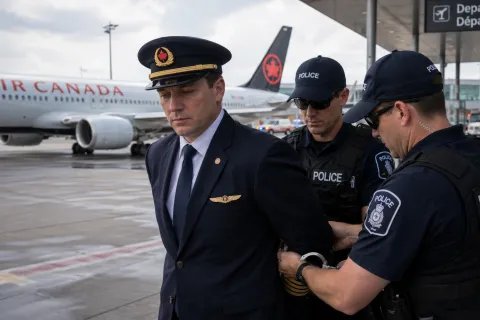
Imposter Pilot Flew Air Canada Jets for 16 Years
TORONTO, Canada - A 59-year-old captain allegedly operated commercial flights worldwide from 2009 to 2025 with only a basic commercial license, sparking criminal charges and industry scrutiny.
Armenia Unlocks EU Visa-Free Travel in 2026
YEREVAN, Armenia - Armenia moves toward visa-free travel with the European Union, a shift that could reshape backpacker routes through the Caucasus if the reforms actually stick.
Air Canada Slashes 13 Global Routes Through Fall 2026
TORONTO, Canada - Air Canada suspends 13 international routes across Europe, Asia-Pacific, and Latin America despite maintaining dominant position with 274 daily international departures.
About the Author

Jeff Colhoun
Jeff Colhoun is an acclaimed travel writer, photographer, and filmmaker, whose work is respected both in the United States and internationally.