Stay current with our airline news coverage.
NEW YORK — The moment of truth comes when a gate agent rolls out the sizer box and invites anyone with “doubtful-looking” bags to try their luck. For many New York-bound flyers—indeed, travelers everywhere—those few seconds determine whether a carry-on glides overhead for free or plummets into the fee-laden world of checked luggage. Understanding airline size limits is the surest way to keep wallets closed and trips drama-free.
Why airline size limits can ruin—or rescue—your budget
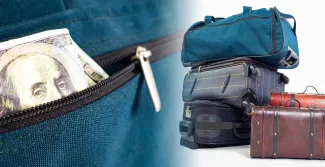
Unexpected bag charges can sting. Major U.S. and international carriers typically bill travelers between $50 and $200 when a suitcase exceeds allowed dimensions or weight. Even worse, an oversized carry-on often gets tagged at the gate, forcing you to surrender valuables like medication or electronics while also delaying your airport exit on arrival. The stakes are even higher on low-cost and basic-economy tickets. Budget airlines have turned baggage revenue into a profit engine, enforcing stricter limits and charging higher surcharges than their full-service rivals. A little at-home preparation, then, is worth its weight in airline miles.
How airlines actually measure luggage
Most carriers rely on “linear dimensions,” the simple addition of a bag’s height, width and depth. Say your suitcase measures 22 inches high, 14 inches wide and 9 inches deep; add them together and you get 45 linear inches. • Checked bags: Maximum limits hover around 62 linear inches for economy-class passengers. • Carry-ons: A ceiling of 45 linear inches—often expressed as 22 x 14 x 9 inches—remains the industry standard. Those totals must include every protrusion: wheels, handles, side pockets, even decorative zipper pulls. Gate agents seldom show mercy when a plastic foot or overfilled front pouch pushes a case into forbidden territory.
Do airlines measure luggage packed or empty?
Retailers advertise the unfilled size of a suitcase, because that is how manufacturers save weight on product labels. Airlines, by contrast, eye whatever shows up at check-in—bulges, strained zippers and all. If you fill an expandable section with last-minute souvenirs, the bag could swell past the official allowance and trigger a fee. Measure again after packing, especially when flying unfamiliar or notoriously strict carriers.
Carry-on versus personal item: drawing the line
Airlines distinguish two free cabin bags on most tickets: a standard carry-on for the overhead bin and a smaller personal item for the space beneath the seat. For many travelers, that second piece is a laptop sleeve or slim backpack, but dimensions matter: • Carry-on: 22 inches long, 14 inches wide, 9 inches deep (wheels and handles included). • Personal item: typically capped at 18 x 14 x 8 inches, though some airlines allow even less. “It comes down to where the bag will be stowed and how quickly you can move it,” Morgan said on TikTok. Budget carriers sometimes eliminate the complimentary overhead piece entirely, requiring travelers to pay for any bag that won’t live under the seat.
Simple tools to measure your suitcase at home
Savvy flyers keep three inexpensive instruments near the closet:
- Soft measuring tape: Stand the suitcase upright, then measure from the ground, including wheels, to the top of the retracted handle for height; side-to-side for width; and front-to-back for depth. Add those three numbers to find total linear inches.
- Luggage scale: Clip the handheld scale to the top handle once the bag is fully packed. Airlines commonly permit 50 pounds in economy, but premium cabins and some intercontinental routes push that to 70 pounds.
- Rigid ruler or yardstick: Ideal for verifying the depth of hard-shell models, where curved corners can be deceiving.
Tips for travelers: dodging extra fees with smart packing
- Plan layers: A half-empty case on departure allows space for souvenirs on the return. If you expect to shop, pack a lightweight duffel that folds flat; it can serve as a personal item on the flight home.
- Confirm policies 48 hours before travel: Airlines tweak baggage rules surprisingly often. Revisit the carrier’s website after online check-in to catch last-minute changes.
- Use compression: Packing cubes or vacuum-seal bags reduce volume, but beware: shrinking size does not reduce weight.
- Wear bulk: Heavy shoes and jackets count as clothing, not baggage. Layer up at boarding time to spare suitcase space.
- Weigh after souvenirs: Hotel scales or fitness-center balance beams offer a quick mid-trip check for shoppers who may have gone overboard.
Regional quirks and tightest airline size limits
Many North American carriers stay within the 22 x 14 x 9-inch guideline, but the story changes overseas. European ultra-low-cost stalwarts sometimes trim carry-ons to 21 x 13 x 8 inches and slash free weight allowances to 15 pounds. In Asia, several budget airlines allow only one personal item unless travelers pay for a higher fare bundle. Always cross-reference the confirmation email, especially if your itinerary involves multiple partner airlines.
FAQ: decoding airline size limits
Does the 62-inch checked-bag rule include wheels and handles?
Yes. Every rigid or protruding component must fit within the limit, and gate agents often test problem bags with a measuring tape.
Can I bring both a carry-on and a backpack for free?
Most full-service airlines allow one overhead bag and one small personal item. Basic-economy and budget fares may restrict you to the under-seat piece only unless you pay extra.
What happens if my checked bag measures 63 inches?
Expect an oversized fee, frequently in the $50 to $200 range. Charges apply per segment, so a round-trip could double the pain.
Is weight or size more important?
Both matter. A lightweight but gigantic duffel will be rejected just as fast as a compact but leaden toolbox. Measure and weigh.
Are expandable zippers safe to use?
Only if the dimensions remain within the airline’s published limits when expanded. Otherwise, leave that zipper closed.
The bottom line on beating baggage fees
Mastering airline size limits is largely a game of arithmetic and discipline. Measure your suitcase packed, not empty; weigh it after every major addition; and verify the carrier’s policy each time you book. With numbers on your side, you can stride past the sizer box in New York, London or Sydney—with wallet intact and overhead bin space secured. — as Morgan said on TikTok.
More travel news
United Cuts December Flights as Fuel Costs Rise
United is cutting some December flights; Southwest halved planned 2026 capacity growth; and American expects slower 2027 growth if fuel prices remain elevated.S...

Las Vegas Heat Grounds Planes as Temps Hit 115
LAS VEGAS, Nevada - Extreme weekend temperatures force airlines to remove passengers, cut fuel loads, and adjust departure schedules as desert heat pushes aircraft to performance limits.

Flight Attendant Reveals Free First Class Upgrade Secrets
Global - After years of speculation and social media advice, a veteran flight attendant sets the record straight on what actually secures free upgrades and what never will.
Booze Sales Boost Revenue But Ground Flight Safety
Airlines worldwide are confronting a costly paradox: onboard alcohol sales drive ancillary revenue, but drunk passengers are creating expensive diversions and safety crises that may outweigh the profits.
About the Author

Andy Wang
Andy Wang is Asia Editor at Jetsetter Guide, covering Southeast Asian travel and food from his base in Singapore. A first-generation American, he brings a dual perspective to the region.