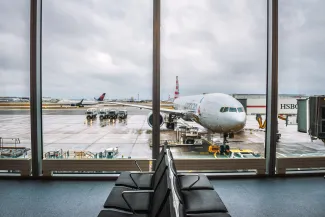
Stay current with our airline news coverage.
MIAMI - Nothing takes the shine off a business-class award quite like learning that your carefully saved miles may have put you closer to the top of the downgrade list.
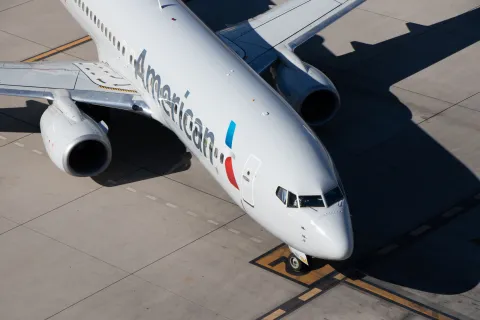
An American Airlines passenger alleged that her family was removed from business class on a Miami-to-Milan flight because the airline needed the seats to transport pilots for work, according to an account attributed to Reuters. The passenger said the family was selected because its tickets had been booked with miles.
There’s an important caveat: As of Aug. 22, 2026, no corroborated news article or industry report independently confirmed the specific incident. That means the family’s account should be treated as an allegation, not a settled finding about what American did or why it did it.
Still, the operational framework described in the complaint is plausible. Airlines routinely move, or “deadhead,” pilots and other crew members between airports so they can operate later flights. American’s pilot contract says cockpit crew members deadheading on specified long-haul routes cannot be required to travel in economy, according to the source material.
Why American Airlines pilots may need business class
American’s contractual protection applies to pilots deadheading on transatlantic, transpacific, mainland-to-Hawaii or Alaska, and South America routes. When those pilots need transportation, the airline may have to place them in first class or business class, even when the premium cabin is otherwise full.
That’s the uncomfortable collision here. The pilots aren’t simply receiving a pleasant upgrade after a long day; their premium seating can be required by the airline’s labor agreement. Moving them may also be necessary to keep other flights operating. None of that makes a passenger’s downgrade feel any better, of course.
When premium seats are oversold or needed for crew, airlines may seek volunteers before involuntarily moving passengers. Internal priority lists can consider fare category, ticket type, frequent flyer status and check-in time. Award tickets may be treated differently from full-fare cash tickets, making travelers using miles more vulnerable during an operational reshuffle.
American doesn’t publish its internal policy for deciding which premium-cabin passengers are downgraded, according to the source material. That lack of transparency is a big part of the frustration. A traveler can redeem a substantial mileage balance for business class without knowing precisely where that ticket ranks if the airline suddenly needs the seat.
The $600 voucher isn’t the whole calculation
American offered the family a $600 travel voucher following the alleged downgrade, according to the account. The voucher was described as a goodwill gesture, not a replacement for the refund associated with receiving a lower cabin than the one booked.
For an award ticket, the relevant calculation would be the miles originally charged minus the number of miles the lower-cabin itinerary would have cost when the award was purchased. That distinction matters because a voucher and a mileage adjustment are two different things.
The U.S. Department of Transportation requires an airline to return the fare difference when a passenger is involuntarily downgraded. The United States doesn’t have a comprehensive downgrade regime equivalent to Europe’s, although the department regulates oversales and denied boarding and accepts consumer complaints involving airline practices.
The source material also notes that EU Regulation 261/2004 would provide reimbursement of 75% of the miles paid, plus 75% of applicable carrier-imposed surcharges, for a qualifying downgrade on a Europe-to-U.S. flight. The reported itinerary traveled from Miami to Milan, however, and the supplied information doesn’t establish that the same provision applied to this specific journey.
A particularly awkward moment for American’s premium push
The allegation arrives as American is publicly leaning harder into premium travel. The airline plans to increase premium seats to about 40% of narrowbody capacity, up from roughly 25%, according to Reuters. It also plans to restore seatback entertainment screens on more than 800 narrowbody aircraft, with retrofits beginning in 2028.
The BBC also reported American’s plan to bring back seatback screens. The changes are part of a strategy aimed at higher-spending travelers, including customers connected to the airline through its loyalty program and co-branded credit cards.
Those relationships aren’t pocket change. American’s credit card partnerships generate nearly $6 billion in annual revenue at a reported 53% margin, according to the source material. When an airline earns that much from loyalty, members are reasonable to expect their miles to represent more than a second-tier claim on a seat.
Miles still have value, but document everything
The operational argument is easy enough to understand: If pilots must be moved to operate other flights, getting them into position protects the broader schedule. The customer-service problem begins when the airline solves that issue by displacing travelers without clearly explaining how they were selected and how they’ll be made whole.
For award travelers, the useful response is paperwork, not an airport shouting match. Keep the original booking confirmation, mileage receipt, boarding passes and any written downgrade notice. Ask American to state the reason for the cabin change and provide the mileage calculation based on what the lower cabin cost when the ticket was booked. If a voucher is offered, ask whether it is separate from the required fare or mileage adjustment.
I wouldn’t stop redeeming miles for business class because of one uncorroborated complaint. Award travel remains one of the main reasons people engage with airline loyalty programs in the first place. But this episode, if ultimately verified, would expose an unpleasant reality: A confirmed premium seat may not carry equal operational priority simply because the traveler paid with miles rather than money.
American can transport the pilots it needs to run its network. It should also be transparent about who gets moved, why they were selected and exactly what they’re owed afterward. Otherwise, that premium promise starts to feel a little less premium.
More travel news
Italy rain forecast: Yellow alerts cover parts of six regions
Two fronts are forecast to bring repeated rain across Italy, while Oct. 7 yellow alerts apply to designated areas in Abruzzo, Campania, Lazio, Liguria, Molise and Tuscany.

U.S. Customs and Border Protection to End Routine Passport Stamps
CBP announced routine passport stamping will end during primary inspection, with limited exceptions; foreign visitors can access admission and authorized-stay details through I-94 or CBP Link.
American Airlines may adjust capacity if fuel prices stay high
American Airlines says persistently high fuel prices may force further capacity changes, while United Airlines has cut capacity roughly 5% and Southwest Airlines has modified schedules.
Italy Travel Advisory Update Keeps Level 2 Rating
The State Department revised its Sept. 10 summary without raising Italy’s Level 2 rating, advising Americans visiting the country to stay alert to terrorism and opportunistic theft.

About the Author

Bob Vidra
Bob Vidra is News Editor at Jetsetter Guide, covering airlines, airports and the travel industry since 2023.