Stay current with our airline news coverage.
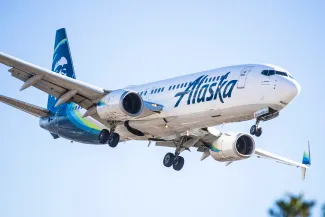
Alaska Airlines plans to bring built-in entertainment screens to its Aurora 737 MAX layout, but your cabin will determine whether you get one. And there’s an important distinction: This isn’t a business-class-only perk. Both Aurora business class and Premium Reserve premium economy will have screens; the main cabin won’t, according to PaxEx.Aero.
The screens, powered by Panasonic Avionics’ Astrova platform, represent a change for Alaska’s single-aisle passenger experience. They also create a split between travelers who get an airline-provided display and those expected to bring their own.
This is a future cabin, not an upgrade you’ll find aboard an Alaska flight today. The Aurora announcement came Sept. 29, 2026, with the new product planned for selected transcontinental flights on Boeing 737 MAX 10 aircraft from 2028, according to Simple Flying.
Which Alaska 737 MAX passengers get screens?
The dividing line is straightforward: Aurora Suites and Premium Reserve get installed entertainment screens, while main-cabin seats do not, PaxEx.Aero reported. Paying for the top cabin won’t be the only way to get a screen, but choosing this particular aircraft won’t guarantee one, either.
Alaska plans to put at least 25 of its 168 Boeing 737 MAX 10s on order into the special premium configuration, according to One Mile at a Time. That’s a selected portion of the incoming fleet, not a screen rollout across every new MAX.
Those aircraft are planned with 12 Aurora business-class suites across six rows in a 1-1 arrangement. One Mile at a Time reported that the lie-flat seats will use a reverse-herringbone layout with direct aisle access. Behind them will be 12 Premium Reserve seats across three rows in a 2-2 configuration.
Premium Reserve is a separate premium economy product, not simply another name for Alaska’s existing Premium Class. According to TravelPulse, its announced features include wider seats, 38 inches of pitch, enhanced recline, leg and calf rests, 16-inch entertainment screens, and upgraded dining and amenities.
For someone who wants an installed screen but doesn’t need a lie-flat suite, that distinction matters. Premium Reserve offers another cabin to consider on these aircraft; Aurora isn’t the only qualifying choice.
Why leave screens out of the main cabin?
Alaska’s explanation isn’t just that premium passengers should get more. PaxEx.Aero reported that executives pointed to certification timing, dependable seat supplies and the need to deliver the announced products on schedule.
“It was more important to us to go deliver on all of the things we announced today,” said Shane Tackett, president and chief financial officer at Alaska Airlines, according to PaxEx.Aero.
Getting a seat approved with a screen installed adds complexity, the publication reported. Mark Krolick, Alaska’s managing director of inflight guest products, also emphasized the challenge of securing seats through reliable supply chains within the airline’s timelines.
There’s a specific design wrinkle at the front of economy. According to PaxEx.Aero, the aircraft won’t have a hard bulkhead between Premium Reserve and the main cabin. Seating also changes from 2-2 to 3-3 at that boundary, so the airline can’t simply put a screen for every economy passenger on the seatback immediately ahead.
That first economy row would need an in-arm screen design instead. PaxEx.Aero treated this as a contributing complication, not a complete explanation for leaving screens out of the entire cabin. It’s a useful distinction: A tricky row helps explain the engineering work, but doesn’t by itself explain the whole decision.
Alaska is betting on personal devices and Starlink
For passengers without installed screens, Alaska’s stated priority is free Starlink Wi-Fi at every seat, along with outlets to keep personal devices charged, according to PaxEx.Aero. The airline’s position is that fast internet gives travelers access to the entertainment they already want on devices they already use.
Alaska pointed to experience on Hawaiian Airlines’ Airbus A330 fleet to support that view. In a statement reported by PaxEx.Aero, the airline said inflight entertainment usage declined as passengers shifted to other activities, with the greatest shift on shorter trans-Pacific flights around five hours. On longer international flights, the decline was smaller; passengers continued to watch movies or television while also using other screens.
That’s Alaska’s reasoning, not proof that everyone prefers a phone or tablet. PaxEx.Aero noted that travelers can want both personal content and an airline-provided display. There’s no contradiction in streaming on one device and wanting a second screen available.
The connectivity rollout is also still a work in progress. PaxEx.Aero reported that Alaska installed Starlink on zero aircraft during September. The promised cabin experience and the installation work needed to support it remain separate pieces of the plan.
Could economy screens come later?
Alaska hasn’t ruled that out, but it hasn’t committed to it, either. According to PaxEx.Aero, Tackett said the airline needs to complete its current investment cycle, introduce the new products and get aircraft equipped with Starlink before reassessing whether passengers are missing installed screens.
Economics are another consideration. PaxEx.Aero reported that Andrew Harrison, Alaska’s executive vice president and chief commercial officer, discussed potential business models involving curated content, marketing and advertising. The publication also described Alaska as having a relatively firm position against screens on the rest of its incoming MAX 10 fleet and other single-aisle aircraft.
For travelers, the sensible reading is narrower than a fleetwide screen rollout. Alaska plans to add them to two cabins on a selected premium configuration. When these aircraft enter service, both the configuration and the cabin will matter. A Premium Reserve seat will include a display; a main-cabin seat on the same plane won’t. That’s the distinction worth keeping in mind, rather than treating the Aurora branding as an entertainment upgrade for everyone aboard.
More travel news
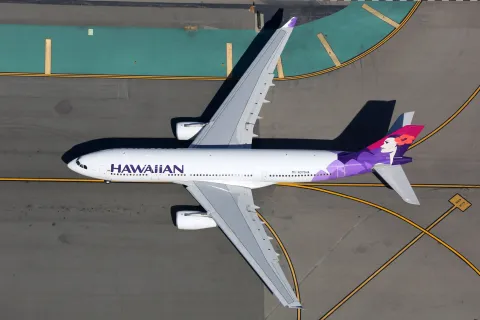
Hawaiian Airlines Plans Seattle Nonstops to Osaka, Tahiti
The planned routes will run four times weekly to Osaka and three times weekly to Papeete on Hawaiian Airlines Airbus A330-200s; neither will operate daily.
United Airlines launches Starlink flight tracker
Travelers can use United Airlines’ Starlink Tracker to check flight-level availability as the carrier works toward fleetwide installation by the end of 2027.

United Airlines has Starlink on just under 600 aircraft
United Airlines’ installed total spans regional and mainline aircraft; American Airlines plans to begin equipping more than 1,000 mainline aircraft in early 2027.

Alaska Airlines Plans Lie-Flat Boeing 737 MAX 10s for 2028
Alaska Airlines plans a dedicated subfleet of at least 25 MAX 10s for select transcontinental routes, each with 12 lie-flat Aurora seats and Premium Reserve; the first are expected in 2028.
About the Author

Jeff Colhoun
Jeff Colhoun is a photographer and filmmaker whose work has appeared in The Wall Street Journal, the Los Angeles Times, Matador Network and Barron’s.