Stay current with our airline news coverage.
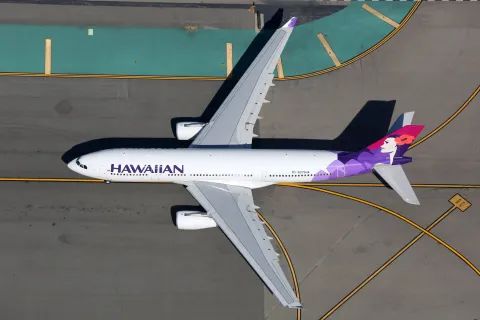
SAN FRANCISCO — Just as the fall and winter swells begin rolling toward California, Oahu and Maui, two of the region’s largest carriers have quietly overhauled their surfboard baggage rules. Alaska Airlines and Hawaiian Airlines now allow travelers to check multiple boards in a single bag—at no extra cost—so long as the bundle meets a refreshed set of size limits. The move positions the West Coast–to–Hawaii corridor, and many onward international routes, as markedly friendlier for wave chasers who never leave home without a quiver.
What’s new in the surfboard baggage policy?
Until recently, most U.S. airlines charged oversize fees that turned a simple board bag into a costly liability. Under the new approach, both Alaska Airlines and Hawaiian Airlines will:
- Treat surfboards as standard checked baggage, eliminating specialized handling surcharges.
- Permit more than one board per bag, provided the total fits within length restrictions.
- Accept board bags up to 10’5” on mainline jets and up to 9’7” on regional Embraer E175 aircraft.
That length expansion is significant; big-wave riders often carry “guns” topping the 9-foot mark, while families may pack a mix of shortboards and longboards in a single coffin-style case. Inside the main cabin, no changes were announced—boards still must be checked rather than carried on—yet the absence of oversize fees removes one of the steepest barriers to traveling surfers.
Key routes that benefit travelers
California–Hawaii is only the beginning. Both airlines operate extensive networks that link surf breaks from the Pacific Northwest to Tahiti and Australia:
- Alaska Airlines: nonstop service from Los Angeles, San Diego, San Jose, Seattle and Anchorage to Honolulu, Maui, Kauai and Kona.
- Hawaiian Airlines: inter-island shuttles plus long-haul routes to Sydney, Auckland, Pago Pago and Papeete.
Because the revised allowances apply system-wide, a rider beginning in Sacramento can connect in Honolulu and land in Tahiti without repacking or paying baggage penalties along the way.
Regional jets have tighter limits
The one major caveat concerns Embraer E175 aircraft, which Alaska deploys heavily along the U.S. West Coast and Hawaiian deploys for certain neighbor-island hops. On those regional jets, the nose-to-tail cap drops from 10’5” to 9’7”. Travelers flying niche or seasonal routes should keep an eye on equipment swaps; if a last-minute schedule change puts an E175 on your itinerary, a bigger longboard may need alternate transport.
Loyalty perks and free bags
The updated policy dovetails with existing bag waivers:
- Residents booking inter-island segments on Hawaiian receive one checked bag free; a surfboard counts toward that allowance.
- Alaska Airlines travelers holding certain branded credit cards or Atmos Rewards status also enjoy complimentary checked-bag privileges.
Stacking the new rules with these loyalty benefits can reduce total cost to zero, even when lugging multiple boards.
Why the carriers made the switch
Neither airline issued a lengthy public statement, but the timing is telling. Domestic leisure demand remains strong, and both brands market heavily to outdoor-minded travelers. By dropping pain-point fees, the carriers can lure a lucrative niche without adding complex new services. “Surfers want flexibility—different waves need different boards,” Alaska’s baggage team wrote in an online update, pointing to the decision to allow several boards in one bag.
Tips for travelers packing surfboards
Even with simplified fees, proper preparation is crucial to keep dings at bay:
- Use a padded, coffin-style bag with internal tie-downs.
- Remove fins when possible and stash them in a separate compartment.
- Wrap delicate glassed-on fins with pipe insulation or bubble wrap.
- Add a soft towel or wetsuit between boards to eliminate deck-to-deck pressure.
- Mark the exterior as “Fragile—Surfboards” to guide ground crews.
Pre-flight checklist
- Check the operating carrier on each segment; codeshares may have stricter rules.
- Measure the board bag end-to-end, including protective bumpers.
- Arrive earlier than normal; oversize drop-off counters can create delays.
FAQ: Updated surfboard policy on Alaska and Hawaiian
How many boards can I bring? There is no explicit quantity limit as long as the quiver fits in one bag within length and weight allowances. Is there a weight cap? Standard checked-bag weight limits apply: 50 pounds for main-cabin tickets and 70 pounds for premium classes. Excess weight fees remain in effect if you exceed those thresholds. Do I need to call ahead? Advance notice is not required, but agents recommend adding a note to your reservation if you’re checking oversize sporting gear. What if my board is damaged? Both airlines reimburse for proven in-transit damage, though claims must be filed at the airport upon arrival. Can I use a hard-shell case? Yes. However, the case’s external length counts toward the 10’5” or 9’7” maximum.
Bottom line: Surf travel just got cheaper
For wave riders eyeing El Niño-boosted swells or plotting winter escapes, the new policy removes one of the most frustrating costs of air travel. Combine it with strategic route selection—many of which originate in San Francisco, Los Angeles or Honolulu—and you can hopscotch the Pacific with a full quiver in tow, without breaking the bank at the ticket counter. Whether you’re chasing double-overhead walls at Waimea or sharing mellow longboard sliders in Santa Cruz, you’ll now spend less time angsting over baggage fees and more time waxing up for the next set.
Explore more Australia travel →
More travel news
Alaska Airlines expands premium seats and Starlink Wi-Fi
Alaska Airlines is adding premium seats and offers complimentary Starlink to Atmos Rewards members on equipped aircraft; lie-flat MAX 10 suites are planned from 2028.
Alaska Airlines Opens Anchorage–Tokyo Flights for Booking
The new seasonal nonstop is bookable from $999 round trip. Daily service runs May 13–Sept. 7, 2027, with domestic-style first-class recliners rather than flat beds.
Hawaiian Airlines Plans Seattle Nonstops to Osaka, Tahiti
The planned routes will run four times weekly to Osaka and three times weekly to Papeete on Hawaiian Airlines Airbus A330-200s; neither will operate daily.
Hawaii Reports Ninth Travel-Related Dengue Case of 2026
The Oʻahu case involved exposure while traveling where dengue is common. All nine Hawaii cases this year are travel-related, and officials assess transmission risk as low.

About the Author

Mariana Torres
Mariana Torres is South America Editor at Jetsetter Guide, covering backpacking and off-the-beaten-path travel in the Andes and the Amazon.