Stay current with our airline news coverage.
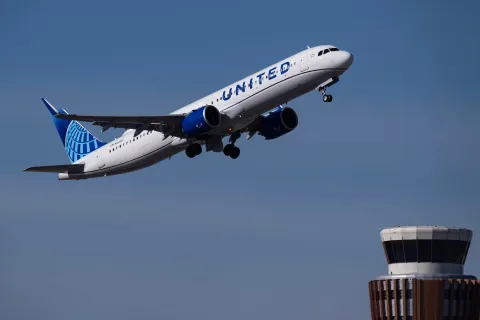
Tulum’s Felipe Carrillo Puerto International Airport is losing the airline network it was built to attract. Less than three years after its late-2023 opening, year-round international service has fallen from 12 airports to four, according to One Mile at a Time’s Nov. 17, 2026, analysis. For U.S. travelers heading to Tulum, the retreat includes United’s planned exit in early 2027, following JetBlue’s departure.
This is not a story about an airport that never attracted airlines. One Mile at a Time reports that American, Delta, JetBlue and United launched service, alongside carriers from Canada, Europe and Latin America. The problem has been sustaining that initial interest as passenger numbers fall.
Travelers holding affected United reservations have a concrete choice: rebooking through Cancún or a refund, according to Karlobag.eu, citing El Financiero. Other cuts follow different schedules. An airline’s announced withdrawal does not mean every flight has already stopped.
Tulum airport’s passenger losses extend beyond one weak month
One Mile at a Time reports a 33.2% passenger decline in the first half of 2026. June traffic fell 44.8%, to 47,600 passengers from 86,200 a year earlier. Those figures describe a substantial reversal for an airport intended to expand access to Tulum, not merely shift visitors away from Cancún.
Karlobag.eu provides the underlying half-year totals, citing Mexican Federal Civil Aviation Agency figures reported by El Economista: 471,500 passengers between January and June 2026, compared with 705,400 during the same period in 2025. It reports that the decline extended throughout the first half.
International traffic took the harder hit. According to Karlobag.eu, international passenger numbers fell 40.8%, from 417,600 to 247,100. Domestic traffic also weakened, falling 22%, from 287,800 to 224,400. The airport’s difficulties therefore reach beyond its foreign airline network, although that network suffered the sharper contraction.
The distinction matters: fewer international passengers alone would not establish that the entire airport was shrinking. Here, both segments declined.
Which Tulum flights are ending, and when?
The retreat is already underway, but further reductions remain ahead. One Mile at a Time reports that JetBlue, Avianca, Copa and Discover have withdrawn, while Canadian carriers now operate seasonally. Karlobag.eu reports that Aeroméxico operated its final Tulum flight on Sept. 30, 2026, citing market conditions and network adjustments.
For passengers planning upcoming trips, the scheduled changes are:
- United from Newark: The last scheduled flight is Jan. 2, 2027, according to JetsetterGuide’s report citing TheTravel.
- United from Houston: The last scheduled flight is Jan. 4, 2027, according to JetsetterGuide. These remaining route endings complete United’s withdrawal.
- Volaris: All Tulum flights will be temporarily suspended beginning Jan. 7, 2027, according to Karlobag.eu. No return date has been announced.
- Delta from Atlanta: Service is scheduled to continue through May 2, 2027, before a suspension beginning May 3. A seasonal return is expected in November 2027, according to JetsetterGuide.
American also plans to suspend Miami service while retaining Dallas/Fort Worth, Karlobag.eu reports. Delta’s announced pause means its continued presence should not be read as a commitment to uninterrupted year-round service.
Even before that pause, Delta’s Atlanta schedule has exceptions. JetsetterGuide reports daily service is scheduled from Nov. 22, 2026, through May 2, 2027, except from Jan. 12 through March 3, when there will be no Tuesday or Wednesday flights. The airline has also canceled previously planned Saturday-only flights for May through July 2027.
Why the initial airline rush did not hold
One Mile at a Time identifies several pressures: weaker U.S. demand for Mexico, growing competition from resorts elsewhere, high vacation costs, sargassum problems and declining launch incentives. Those are the publication’s explanations for the broader slowdown, not a single cause established for every airline departure.
Its analysis reports that Mexico’s share of American trips fell from 19.8% to 18.1% in the first half of 2026. It also argues that resort growth in Cancún and other Mexican destinations has intensified competition, while high prices, taxes and service charges have weakened the value proposition for luxury travelers.
That U.S. weakness should not be confused with a decline across all international travel to Mexico. HoyMX, citing Mexico’s Secretariat of Tourism, reports that international tourist arrivals nationally rose 3.9% to approximately 32.68 million in January-August 2026. Tulum’s contraction sits within a more uneven national picture.
Airline operating costs also matter. Karlobag.eu, citing Aviacionline, reports that Volaris attributed its decision to low load factors and higher costs, including airport usage fees, fuel and SENEAM air navigation charges. Its Guadalajara route had already fallen from daily service at its December 2024 launch to three flights a week.
One Mile at a Time reports that Tulum’s launch incentives declined annually, with almost everything expiring after three years. Separately, Karlobag.eu reports that airport management offered new airport and runway usage discounts during 2026. Incentives have not simply disappeared without a response, but the reported traffic losses show that discounts alone have not sustained the initial expansion.
Cancún remains part of the booking decision
Tulum’s airport was meant to provide a dedicated gateway to a destination previously reached through Cancún, according to One Mile at a Time. Yet Cancún remains a competitor: Karlobag.eu reports that it offers a wider destination network, more frequent flights and more connecting services.
For affected United passengers, accepting Cancún instead of a refund preserves access to the destination but changes the arrival arrangements. JetsetterGuide, citing TheTravel, advises allowing about two hours for the road journey, depending on traffic and the hotel’s location. Any airport pickup needs to match the replacement itinerary.
Delta’s process differs. According to JetsetterGuide, its schedule-change policy starts with attempted automatic rebooking. Passengers unhappy with the replacement can review alternatives through My Trips or the Fly Delta app, contact the airline, or cancel for a refund of unused transportation.
The booking decision now turns on the actual operating dates, not the airport’s launch-era route announcements. United’s exit, Delta’s seasonal shift and Canadian carriers’ limited seasonal service are different arrangements. For travelers, checking those distinctions and comparing the full arrival journey through Tulum or Cancún is more useful than treating every announced route as a lasting connection.
Explore more North America travel →
More travel news
United Airlines to Exit Tulum; Delta to Pause in 2027
Passengers booked on affected Tulum flights can review alternatives or refunds; United’s routes end Jan. 2 and 4, while Delta pauses May 3 and expects a November 2027 return.

Delta Air Lines Plans Delta One Service Refresh
The planned Delta One refresh starts on long-haul flights departing Los Angeles in fall 2026 and expands globally in early 2027; new suites follow a separate rollout.

Delta Air Lines Plans More Boston Flights for April 2027
During the 10 days surrounding Patriots’ Day 2027, Delta plans 6,000 more departing seats from Boston, including new Destin-Fort Walton Beach service.
Delta CEO Declares Budget Airline Model Dead
ATLANTA, Georgia - Delta's CEO used the airline's earnings call to declare that the low-cost carrier model no longer works, even as his own airline posted one of its strongest quarters in years.
About the Author

Jeff Colhoun
Jeff Colhoun is a photographer and filmmaker whose work has appeared in The Wall Street Journal, the Los Angeles Times, Matador Network and Barron’s.