Stay current with our airline news coverage.
WORLDWIDE - It's not often you see an aircraft graveyard filled with planes that should still be flying revenue routes for another two decades. But walk through certain European boneyards right now and you'll find something unsettling: Airbus A321neos, some barely a few years old, being stripped for parts like junked cars.
These aren't aircraft that flew their last mile. They're victims of an ongoing crisis that's forcing airlines to make choices no one anticipated when they ordered these fuel-efficient jets.
The Engine Crisis Behind the Cannibalization
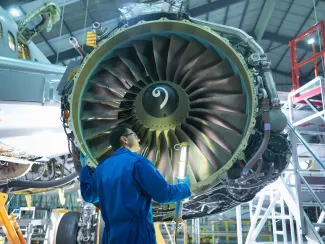
The culprit isn't weak demand or airline bankruptcies. It's a severe shortage of Pratt & Whitney geared turbofan engines, according to Simple Flying. The GTF powerplants that were supposed to revolutionize narrow-body efficiency have instead created one of the industry's strangest supply chain nightmares.
When engines need maintenance or replacement and new units aren't available, airlines face a brutal calculation. They can ground perfectly good airframes and wait months (or longer) for engines. Or they can sacrifice one aircraft to keep several others flying.
Many are choosing the latter. The result? A321neos sitting in Spanish graveyards, their engines removed and shipped to aircraft that can actually generate revenue. It's aviation triage, and it's happening because Pratt & Whitney can't deliver replacement engines fast enough to meet demand.
Why Airlines Are Making This Choice
Let's be clear about what's driving this decision. An airline doesn't dismantle a modern aircraft lightly. These A321neos represent massive capital investments, and their book value doesn't disappear just because you pull the engines off.
But the math changes when you're facing the alternative: grounding three or four aircraft because you can't get spare engines. If cannibalizing one plane keeps your fleet flying, you preserve more revenue. You keep routes operating. You avoid the cascading operational disruptions that come from unexpected groundings.
It's not a decision anyone wanted to make, but the engine shortage has left carriers with few good options. The economic realities have shifted dramatically from when these aircraft were first delivered.
What Got Us Here
The Pratt & Whitney GTF was supposed to be a game changer. Better fuel efficiency, lower emissions, quieter operations. Airlines ordered A320neo family aircraft in droves, many specifically choosing the PW1100G engine option.
Then reality hit. Durability issues emerged. Maintenance requirements exceeded expectations. The supply chain for replacement parts couldn't keep pace. And suddenly, airlines that thought they were getting cutting-edge reliability found themselves managing an unprecedented engine availability crisis.
Pratt & Whitney has acknowledged the problems and is working on solutions, but manufacturing capacity doesn't scale overnight. Meanwhile, airlines need engines now, not next year.
The Booking Calculus Just Shifted
If you've been tracking route cancellations or unexplained aircraft swaps on your upcoming flights, this engine shortage might be part of the story. Airlines operating A321neos with GTF engines have been dealing with reduced fleet availability for months, and it's showing up in schedules.
Some carriers have been forced to cut frequencies on routes they'd normally serve daily. Others have swapped in older, less fuel-efficient aircraft to maintain schedules. You might book an A321neo and end up on a 737-800 or an older A320ceo instead. It's not ideal for the airline's fuel budget, and it's not what passengers were expecting either.
For travelers, the practical impact is harder to predict route stability. If your preferred airline has a heavy A321neo fleet, pay closer attention to schedule changes in the weeks before departure. Aircraft swaps can mean different seat configurations, different entertainment systems, and occasionally, reduced capacity that leads to involuntary rebookings.
There's also a secondary effect worth watching: airlines with CFM-powered A320neo family aircraft or Boeing 737 MAX fleets aren't facing this particular crisis. That could influence which carriers maintain more reliable schedules on competitive routes over the next year or two.
None of this is to say you should avoid A321neos entirely. When they're flying, they're excellent aircraft. But the engine shortage is real, and it's reshaping how airlines deploy their fleets in ways most passengers never see until a gate agent announces an equipment change.
More travel news
Jet Fuel Prices Have Doubled Since January
Jet fuel prices have doubled since January, and Leeham News is modeling potential ticket and cargo price effects if the increase persists.
Frontier Plans 2027 First-Class Launch on Airbus Fleet
The planned cabin is intended for Frontier’s Airbus fleet, with introduction targeted for 2027; the cited reports do not establish a fleetwide completion date.
Qantas Project Sunrise Flights Expected in First Half of 2027
Commercial flights have not begun; Qantas plans nonstop Sydney routes to London and New York with 238-seat A350-1000ULRs, with service expected in the first half of 2027 but no confirmed date.
American Airlines Flew Uncertified Plane to Hawaii
LOS ANGELES, United States - A dispatch software failure sent the wrong A321 variant 3,000 km over the Pacific on Flight 31, prompting an FAA probe and emergency fixes to American's fleet-assignment system.
About the Author

Bob Vidra
Bob Vidra is News Editor at Jetsetter Guide, covering airlines, airports and the travel industry since 2023.