Stay current with our airline news coverage.
What Changed and When
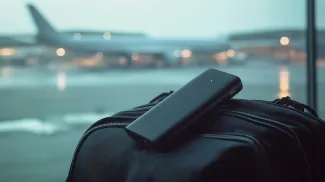
The new ICAO policy is straightforward: two power banks per passenger, carry-on only, no charging allowed during the flight. That's it. If you've been traveling with a small arsenal of backup batteries, or if you're used to plugging in your power bank at your seat to keep the charging chain going, those days are over. The rules took effect on March 27, 2026, which means this isn't a proposal or a trial run. It's live right now, and it covers every international flight departing from or arriving in any ICAO member country. Domestic flights may follow different rules depending on the country, but the moment you cross a border, these limits apply.Why ICAO Made the Call
Lithium-ion batteries have been a growing headache for aviation safety. They're in everything we travel with, from phones to laptops to those chunky portable chargers we all rely on. But when they malfunction, they can overheat, catch fire, or even explode; and at 35,000 feet, that's a problem with very few good solutions. According to News Source, incidents involving portable batteries on commercial flights escalated through 2024 and 2025. By June 2025, the Federal Aviation Administration had logged enough events to make this a priority conversation at the international level. The fact that all 36 Council members signed off on this without exception suggests the data was compelling enough to overcome the usual bureaucratic inertia. One notable incident referenced in the reporting involved Air China Flight CA139, which landed safely with no reported injuries after a battery-related event. It's precisely these close calls that tend to push regulators from discussion to action.What This Means for Your Next Trip
For most travelers, honestly, this won't change much. Two power banks is more than enough for a long haul flight if you're strategic about it. A decent 20,000 mAh battery can recharge most smartphones four or five times, and if you've got two of those, you're set even on a 15-hour nonstop. But if you're someone who travels with multiple devices, shares power with companions, or just likes the security of having extras, you'll need to rethink your packing list. And the no-charging rule means you can't daisy-chain your setup; once a power bank is drained, it stays drained until you land. Here's where it gets a little more inconvenient: if you're connecting through multiple countries on a multi-leg international journey, you'll need to stay under the two-bank limit the entire time. You can't check extras in your luggage, either; lithium-ion batteries have long been prohibited in checked bags due to fire risk in the cargo hold. So two is your ceiling, period.The Bigger Shift in Aviation Safety
What stands out here isn't just the two-bank cap; it's that ICAO managed to get 193 countries on the same page. Aviation is full of fragmented rules that vary by region, airline, and even aircraft type. Getting universal agreement on something this specific is rare, and it signals that battery safety has moved from a niche concern to a top-tier regulatory priority. The no-charging provision is equally telling. It's not just about limiting how many batteries you bring; it's about controlling what happens to them during flight. Charging generates heat, and heat plus lithium-ion plus pressurized cabin equals a scenario no one wants to manage at altitude. By banning charging outright, ICAO is eliminating one of the riskier variables entirely. For travelers, the practical takeaway is simple: charge everything before you board, bring two quality power banks if you need backup, and plan your device usage accordingly. It's not the end of the world, but it does mean you can't rely on inflight charging as a fallback anymore. And if you've been lugging around four or five power banks just in case? Time to donate a few. The new normal is leaner, and it's here to stay.More travel news
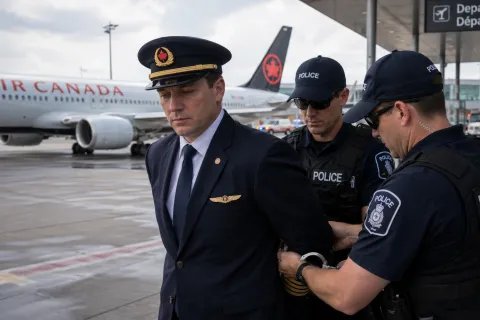
Imposter Pilot Flew Air Canada Jets for 16 Years
TORONTO, Canada - A 59-year-old captain allegedly operated commercial flights worldwide from 2009 to 2025 with only a basic commercial license, sparking criminal charges and industry scrutiny.
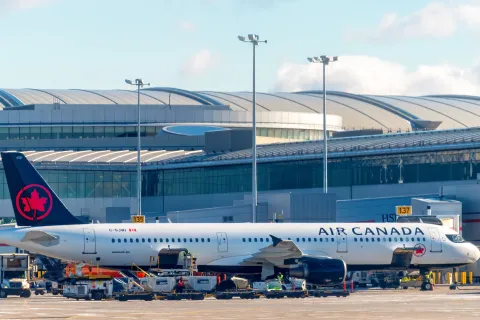
Air Canada Slashes 13 Global Routes Through Fall 2026
TORONTO, Canada - Air Canada suspends 13 international routes across Europe, Asia-Pacific, and Latin America despite maintaining dominant position with 274 daily international departures.
Canadian Tourist Killed in Teotihuacan Pyramid Attack
TEOTIHUACAN, Mexico - A lone gunman killed a Canadian tourist and wounded at least five others at one of Mexico's most visited archaeological sites before taking his own life.

Tourists Bypass America Despite Worldwide Travel Surge
WASHINGTON, D.C. - The United States is losing ground in global tourism as visitors skip American destinations for faster-growing markets in Asia-Pacific and Europe, despite the strongest worldwide travel boom in years.

About the Author

Jeff Colhoun
Jeff Colhoun is an acclaimed travel writer, photographer, and filmmaker, whose work is respected both in the United States and internationally.