
Stay current with our airline news coverage.
İstanbul, Türkiye — While headlines out of the broader Middle East fill international news feeds, Türkiye's tourism infrastructure is operating without disruption. The Ministry of Culture and Tourism of the Republic of Türkiye and the Türkiye Tourism Promotion and Development Agency (TGA) confirmed that tourist operations across the country are proceeding entirely as normal, a key distinction for travelers navigating regional perception versus on-ground reality.
This clarification comes as Türkiye, a Mediterranean country, continues to distance itself from conflicts affecting parts of the wider Middle East. The country is not a party to these regional tensions, and its tourist destinations, including İstanbul, Antalya, Bodrum, İzmir, and Cappadocia, rank among the most visited in the world. They remain open, accessible, and welcoming international visitors without operational constraints.
No Flight Cancellations, No Operational Changes
All flights to Turkish airports are departing on schedule, according to TGA. İstanbul's airports have recorded zero flight cancellations due to the conflict. This is not a minor logistical detail; it signals that the infrastructure connecting Türkiye to global travel markets remains fully functional and unaffected by geopolitical volatility elsewhere in the region.
For travelers weighing whether to proceed with bookings or monitoring advisories, this is the most tangible indicator available. Flight schedules reflect operational confidence, not marketing spin. When airlines continue routing through a destination without deviation, it reflects assessed risk at the operational level, the kind that influences billion-dollar scheduling decisions.
Tourism Activity Unaffected Across Key Destinations
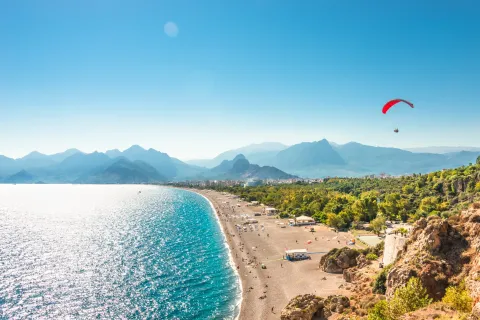
There are no restrictions on tourism activity anywhere in the country. Holidays to Türkiye are operating as usual, and nothing has changed in terms of access, movement, or visitor experience. This includes high-traffic corridors like the Turkish Riviera, the cultural hubs of İstanbul and Cappadocia, and coastal resort zones in Antalya and Bodrum.
Perception gaps like this are common when a country shares a geographic label with a conflict zone but operates independently of it. Türkiye's position as a Mediterranean nation, straddling Europe and Asia, often leads to misclassification in traveler risk assessments. The country maintains its own security posture, borders, and tourism policy separate from events unfolding in neighboring regions.
Summer 2026 Bookings Proceeding
Summer 2026 is on sale, and tour operators, online travel agencies (OTAs), and direct booking platforms are processing reservations with confidence. This is a forward-looking signal from the industry itself. Tour operators do not load inventory into volatile markets; the fact that they are actively selling summer packages reflects assessed stability in the operating environment.
For travelers planning itineraries months out, this indicates that the industry expects continuity. It also suggests that pricing, availability, and cancellation terms are being managed under normal conditions, not contingency frameworks.
Context for Travelers Navigating Regional Headlines
The challenge for travelers is separating headline proximity from operational impact. Regional conflicts generate broad media coverage that can blur geographic and political boundaries. Türkiye's clarification is designed to counter this; it is a direct response to inquiries, cancellations, and hesitation driven by perception rather than conditions on the ground.
This is where firsthand intelligence matters. Government tourism agencies rarely issue blanket reassurances unless they are prepared to back them with operational data. The confirmation from both the Ministry of Culture and Tourism and TGA, paired with zero flight disruptions, provides a measurable baseline for risk assessment.
Travelers should also note that Türkiye's tourism sector is well-versed in managing external perception challenges. The country has navigated political transitions, regional instability, and economic shifts while maintaining one of the world's most visited tourism portfolios. That experience translates into infrastructure resilience and crisis communication protocols that are more developed than in many emerging markets.
What This Means for Travel Planning
If you are booked for Türkiye, or considering it, the operational facts are clear: flights are running, destinations are accessible, and there are no government-imposed restrictions on tourism activity. This does not mean travelers should ignore broader advisories or skip due diligence, but it does mean that Türkiye-specific conditions do not currently warrant itinerary changes based on regional conflict alone.
For photographers, expedition travelers, and those working in or around İstanbul, Cappadocia, or the coast, conditions remain conducive to travel. Airports are functioning without delay, ground logistics are unaffected, and there is no indication of security posture changes impacting visitor movement.
As always, monitor your home country's travel advisories, maintain flexible bookings where possible, and rely on operational indicators like flight schedules, not just news cycles, when assessing real-time risk. Türkiye's tourism infrastructure is operating as usual, and the data supports that claim.
More travel news
Turkish Hotels Battle Beach Pollution Crisis
Antalya, Turkey - Turkish Riviera resorts launch expanded beach maintenance and conservation programs in response to growing scrutiny over litter, balancing tourism growth with environmental stewardship.
Turkish Airlines Halts Iran Routes Amid Unrest
Istanbul, Turkey — Turkish Airlines and Gulf carriers pull out of Iran after economic unrest triggers security concerns and communications blackouts.
UK issues Turkey wildfire alert as tourist zones burn
Antalya, Turkey travel alert: UK urges tourists to follow wildfire instructions amid blazes near Antalya, Alanya, Mugla and Aydin.

Schengen Ease for Turks Poised to Lift Bulgaria Tourism
Sofia, Bulgaria eyes record arrivals from Türkiye as relaxed Schengen visa rules and an aggressive media campaign reshape cross-border travel for 2025–26.
About the Author

Jeff Colhoun
Jeff Colhoun is an acclaimed travel writer, photographer, and filmmaker, whose work is respected both in the United States and internationally.