Stay current with our airline news coverage.
What Changed at the Border
Spain still welcomes millions of visitors annually, and nothing about visa-free access for eligible countries has fundamentally changed. But according to Travel and Tour World, the financial thresholds applicable in 2026 have attracted considerable attention because of their direct impact on short-term travelers, including backpackers, digital nomads, and anyone planning extended stays without formal employment in-country. Border officers now have clearer authority to ask for proof of funds. That could mean bank statements, credit cards with available limits, or cash on hand. The exact amount varies depending on your length of stay and accommodation type, but the takeaway is simple: showing up with a maxed-out debit card and a vague plan to "figure it out" is no longer a viable strategy. I've crossed into Spain a dozen times over the past decade, usually with little more than a passport stamp and a nod. The vibes have shifted. This isn't about turning people away arbitrarily; it's about enforcement of rules that technically existed but weren't always applied. Now they are.Who Gets Hit Hardest
Let's be honest: this disproportionately affects budget travelers. If you're booking boutique hotels and flashing an American Express, you're probably fine. But if you're the type who couch-surfs, works odd gigs for accommodation, or relies on a shoestring budget and good luck, these checks add a layer of stress you didn't need. Digital nomads operating in legal gray zones, remote workers without formal contracts, and long-term wanderers living off savings all fall into a category that Spanish immigration officials may scrutinize more closely now. It's not that they're unwelcome. It's that proving financial solvency when your income fluctuates or comes from freelance platforms isn't always straightforward. Solo female travelers, particularly those moving slowly through hostels and cheaper neighborhoods, might also find themselves fielding more questions. There's an implicit assumption in these policies that "real" tourists have hotel reservations and return flights booked months in advance. That's not how a lot of us travel, and the mismatch creates friction.The Hostel Perspective
Hostels have long been the backbone of budget travel infrastructure in Spain. Barcelona, Madrid, Seville, Granada: all packed with affordable dorms where travelers swap stories, split pitchers of sangria, and figure out their next move. These spaces thrive on spontaneity and last-minute bookings. Stricter entry checks don't mesh well with that ecosystem. If you need to demonstrate financial stability upfront, you're less likely to wing it. That could mean fewer walk-ins, shorter stays, and a chilling effect on the kind of freewheeling, open-ended travel that hostels were built for. I've met travelers at check-in counters who had barely enough cash to cover their first week, banking on finding work or extending their stay based on vibes. That model just got riskier.How to Actually Prepare
If you're planning a trip to Spain this year and you're not rolling in disposable income, here's what makes sense: bring documentation. Print bank statements showing a reasonable balance. Have a credit card with available credit, even if you don't plan to use it. Book at least your first few nights of accommodation in advance and keep the confirmation handy. It's tedious, and it runs counter to the spontaneous ethos that drew a lot of us to this lifestyle in the first place. But getting turned away at the border because you couldn't prove solvency is worse. Travelers on longer timelines, especially those planning to spend months bouncing between coworking spaces and cheap Airbnbs, should also consider having proof of income or remote work contracts available. You might not need them, but if an immigration officer decides to dig deeper, having something official-looking can smooth things over.Why This Feels Personal
For those of us who've built lives around long-term, low-budget travel, these kinds of policy shifts sting in a specific way. They reinforce the idea that legitimate travel looks a certain way: planned, expensive, transactional. They penalize flexibility and assume that anyone without a fat bank account is a potential burden or overstayer. Spain isn't alone in tightening entry requirements. Countries across Europe have been moving in this direction for years, trying to manage tourism volume and weed out travelers they perceive as risky. But Spain has always felt like a haven for backpackers, a place where you could show up with minimal resources and make it work. That reputation is shifting, even if only at the margins. The practical reality is that most travelers will still get through without issue. But the psychological impact, the knowledge that you might be questioned or turned away based on your financial situation, changes the calculus. It makes travel feel less accessible, more gatekept, and a little less like the open road we've been romanticizing. If you're heading to Spain soon, pack your patience along with your bank statements. The country is still worth visiting, but the welcome mat just got a bit more conditional.More travel news
Italy and Spain Extend Reciprocal Border Checks
Passengers arriving in Italy from Spain may face random airport and seaport checks for 15 more days, while those entering Spain from Italy face checks through Oct. 8.

Spain Warns Eclipse Chasers as Wildfire Danger Soars
MADRID, Spain - Authorities urge travelers heading to see Wednesday's total solar eclipse to avoid sparking wildfires as nearly half a million visitors converge on dry, fire-prone regions already scorched by a record season.
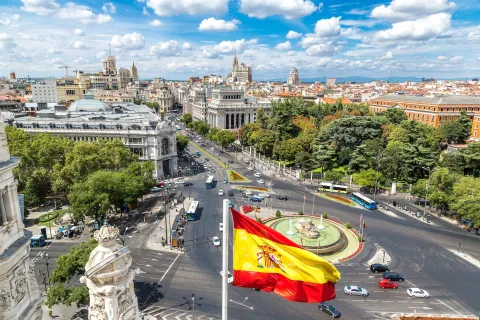
Windstar Unveils Spain Mystery Cruise with Port Clues
Barcelona, Spain – Windstar Cruises has announced two new Mystery Cruises for 2027, sailing to Northern Europe and Japan, alongside a Spanish coastal voyage in November 2026 where travelers discover each port just days before arrival.

Canada Issues Spain Crime Alert During Peak Tourist Season
OTTAWA, Canada - The Canadian government has issued updated travel warnings for Spain during peak summer season, highlighting violent crime risks and dangerous activities in the popular European destination.

About the Author

Mariana Torres
Mariana is a 33-year-old travel writer and backpacker who specializes in finding the pulse of a place far beyond the tourist maps.