Stay current with our travel advisories coverage.
DUBAI, UAE — The UK Foreign, Commonwealth & Development Office issued a revised travel advisory for the United Arab Emirates this week, elevating its assessment of terror-related risk for British nationals traveling to one of the region's most frequented destinations. The updated guidance carries a clear shift in language and threat categorization: "Terrorists are likely to try to carry out attacks in the United Arab Emirates (UAE)," according to the FCDO advisory. That's not boilerplate caution. In the FCDO's five-tier threat scale, "likely" sits above "possible" and signals an elevated operational assessment based on regional intelligence. For travelers accustomed to viewing the UAE as a stable, well-secured Gulf state, this marks a notable recalibration.
What the Advisory Says
The FCDO's language is specific about both scope and target profile. "Attacks could be indiscriminate, including in places visited by foreign nationals," the advisory states. That includes hotels, malls, airports, beaches, entertainment districts, and transport hubs; anywhere with concentrations of international visitors. The guidance goes further: "Terrorists continue to issue statements threatening to carry out attacks in the Gulf region. These include references to attacks on Western interests," according to the FCDO. This isn't abstract. It reflects ongoing propaganda and messaging from groups with demonstrated intent and capability in neighboring conflict zones. The UAE's high-profile positioning as a global business, tourism, and logistics hub makes it symbolically and operationally relevant to actors looking to destabilize or draw attention.
Context for Travelers
The UAE has long maintained extensive security infrastructure. Dubai and Abu Dhabi operate multi-layered surveillance, screening, and intelligence coordination across public spaces. That's not speculation; it's visible policy and part of the reason millions of travelers move through the Emirates annually with minimal incident. But security architecture and threat probability are not the same calculation. The FCDO's updated assessment reflects intelligence suggesting adversaries view the UAE as a viable target environment. That doesn't mean an attack is imminent or inevitable. It means the assessment of intent and capability has shifted. For travelers, the practical impact is situational awareness. Avoid large crowds when feasible. Monitor local news and embassy communications. Register with the UK government's travel notification system. Understand where your hotel, conference venue, or cruise departure terminal sits in relation to emergency services and transport corridors. These are baseline steps in any high-traffic international destination. The advisory simply reinforces their relevance in current conditions.
Regional Threat Environment
The Gulf is not insulated from broader Middle East instability. Ongoing conflict in Yemen, periodic escalation between regional powers, and the operational reach of non-state actors all contribute to a complex threat landscape. The UAE's involvement in regional security partnerships and its economic ties to Western governments make it a stated target in propaganda from groups with grievances spanning multiple theaters. Western interests are explicitly referenced in recent threat statements, according to the FCDO. That includes diplomatic facilities, multinational corporations, and sectors like aviation, energy, and finance where international personnel concentrate. Travel advisories don't exist in a vacuum. They reflect shifts in chatter, movement patterns, financing activity, or disrupted plots that may never become public. The FCDO doesn't issue "likely" assessments lightly.
What This Means for Trip Planning
If you're booked for Dubai, Abu Dhabi, or other Emirates destinations, the advisory does not recommend cancellation or evacuation. It does recommend heightened vigilance and realistic risk acceptance. Business travelers, cruise passengers, and conference attendees should verify venue security protocols, emergency procedures, and communication channels with event organizers or employers. Photographers and media professionals working in public spaces should coordinate with local contacts and maintain low profile where appropriate. Families and leisure travelers should avoid high-density events without clear exit routes, remain aware of crowd dynamics, and keep mobile devices charged with local emergency numbers saved. That includes UAE police (999), UK Embassy Dubai (+971 4 309 4444), and your accommodation's direct line. Travel insurance policies vary in coverage related to terror events. Review your policy's exclusions and consider whether additional coverage or modifications are warranted based on your risk tolerance and itinerary.
Guidance vs. Ground Truth
Advisories serve as intelligence snapshots, not certainties. The UAE remains a functioning, internationally connected destination with robust visitor infrastructure. Millions will travel there without incident. But the gap between statistical safety and assessed threat is where informed decisions happen. The FCDO's shift reflects changed conditions, not panic. Treat it as data, not deterrent. If your travel is discretionary and the advisory creates concern, postponing is a valid option. If your trip is necessary or already underway, the guidance provides a framework for operating with awareness rather than anxiety. The UAE is not Kabul or Mogadishu. But it's also no longer in the "unlikely threat" category according to British intelligence assessment. That distinction matters for anyone making travel decisions based on something other than marketing brochures.
Explore more Middle East travel →
More travel news
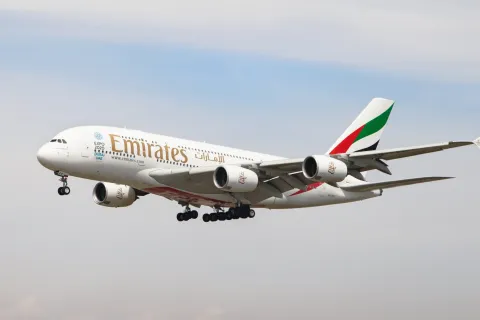
Emirates considers Denver for nonstop Dubai flights
Emirates President Tim Clark identified Denver as one of three U.S. candidates for nonstop Dubai service, with no route, aircraft or launch date confirmed.
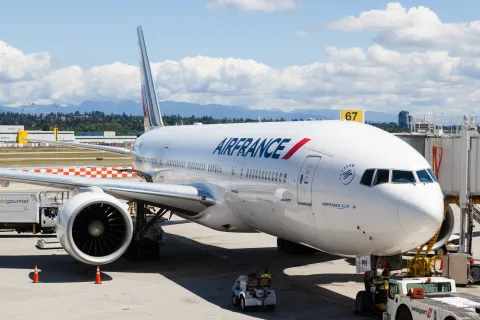
Air France extends Dubai and Riyadh flight cancellations
Air France has extended cancellations in both directions. Passengers whose covered flights are canceled can choose a refund or rerouting, with replacement seats subject to availability.
Pakistan International Airlines plans to add two 787s for UK
The wet lease for PIA’s UK service includes two Boeing 787-9s, crews, maintenance and insurance and is expected to start in early November 2026, subject to scheduling and approvals.

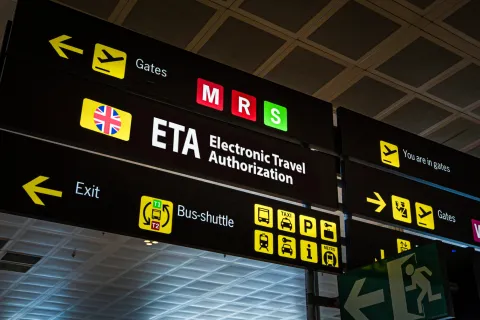
United Kingdom ETA checks require British-Canadian entry proof
Since Feb. 25, 2026, British-Canadian dual citizens flying to the UK need a valid British passport or a right-of-abode certificate in their Canadian passport.
About the Author

Wilson Montgomery
Wilson Montgomery is a Travel Writer at Jetsetter Guide covering Africa and safari travel.