Stay current with our travel advisories coverage.
WASHINGTON, D.C. — Canadians heading south this winter are being warned about enforcement of strict entry rules that carry fines up to $5,000 and potential jail time, a dramatic shift in how U.S. authorities are treating visitors who've long enjoyed relatively frictionless border crossings.
The enforcement comes as Canadians have already been crossing into the United States less frequently. For the past 10 straight months, Canadians have crossed the U.S. border fewer times than they did last year, according to Travel. Despite this sustained decline in border traffic, Canadian snowbirds are still planning winter trips south, walking directly into a changed regulatory environment that demands compliance with registration requirements many didn't know existed.
What the New Rules Actually Require
The policy isn't technically new; it's the enforcement that's changed. A U.S. regulation requires most visiting Canadians who remain for 30 days or longer to register with American government authorities, according to Travel. This applies specifically to Canadians entering without a visa who plan extended stays in the United States.
The requirement targets "aliens 14 years of age or older who were not registered and fingerprinted" and who "remain in the United States for 30 days or longer" and must "apply for registration and fingerprinting," according to Travel. For decades, this rule existed on paper but saw little enforcement for Canadian visitors. That has changed.
The Citizenship and Immigration Services (USCIS) website makes the consequences clear: "Noncompliance is a misdemeanor punishable by a fine of up to $5,000 or imprisonment for not more than 30 days, or both," according to Travel.
Who This Affects Most
Snowbirds and extended-stay visitors bear the brunt of this policy shift. Canadians can stay up to six months without a visa, but anyone planning to remain for 30 days or longer now falls under the registration requirement. This catches a significant segment of winter travelers who traditionally spend months in warmer U.S. states.
The fingerprinting component has caused particular confusion. Official U.S. guidance states that Canadian citizens are exempt from fingerprinting under the Alien Registration Requirement, while Section 262 of the Immigration and Nationality Act says "Canadian citizens are generally exempted from the fingerprint requirement," according to Travel. The word "generally" leaves room for interpretation and inconsistent application at ports of entry.
Practical Impact on Border Crossings
Canada's government has updated its online travel advice to reflect the new enforcement reality. The advisory warns that "failure to comply with the registration requirement could result in penalties, fines, and misdemeanor prosecution," according to Travel.
Canada also updated its travel guidance to note that U.S. Border Patrol officers have "significant" discretion in deciding who enters the country, and travelers should expect stringent searches of their electronic devices, according to Travel. The federal government has reminded Canadians to "expect scrutiny" from border patrol officers when traveling to the United States, according to Travel.
This isn't abstract policy language. It reflects what travelers are experiencing on the ground: longer wait times, more intensive questioning, and heightened enforcement of regulations that previously went unenforced.
The Bigger Picture: Declining Border Traffic
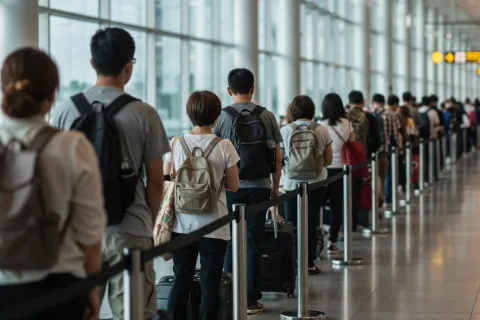
The timing of this enforcement is notable given the sustained drop in Canadian travel to the U.S. Border crossings have fallen consistently for 10 consecutive months compared to the previous year. This isn't a seasonal blip; it's a trend line showing Canadians are already choosing to travel south less frequently.
Yet snowbirds, who often own or rent properties in Florida, Arizona, and other sun-belt states, remain committed to their winter migration patterns. These are precisely the travelers most affected by the 30-day registration requirement, and many are only now learning about the penalties for non-compliance.
What Travelers Need to Know
If you're Canadian and planning to stay in the United States for more than 30 days, registration is mandatory. The enforcement is real, and the penalties are not symbolic. A misdemeanor prosecution and a $5,000 fine will complicate future travel plans significantly.
The registration process involves providing information to U.S. authorities and potentially undergoing fingerprinting, though the fingerprint requirement remains murky for Canadians. What's not murky: the government's intent to enforce compliance.
Travelers should also prepare for increased scrutiny at the border itself, including searches of electronic devices. Border officers have broad discretion, and that discretion is being exercised more assertively than in recent years.
This isn't about discouraging travel. It's about understanding the environment you're entering. The border you crossed last year isn't the same one you'll cross this winter. Rules that were technically on the books but practically ignored are now being enforced with financial and legal consequences.
For Canadians who've been making the trip south for years without issue, this represents a fundamental shift in how the U.S. is managing its northern border. Whether you agree with the policy or not, ignoring it isn't a viable strategy.
More travel news
CDC flight attestation starts Nov. 3 for flights to U.S. from abroad
Passengers and crew on flights departing foreign countries for a U.S. airport at or after 11:59 p.m. EST Nov. 3 must attest to no DRC presence in the prior 21 days unless exempt.
Canada updates France travel advisory for planned protests
Canadian travelers in France should avoid demonstrations and prepare for localized curfews and transport disruptions around planned protests on Oct. 31 and Nov. 5.

Iraq Travel Advisory Remains at Level 4 Do Not Travel
The Oct. 23 update did not change Iraq’s warning level: U.S. citizens are advised not to travel, while those there should prepare independent departure plans.

United Kingdom ETA checks require British-Canadian entry proof
Since Feb. 25, 2026, British-Canadian dual citizens flying to the UK need a valid British passport or a right-of-abode certificate in their Canadian passport.
About the Author

Jeff Colhoun
Jeff Colhoun is a photographer and filmmaker whose work has appeared in The Wall Street Journal, the Los Angeles Times, Matador Network and Barron’s.