Stay current with our travel industry news coverage.
Hollywood's latest survival thriller has transformed a suite of New South Wales wilderness areas into something between adventure tourism brochure and cautionary tale. Netflix's *Apex*, directed by Baltasar Kormákur and starring Charlize Theron as a thrill-seeker pursued by a serial killer through fictional Wandarra National Park, filmed across some of Australia's most striking landscapes, from the labyrinthine gorges of the Blue Mountains to the thundering plunge of Ginninderra Falls. The production injected $50 million into the local economy and created 500 jobs, according to production data, but the film's release has also sparked questions about how cinematic adventure translates to real-world tourism in fragile ecosystems.
Where Cinema Met Wilderness
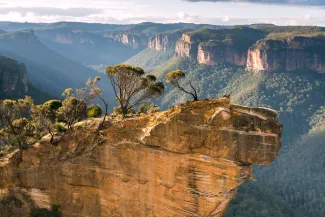
The film's production originally envisioned an American setting, but practical realities shifted the entire project to Australia. "We needed to shoot in a warm climate at a specific time of year, so the Southern Hemisphere came into play. Then, for economic reasons, Australia became one of the options. As I started looking into it, I felt it was actually a great idea to locate the film here and really use Australian nature, which is unique," said Baltasar Kormákur, Director, in production interviews. Principal filming across New South Wales from February 2025 capitalized on that uniqueness. The Grand Canyon Walking Track in Blue Mountains National Park provided the film's signature gorge sequences, its 6.5km loop revealing sandstone cliffs and rainforest gullies that stood in convincingly for remote American wilderness. Royal National Park and Glenbrook Gorge contributed additional cliff faces and river environments, while the privately owned Ginninderra Falls near Wallaroo, on the NSW-ACT border, delivered the film's most dramatic moment: a 60-meter cliff jump that required extensive permissions and safety infrastructure. The Needles at Engadine supplied the setting for a pivotal canoe capsizing scene, and Penrith Whitewater Stadium, built for the Sydney 2000 Olympics, hosted controlled kayaking and rafting sequences. More quotidian locations balanced the wilderness drama; the General Store and Post Office in Bowning, NSW, framed the characters' first meeting. Additional studio work took place at Disney Studios Moore Park, and pick-up shots extended to coastal New Zealand.
The Cost of Authenticity
Kormákur's commitment to using Australia's actual terrain, rather than simply green-screening landscapes, came with considerable logistical challenges. "There were caves in the Grand Canyon [in Australia's Blue Mountains National Park] that were really hard to get to. Even just to scout them, we had to swim; there's no other way in," he noted. That dedication to authenticity extended to the cast; Theron required elbow surgery after an on-set injury sustained during the physical demands of filming in these remote locations. The production's choice of truly wild locations, some accessible only by swimming or technical climbing, created sequences that feel genuinely precarious on screen. But it also means that many of the film's most striking settings remain effectively off-limits to casual visitors, either because they require advanced outdoor skills or, like Ginninderra Falls, sit on private property.
Set-Jetting Meets Wilderness Ethics
The phenomenon of set-jetting, where film and television audiences seek out shooting locations, has proven a reliable tourism driver from New Zealand's *Lord of the Rings* trails to Scotland's *Outlander* circuits. *Apex* arrives with built-in appeal to both adventure travelers and thriller fans, and the accessibility of locations like the Grand Canyon Walking Track in Blue Mountains National Park suggests a tourism uptick is inevitable. That presents both opportunity and tension. The Blue Mountains, already one of New South Wales' most visited natural areas, can absorb increased foot traffic on established tracks with proper visitor management. The 6.5km Grand Canyon loop, while challenging, is a marked route designed for recreational use. Royal National Park similarly maintains infrastructure for day hikers. But the film's more remote and dramatic settings, the cliff faces that required swim access for scouts, the private waterfall that demanded extensive permissions for a single stunt, raise different questions. Tourism inspired by cinema often conflates what's visually spectacular with what's practically accessible or ecologically appropriate. A 60-meter cliff jump filmed with safety teams and permissions becomes, in some viewers' minds, an invitation rather than a choreographed stunt.
The Calculus for Adventure Travelers
For travelers drawn to Australia by *Apex*, the practical path involves separating cinematic fiction from on-the-ground reality. The Blue Mountains offer legitimate hiking, abseiling, and canyoning through licensed operators who understand the terrain's risks and seasonal variations. Royal National Park provides coastal walks and river valleys that deliver the film's aesthetic without requiring technical skills or trespass. What the film inadvertently demonstrates is the diversity of New South Wales' wilderness assets, from Olympic-grade whitewater facilities to sandstone gorges that have challenged walkers for generations. The $50 million economic injection and 500 jobs created by the production signal the state's capacity to support complex location filming, but they also underscore the infrastructure and expertise required to operate safely in these environments. Kormákur's observation that Australian nature is "unique" holds true beyond cinematography. These landscapes evolved in isolation, supporting species and ecosystems found nowhere else, and their management requires balancing public access with conservation imperatives. The film's success in capturing that wildness on screen could drive visitor interest; whether that interest translates into responsible, low-impact tourism will depend on how both the industry and individual travelers respond. For those planning trips inspired by *Apex*, the priority should be engaging with established tour operators, respecting closure notices and private property boundaries, and recognizing that what looks thrilling in a thriller often demands skills, permits, and preparation that casual visitors lack. The Blue Mountains and Royal National Park welcome explorers; they do not, however, welcome recklessness. The film's own production challenges, swimming to scout locations and on-set injuries, illustrate that even professionals with resources face genuine risks in these terrains. Australia's wilderness has always rewarded careful, informed engagement. *Apex* may inspire the journey, but the experience itself requires more than a Netflix subscription and a sense of adventure.
More travel news
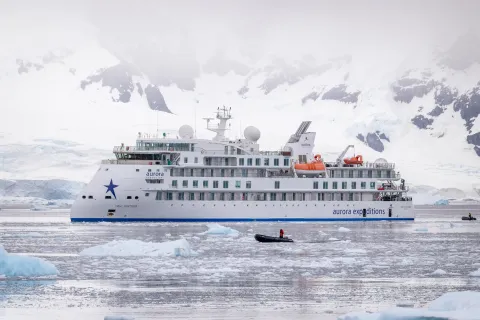
Aurora Expeditions Welcomes Kids on Remote Voyages
Sydney, Australia - Aurora Expeditions has lowered its minimum age requirement to six, bringing families with school-age children onto expedition ships bound for Antarctica, the Arctic and other remote regions.
Australia Replaces Paper Forms With Digital Travel Cards
Sydney, Australia - The Australian government announces nationwide rollout of digital passenger cards to eliminate paper forms at all international entry points over the next 12 to 18 months.
Global Airlines Enter Crisis Mode as Jet Fuel Soars
LONDON, England - Airlines across three continents face severe jet fuel shortages with European prices doubling in weeks, forcing carriers into emergency protocols and raising questions about flight cancellations.

Australia's LGBTIQ Asylum Visa: Your Path to Safety
CANBERRA, Australia — A comprehensive pathway exists for LGBTIQ individuals seeking refuge from persecution, offering vital protection through Australia's asylum visa framework.

About the Author
Wilson Montgomery
Wilson Montgomery is a Travel Writer at Jetsetter Guide covering Africa and safari travel.