Stay current with our travel industry news coverage.
Booking.com’s Travel & Sustainability Report 2026 finds that 43% of 32,500 global respondents want to avoid overcrowded destinations, according to USA TODAY reporting published by Central Oregon Daily on Sept. 17. For travelers considering where to go in 2027, the finding brings the pressure on a place into the conversation alongside price and season.
The wildlife and community findings require a separate reading. USA TODAY reports that around half of those travelers also plan to avoid activities that harm local wildlife or exploit communities. The source does not present 43% as a single measure covering both avoidance of crowds and avoidance of harmful activities.
That distinction matters. Seeking a quieter destination is one decision; considering what happens to its wildlife and residents is another. The report’s findings concern travelers’ stated intentions, not completed bookings or measured conservation outcomes.
What the Booking.com findings establish
USA TODAY places the survey in the context of planning trips for 2027, describing travelers weighing overtourism, their impact and the possibility of a more immersive experience. Its account also draws a contrast between destinations seeking fewer visitors, including through tourist taxes, and places actively encouraging more tourism.
The available coverage does not provide Booking.com’s survey questions, fieldwork dates or country breakdown, or establish that respondents were specifically asked about travel in 2027. It therefore supports a narrower conclusion than a forecast of next year’s bookings: a substantial share of the surveyed travelers say they want to avoid overcrowded places.
Nor does the account include an earlier survey result against which to measure change. The 43% figure is a finding from the 2026 report, not, on the evidence supplied, proof that concern about crowding has risen by a particular amount.
For the reader, the useful distinction is between appetite and action. These responses describe what people want from travel. Whether a particular journey delivers benefits to a destination depends on details beyond the survey percentage.
Less visited, but ready to welcome travelers
A related development in USA TODAY’s reporting gives that interest a practical setting. Small-group tour company Intrepid Travel recently released its 2027 Not Hot List, identifying 10 overlooked destinations it says are ready to welcome visitors and benefit from tourism spending.
According to USA TODAY, Intrepid’s local guides and experts selected the destinations using three criteria: being less visited, tourism readiness and what is new for 2027. The list is a separate initiative, not a Booking.com ranking or a finding from its survey.
“If we want tourism to continue to be a force for good, we need to constantly rethink how and where we travel,” said Erica Kritikides, general manager of experiences at Intrepid Travel, according to USA TODAY.
The inclusion of tourism readiness deserves attention. In my reading, it makes the list more useful than a simple invitation to seek empty places. Intrepid’s stated approach considers not only whether a destination receives fewer visitors, but whether it is ready to receive them. That is a more demanding proposition than treating obscurity itself as a virtue.
Samburu brings the question into safari planning
For African travel, the most relevant example is Samburu National Reserve in northern Kenya. USA TODAY reports that the reserve receives a tenth of the visitor numbers of Maasai Mara National Reserve. It identifies lions, elephants and oryx among the wildlife travelers can see there.
The same account says a visit directly supports Samburu people and conservation efforts. That places the reserve at the meeting point of the concerns highlighted in the survey: visitor pressure, wildlife and the communities connected to a destination.
The comparison is best read as a reason to consider Samburu, rather than a verdict against the Maasai Mara. Lower visitor numbers describe one aspect of a safari destination; they do not, by themselves, measure the quality of conservation or the distribution of tourism income. Those are distinct questions, even when they belong in the same booking conversation.
Looking beyond the absence of crowds
Elsewhere, USA TODAY’s account offers a more concrete description of how tourism can connect with local livelihoods. Sri Lanka’s Pekoe Trail is described as a community-led initiative managed by a nonprofit that aims to support local communities and ecosystems. Its route through remote villages encourages stays in locally owned guesthouses and homestays.
That example helps clarify the difference between choosing somewhere quieter and choosing how to spend time there. Local accommodation and community-led management are identifiable features of the experience described, rather than benefits inferred solely from low visitor numbers.
The Booking.com findings put these considerations firmly within travelers’ stated priorities. Their value lies less in promising a new map of uncrowded holidays than in keeping two questions separate and visible: how much pressure a destination receives, and how a visit treats the people and wildlife already there.
More travel news
AI Hotel Mirage Masks Poorly Rated Vegas Stay
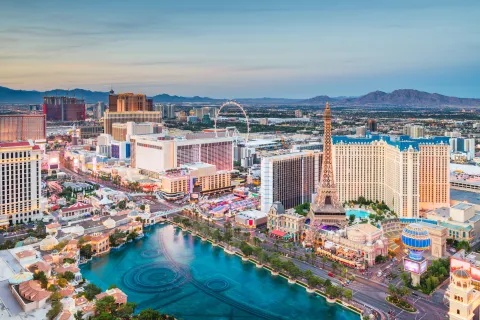
Las Vegas, United States - A Booking.com listing for Palette Las Vegas allegedly used altered images to direct guests to OYO Hotel and Casino Las Vegas.
JFK Ranks Most Stressful US Airport for Business Trips
NEW YORK - JFK Airport tops the list of most stressful US hubs for business travelers, with Newark and Fort Lauderdale close behind, new research shows.

Spain Court Kills Airbnb Host Registry Requirement
MADRID, Spain - The court ruled the central government overstepped its authority, voiding a system that required Airbnb hosts to obtain state registration numbers as of July 2025.

BTS Tour Announcement Triggers 968% Travel Surge
GOYANG, South Korea — Within hours of BTS announcing its world tour comeback, travel searches for this Seoul suburb exploded by 968%, signaling massive fan-driven tourism.

About the Author

Wilson Montgomery
Wilson Montgomery is a Travel Writer at Jetsetter Guide covering Africa and safari travel.