Stay current with our airline news coverage.
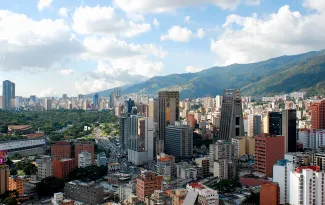
CARACAS, Venezuela — When explosions lit up Venezuela's capital in the early hours of January 3, 2026, the immediate fallout wasn't just political. It was operational. The FAA issued a Notice to Airmen that same day prohibiting U.S. aircraft from Venezuelan airspace due to "ongoing military activity." The U.S. Embassy, operating from Colombia, ordered shelter-in-place. And suddenly, a nation that already sat at the margins of mainstream Caribbean tourism became a live case study in how fast geopolitical action can reshape aviation rules and traveler risk calculations across an entire region. This wasn't a surprise insurgency or a sudden coup. It was Operation Absolute Resolve, launched at 23:46 VET on January 2 following a direct order from President Trump. Over 150 U.S. aircraft participated. By 02:00 VET on January 3, explosions were reported in La Guaira, Higuerote, and Caracas suburbs. Warehouses, vehicles, an aircraft at Higuerote Airport, and a Buk-M2E missile system were destroyed. President Nicolás Maduro and his wife Cilia Flores were reportedly captured. Venezuelan Vice President Delcy Rodríguez called it a "kidnapping." Maduro declared a national emergency, accused the U.S. of "imperialist aggression," and sought intervention at the UN Security Council. Trump framed the strikes as reclaiming "stolen" U.S. oil assets, invoking a modern interpretation of the Monroe Doctrine to assert dominance in the Western Hemisphere. He announced that U.S. oil companies would rebuild infrastructure and hinted at occupation funded by Venezuelan oil revenues.
Aviation Restrictions and Regional Airspace Risk
The FAA's airspace ban is not symbolic. It's a hard stop for U.S. carriers, charter operators, and any aircraft registered in the United States. That includes private jets, cargo flights, and any routing that might skirt Venezuelan territory. For travelers connecting through the Caribbean, this matters less for direct impact and more for what it signals: the U.S. government views the airspace as an active conflict zone. Venezuela hasn't been a major hub for Caribbean-bound tourists in years. Economic collapse, hyperinflation, and political repression gutted inbound travel long before January 2026. But its geographic position matters. Flights between the southern Caribbean, northern South America, and certain transatlantic routes pass near or through Venezuelan airspace. Rerouting adds time, fuel cost, and logistical complexity. Airlines won't advertise it, but travelers booking anything touching Aruba, Curaçao, Trinidad, or Colombia should expect potential delays or route adjustments as carriers navigate a newly volatile corridor. The U.S. Embassy's shelter-in-place order, issued from Colombia because there is no active U.S. diplomatic presence inside Venezuela, underscores another reality: consular support is nonexistent. If you're American and something goes wrong in Venezuela right now, you're on your own. That's not hyperbole. It's policy.
Caribbean Tourism and the Spillover Question
The Caribbean itself remains open. Resorts are operating. Flights are landing. There's been no confirmed direct halt to tourism infrastructure. But uncertainty is its own deterrent. Travelers booking Caribbean vacations don't typically factor in military strikes 400 miles south. But they do respond to headlines, State Department advisories, and the general sense that a region just got less stable. Venezuela's proximity to popular islands like Aruba, Bonaire, and Trinidad means that even indirect anxiety can shift booking patterns. It's not rational fear of conflict spreading; it's the psychological drag of instability being too close for comfort. Tourism boards across the region will downplay it. They'll point to distance, separate airspace, and the fact that no explosions happened anywhere near a beach resort. All true. But traveler confidence doesn't operate on spreadsheets. It operates on perception. And right now, the perception is that the U.S. just conducted a large-scale military operation in the hemisphere's backyard.
What Changed and What Travelers Need to Know
Venezuela was already off-limits for most practical travel purposes. Decades of U.S.-Venezuela tension over oil nationalizations in 1976 and 2007, drug trafficking routes linked to groups like Tren de Aragua, and Maduro's suppression of opposition had long made it a no-go zone for risk-averse travelers. In late December 2025, Maduro rejected U.S. offers for exile in Turkey, which set the stage for escalated action including strikes on a northern port used for smuggling. What's new is the operational intensity and the formalization of aviation risk. The FAA doesn't issue blanket airspace bans lightly. It did so here because the risk calculus changed overnight. Military activity, disputed leadership, potential anti-aircraft systems still active, these are not theoretical concerns. They're live variables that make civilian aviation untenable. For expedition cruisers, adventure travelers, or photographers working in the region, the takeaway is clear: Venezuela is a hard stop. If you were planning anything near the coast, near the border, or involving Venezuelan waters, shelve it. The legal and safety environment is undefined. Insurance won't cover you. Evacuation options are limited. And consular access is zero. For everyone else booking Caribbean travel, the advice is simpler but still relevant: watch routing, confirm your airline's plans if connecting through anything south of the ABC islands, and understand that regional aviation may experience delays or reroutes as the situation evolves.
Geopolitical Ripple Effects and Travel Intelligence
This isn't just about one country. It's a signal about how quickly military action can rewrite the rules for travelers across an entire region. The Caribbean has always lived in the shadow of larger geopolitical forces, from hurricane evacuation logistics to drug interdiction zones to migration crises. Add a U.S. military operation and a disputed government, and the complexity multiplies. Tourism thrives on predictability. Right now, Venezuela offers none. And while the Caribbean islands themselves remain stable and accessible, the proximity to instability introduces a variable that no amount of marketing can erase. Travelers who want ground truth need to track FAA notices, State Department updates, and regional aviation advisories, not brochures. Venezuela just became a test case for how fast geopolitics can ripple through tourism and air travel. The explosions may have stopped, but the uncertainty hasn't.
More travel news
Airlines Can Hide Baggage Fees Again After Court Ruling
WASHINGTON - A Fifth Circuit ruling has eliminated the requirement for airlines to show baggage and change fees upfront, reverting to 2011-era disclosure standards.
Ski Resorts Become Summer Golf Havens Across US
TRAVERSE CITY, Mich. - Boyne Golf spotlights 14 U.S. ski resorts doubling as summer golf destinations, from Maine to Montana, with courses carved into terrain that hosts skiers in winter.

Airline Wi-Fi Crashes Under Surge in Passenger Use
Several major U.S. airlines' Wi-Fi provider has acknowledged sluggish service and outages on long-haul flights as passenger usage surges.
Trump's 50% Canada Tariff Threatens Travel Costs
WASHINGTON - Trump's sweeping 50% tariffs on Canadian imports spark fresh worries about rising costs for cross-border tourism, business travel, and the entire North American travel ecosystem.
About the Author

Jeff Colhoun
Jeff Colhoun is an acclaimed travel writer, photographer, and filmmaker, whose work is respected both in the United States and internationally.