Stay current with our airline news coverage.
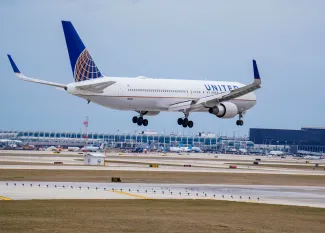
DENVER - A United Airlines flight carrying 200 passengers and seven crew members was evacuated at Denver International Airport Sunday evening following a reported bomb threat, according to Simple Flying. The aircraft, bound for Washington Dulles International Airport, was turned around shortly before reaching the runway at 6:15 p.m., according to Flightradar24 data.
The incident unfolded as the plane taxied toward departure. Flight crew diverted the aircraft to a taxiway near one of the airport's fire stations, away from other arriving and departing traffic. All passengers and crew evacuated via the aircraft stairs, not emergency slides, suggesting a controlled response rather than an emergency escape. Once off the plane, passengers were moved to a terminal where they received food and water while authorities screened the aircraft.
No explosives were found. The plane was cleared, and the flight departed Denver at 11:30 p.m., arriving at Dulles by 2:30 a.m. MST, according to Google Flights. The entire ordeal added roughly five and a half hours to what should have been a routine Sunday evening departure.
Second Threat in Two Days
This evacuation came less than 24 hours after another United flight faced a bomb threat on April 18. That incident involved 159 passengers and six crew members on a Chicago to New York route, which diverted to Pittsburgh International Airport after reports of suspicious sequential beeping. Passengers evacuated that aircraft via emergency slides. FBI agents and local police responded, screened the plane, and confirmed no explosives on board.
The back-to-back threats put United's security protocols and response procedures under scrutiny, though both situations resolved without injury. Authorities have not indicated whether the two incidents are connected, and no arrests or additional details about the nature of the threats have been made public.
Passenger Accounts and Response
One passenger from the Denver evacuation described the situation as tense but managed. "I felt pretty confident. The attendance and the pilots were all very calm and collected, and kept reassuring us that everything was going to be okay," the passenger told ABC News. Another characterized it as "a very scary situation."
The calm demeanor of flight crew likely prevented panic during what could have escalated quickly. Evacuations, even controlled ones, require precise coordination between crew, ground personnel, and emergency responders. In this case, positioning the aircraft near a fire station allowed rapid access for bomb-detection units and law enforcement without disrupting the rest of DIA's operations.
Operational and Security Context
Bomb threats against commercial aircraft are rare but disruptive. They force airlines to balance passenger safety with operational continuity, often resulting in lengthy delays, diversions, and significant logistical costs. Denver International, one of the nation's busiest airports, managed to isolate the threat without cascading delays across its network, a sign that response protocols functioned as designed.
For United, two threats in two days creates an uncomfortable narrative. Airlines depend on public confidence in their security measures, and repeated incidents, even when resolved safely, can erode that trust. The fact that both threats proved unfounded offers some reassurance, but the frequency raises questions about whether United has become a specific target or whether these are isolated hoaxes.
What Travelers Should Consider
These incidents illustrate the unpredictability that still exists in commercial aviation despite layers of screening and security. Passengers on both flights faced hours of delay, missed connections, and stress, all from threats that turned out to be baseless. But that's the calculus of aviation security: every threat must be treated as credible until proven otherwise.
If you're flying United or any carrier, understand that bomb threats, while uncommon, can happen. The good news from these two events is that response protocols worked. Evacuations were orderly, passengers were cared for, and no one was hurt. The bad news is that you could lose half your travel day to something entirely beyond your control.
Keep backup plans for tight connections. Know that if your flight is delayed for security reasons, you're unlikely to get real-time information about the cause until after the situation resolves. And recognize that the calmest crew members in the cabin are often the ones managing the most serious situations.
For now, United has cleared both aircraft and resumed normal operations. But two bomb threats in 48 hours is not a pattern any airline wants to establish, and travelers will be watching to see if more details emerge about who made these threats and why.
More travel news
Colorado Unveils Stargazing Trail Linking 13 Dark Sky Parks
DENVER, Colorado - A new state trail maps access to 13 DarkSky International-certified parks and eight Dark Sky Communities, creating a roadmap for families seeking exceptional stargazing experiences.

Man sneaks onto United flight with fake pass
TEXAS - A passenger allegedly used a counterfeit boarding pass to board a United Airlines flight, hiding in a bathroom before being discovered and removed from the aircraft.
Flying With Power Banks: New Rules for LA Travelers
LOS ANGELES, Calif. - New regulations clarify which portable battery chargers you can bring on flights, with most travelers able to carry two 100-watt-hour power banks without airline approval.

Major US Airlines Ground Nearly 1500 Flights June 3
NEW YORK, N.Y. - Widespread disruptions across Texas, Illinois, California, Massachusetts, New Jersey, and New York grounded 142 flights and delayed 1,294 on June 3, 2026, stranding travelers on major carriers.

About the Author

Jeff Colhoun
Jeff Colhoun is an acclaimed travel writer, photographer, and filmmaker, whose work is respected both in the United States and internationally.