Stay current with our airline news coverage.
WORLDWIDE — The decision to explore the world alone should reflect personal preference, not financial penalty. Yet for solo travelers, particularly women over 50, the pricing structure of modern travel consistently delivers both, revealing a system built for couples and families that treats individual adventurers as afterthoughts worthy of surcharges.
The Single Supplement Problem
The issue begins with a simple mathematical reality. Hotels charge single travelers between 50% and 100% more per night than the per-person cost of double occupancy, according to industry research. This isn't a marginal difference; it represents a genuine barrier, especially for those managing travel on retirement income. The base pricing model clearly wasn't built with solo travelers in mind, and the supplement can feel punitive as a result. Consider the mechanics: a hotel room priced at $300 for two guests costs each person $150. A solo traveler occupying that same room might pay anywhere from $225 to the full $300, despite using half the linens, consuming half the breakfast buffet, and requiring half the housekeeping attention. The justification, from the hotel's perspective, centers on lost revenue from that empty second bed. But from the traveler's viewpoint, it reads as discrimination against independence.
A Demographic Shift Reshaping Travel
The sheer growth in solo travel is undeniable, and much of it is driven by older adults, especially women over 50 who are taking life's next chapter into their own hands. Recent data shows these travelers are experienced, affluent "empty nest" explorers. The propensity to travel independently increases with age, with roughly 38% of people over 55 preferring to travel alone compared with younger groups, underscoring a meaningful demographic shift. Women represent between 75% and 84% of all solo travelers globally, according to Grand View Research. This isn't a niche market anymore. Solo female travelers over 45 plan to spend an average of $18,000 per trip in 2026, demonstrating both financial capacity and serious intent. The solo travel market itself has reached $482 billion, forcing the industry to reckon with demands for equitable treatment. "This isn't a trend; it's a permanent shift in how travel operates. The industry that built itself around couples and families is learning to serve the individual," said Amanda Chen, Travel Industry Analyst at Skift Research. Over 80% of respondents in a major survey conducted by Solo Traveller World in markets such as Australia indicated that nine out of every 10 solo travelers prefer to take tours or cruises either for their entire journey or significant portions of it. This preference signals a desire for structured experiences that balance independence with social connection, yet even these group-oriented options often carry single supplements that inflate costs.
Airlines Add Another Layer of Inequity
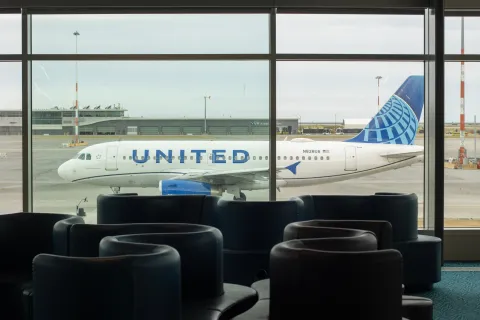
The pricing disparity extends beyond hotels. In 2025, airlines including United and Delta implemented pricing algorithms that offered lower fares to travelers booking two or more seats compared to solo bookings on identical flights. One documented example showed United charging $269 for a solo Chicago to Peoria ticket while pairs paid just $181 per person. On 57% of American Airlines routes, solo travelers paid higher fares than pairs in a study analyzing 19,000 tickets. The backlash was swift. Critics framed the practice as algorithmic discrimination, with headlines like "Airlines Stop 'Punishing' Solo Travelers, And That's Not Good" capturing the controversy. Thrifty Traveler reported that "Delta and United both nixed the fares that hit solo travelers with significantly higher prices." The resolution, however, proved bittersweet: airlines equalized fares by raising prices for everyone, eliminating the discounts rather than lowering solo rates. This outcome illustrates a broader tension. Dynamic pricing maximizes airline revenue by targeting business solo travelers who book last-minute against leisure groups who plan ahead. The algorithms aren't explicitly designed to punish; they're engineered to extract maximum yield from each seat. But the practical effect for solo travelers, particularly retirees on fixed incomes, remains the same: paying more for the identical product.
Market Forces Driving Change
Some segments of the industry are responding constructively. Hotels recognizing the $482 billion solo travel market have begun eliminating single supplements or offering dedicated solo-friendly rates. Vacation rental platforms provide inherent pricing equity since a studio apartment costs the same whether one person or two occupies it. Tour operators targeting older women have launched trips without supplements, acknowledging both the demographic's spending power and their desire to feel welcomed rather than tolerated. These adjustments reflect economic pragmatism more than altruism. With women comprising up to 84% of solo travelers and planning expenditures averaging $18,000 per trip, the financial incentive to serve them properly has become impossible to ignore. Companies that continue imposing punitive single supplements risk alienating their fastest-growing customer segment.
What Solo Travelers Deserve
The fundamental issue isn't complexity; it's fairness. Traveling alone reflects personal circumstances, life stage, or simple preference. Widows, divorcées, never-married professionals, and adventurous spirits shouldn't face financial penalties for their status. The pricing structures that penalize them aren't natural laws; they're business decisions that can be reconsidered. Transparency would help. When single supplements apply, hotels should clearly explain the calculation rather than burying fees in fine print. Airlines should ensure algorithms don't systematically disadvantage solo bookings. Tour operators should normalize supplement-free offerings rather than treating them as niche accommodations. For women over 50 embarking on solo journeys, these aren't abstract policy debates. They're practical barriers that determine whether that retirement trip to the Italian coast or that wellness retreat in Bali remains financially feasible. The industry's slow pivot toward equity matters because travel should inspire possibility, not reinforce limitation. Independence deserves celebration, not surcharge.
More travel news
Global Travel Alerts Rise Amid 2026 Tensions
WORLDWIDE - Governments issue coordinated travel alerts June 15, 2026, warning international tourists to exercise heightened caution as geopolitical tensions reshape the travel landscape.

Slow Travel Revolution Transforms How We Vacation
WORLDWIDE - A 2026 travel trends report reveals that 91% of travelers are embracing slow travel, trading crowded airports and packed itineraries for longer stays and meaningful local engagement.

How to Dodge Bed Bugs on Your Next Trip
Bed bug infestations pose a universal travel risk across all accommodation types, with bites appearing as clustered red bumps that require simple but consistent care.

O’Hare Led U.S. Airports With 43 Delays Wednesday
Wednesday’s figures put O’Hare first among U.S. airports for delays and United first among U.S. carriers; they are not a live flight-status report.
About the Author

Jennifer Wilmington
Jennifer Wilmington is a distinctive voice in the world of family and luxury travel, offering unique perspectives derived from her diverse background and experiences.