Stay current with our airline news coverage.
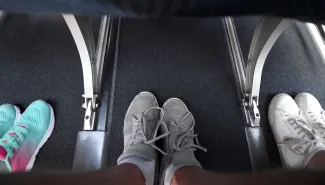
GLOBAL — If you've ever wondered why your knees felt crushed on one flight but reasonably comfortable on another, even when flying the same airline, you're not imagining things. Economy class seat pitch in 2026 is all over the map; it depends on the aircraft type, whether you're flying short-haul or long-haul, and whether the airline has recently squeezed in a new cabin configuration. So which airlines actually give you the most legroom? It's harder to answer than you'd think.
Why Seat Pitch Is So Inconsistent
Here's the thing: there's no industry standard. One airline might offer 32 inches of pitch on its Airbus A350s but only 30 inches on older Boeing 777s. Another might give you decent space on transcontinental routes but cram you into 28 inches on a regional hop. And if an airline is mid-rollout with a new interior, you could get wildly different experiences on the same route depending on which plane shows up at the gate. It's frustrating, sure, but it also means some carriers stand out. A few airlines have made legroom part of their identity, and in 2026, that's worth paying attention to.
JetBlue: The Low-Cost Outlier
JetBlue consistently offers around 32 inches of seat pitch or more, which is impressive for a low-cost carrier. Seat width typically ranges from 17.8 inches to 18.4 inches, and while that might not sound like much, it's noticeable when you're wedged into a middle seat for five hours. The airline flies the Airbus A320 family and the A220, both modern narrowbody aircraft that JetBlue has configured with passenger comfort in mind. Among narrowbody and regional aircraft, that extra inch or two makes a real difference; especially on longer domestic routes where you're not getting a full meal service or lie-flat seat to distract you from the discomfort. JetBlue makes things a little less awful with its cabin layout on narrow body transatlantic flights in economy class, which is no small feat when you consider how many airlines are tightening pitch to squeeze in more rows.
The Bigger Picture: What Counts as "Good" in 2026?
Standard economy seat pitch these days hovers around 30 to 32 inches on most mainline carriers. Anything above 32 inches starts to feel generous. Anything below 30 inches, and you're in for a rough ride unless you're under 5'6" or traveling with a toddler on your lap. Japan Airlines stands out for having some of the most generous personal space in economy class, perhaps the most of any mainline airline. It is one of the few airlines to configure the Boeing 777-300ER nine-abreast instead of the industry standard 10-abreast, which translates to noticeably wider seats. On their Boeing 787s, JAL goes eight-abreast (2-4-2) instead of the cramped nine-abreast layout most carriers use, giving passengers an extra five centimeters of seat width. That might not sound like much, but when you're sitting for 13 hours to Tokyo, it's the difference between tolerable and miserable. Cathay Pacific's A350-1000 won Skytrax's award for world's best economy class in 2024, offering 32 inches of pitch, 18-inch wide seats, and up to six inches of recline. Emirates isn't far behind; their A380 economy features 34 inches of pitch, 18 inches of width, and four inches of recline in a 343-seat configuration. Korean Air has also resisted the urge to squeeze 10 seats across on its widebody aircraft, sticking with nine-abreast configurations after passenger pushback.
Premium Economy and Business: The Growing Divide
Meanwhile, premium economy typically offers 37 to 40 inches of pitch, and business class ranges from 55 to 78 inches with lie-flat options. The gap between economy and premium cabins has never been wider, literally. Airlines are adding more premium seats and retrofitting older planes with denser economy configurations to pay for those upgrades. It's a trade-off that works for airlines' bottom lines but leaves economy passengers wondering why their space keeps shrinking.
What This Means for Travelers
If seat pitch matters to you (and if you're over six feet tall, it probably does), do your homework before booking. Check the specific aircraft type on your route, not just the airline. SeatGuru and other tools can show you exact configurations, though they're not always up to date if airlines are mid-retrofit. And if you have a choice? Fly Asian carriers on long-haul routes. They've largely resisted the 10-abreast squeeze that's become standard on US legacy airlines. JetBlue remains your best bet domestically, especially on transatlantic routes where other low-cost carriers have gone full sardine-can mode. Seat pitch in 2026 isn't getting better across the board, but a few airlines are still fighting the good fight. Your knees will thank you for choosing wisely.
More travel news
Booze Sales Boost Revenue But Ground Flight Safety
Airlines worldwide are confronting a costly paradox: onboard alcohol sales drive ancillary revenue, but drunk passengers are creating expensive diversions and safety crises that may outweigh the profits.

Airlines Target Bad Manners With New Flight Rules
Stricter airline policies crack down on headphone use, loud audio, and personal space violations as unruly passenger incidents soar since 2021.

Young travelers embrace group trips with strangers
GLOBAL — Young travelers are increasingly choosing organized group trips with complete strangers, transforming how an entire generation approaches connection on the road.

Global Chaos Makes Every Vacation a Calculated Risk
GLOBAL — Vacation planning has evolved from comparing airfares to scanning risk maps as conflicts, strikes, and shifting alliances reshape where travelers feel they can safely go.

About the Author

Bob Vidra
Bob Vidra, based in scenic Tahoe, is an esteemed tech editor known for his deep understanding of the dynamic intersection of technology, travel, and the outdoors.