
Stay current with our airline news coverage.
OKLAHOMA CITY, Oklahoma - If you're planning a long flight or road trip this summer, an Oklahoma heart specialist wants you to know about one of the most overlooked travel risks: blood clots that form in your legs and can turn deadly without warning.
In a recent media discussion, the physician outlined the danger of deep vein thrombosis and pulmonary embolism, conditions that together fall under the umbrella of venous thromboembolism. The doctor emphasized that while most healthy travelers face low absolute risk, prolonged sitting in cramped spaces for more than four hours can slow blood flow in the legs and trigger clot formation, especially in people with underlying risk factors.
"When you travel and must sit for longer than four hours, get up, move, and keep your blood flowing; it's one of the simplest ways to prevent a dangerous clot," the specialist said, summarizing National Heart, Lung, and Blood Institute guidance.
What Triggers Blood Clots During Travel
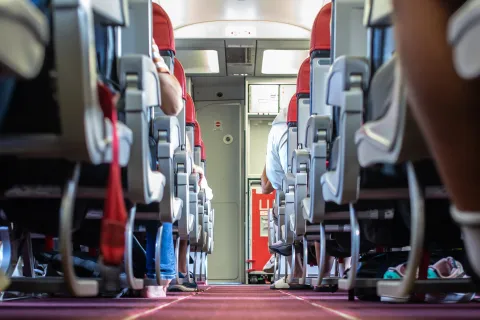
Long journeys over four hours by plane, car, train, or bus slightly increase the risk of DVT because travelers sit still in confined spaces for extended periods. Flights lasting 8 to 10 hours or more pose the greatest risk for clot formation, with about one in 6,000 passengers on flights longer than four hours developing a blood clot, according to hematology guidance.
The Oklahoma discussion framed blood clot awareness as part of basic travel safety, comparable to seat belts or sunscreen. Flights longer than four to five hours roughly double clot risk, and flights longer than 10 hours can nearly triple or quadruple the risk, according to vascular and thrombosis experts.
Key risk factors highlighted include prior DVT or PE, recent major surgery, active cancer, pregnancy or postpartum status, estrogen-containing medications, obesity, older age, and inherited clotting disorders. Summer travel can increase your risk of blood clots like deep vein thrombosis and pulmonary embolism, but they are highly preventable if you know the signs and take basic precautions, according to a regional health system public health message.
Warning Signs Every Traveler Should Know
Typical DVT warning signs after travel are new swelling in one leg, unexplained leg pain or tenderness, warmth, redness, or discoloration of the skin in the affected area. If a clot breaks loose and travels to the lungs, a pulmonary embolism, the symptoms escalate fast: sudden difficulty breathing, chest pain that worsens with deep breaths or coughing, rapid or irregular heartbeat, coughing up blood, lightheadedness, or fainting.
Pulmonary embolism resulting from a travel-related clot can be deadly in about one out of three instances if not recognized and treated rapidly. The segment urged anyone experiencing these symptoms after a long trip to seek emergency medical care immediately, framing post-travel leg swelling or breathing problems as medical emergencies rather than normal travel fatigue.
Simple, Low-Cost Prevention Steps
The Oklahoma guidance aligns with national recommendations and costs nothing to implement. Move your legs frequently, walk the aisle on planes or buses, stop every hour to walk when driving, stretch feet and calves while seated, wear loose clothing, avoid alcohol, and drink plenty of fluids. These are the same moves I've relied on during dozens of long-haul bus rides and budget flights across Asia and Latin America, and they work.
For very high-risk travelers, the doctor noted that medical prophylaxis such as compression stockings or prescription blood thinners may be appropriate, but only under individualized physician guidance. If you have any of the risk factors mentioned, ask your doctor about prevention strategies before booking that ultra-long-haul ticket or multi-day road trip.
Why This Matters for Budget Travelers
Most people are unlikely to develop a blood clot as a direct result of a long flight, but the risk rises with flight duration and underlying conditions, so prevention and early recognition are critical, according to hematology expert commentary on air-travel clots. That calculus matters even more if you're flying budget carriers with tighter seat pitch or taking overnight buses to save money on accommodation.
I've spent countless nights on cramped intercity buses in Southeast Asia and Eastern Europe, and the temptation to stay curled up in your seat for the entire 12-hour journey is real. But the doctor's advice is clear: movement trumps comfort. Set a phone alarm every hour, stand up when the aisle is clear, do seated calf raises, and flex your ankles. Compression socks cost less than $20 and pack flat; they're now a permanent fixture in my daypack for any journey over four hours.
For travelers with prior clots, recent surgery, or other high-risk conditions, the stakes are higher. If that describes you, treat the pre-trip doctor visit as non-negotiable, just like renewing your passport or getting vaccinations. Prescription blood thinners or medical-grade compression garments might be part of your packing list, and that's a small price for peace of mind at 35,000 feet.
The bottom line: blood clots are one of those travel risks that sound scary but are largely preventable with awareness and basic action. Whether you're on a $30 budget flight or a cross-country Greyhound, the same free strategies apply. Get up, move around, stay hydrated, and know the warning signs. Your legs will thank you, and you'll arrive ready to explore instead of sidelined by a medical emergency.
More travel news
FAA Orders Seat Track Checks on 453 Boeing 737 MAXs
WASHINGTON, D.C. - Federal regulators target Boeing's MAX fleet again, this time over cabin seat installations that may not hold properly during flight.
Southwest Faces Fury After ICE Detains Woman at Gate
Denver, Colorado - A Southwest Airlines gate detention by ICE agents has ignited a firestorm online, with more than 1 million views and growing calls to boycott the carrier over its role in immigration enforcement.
Atlanta Airport Halts Flights as Storms Trigger Floods
ATLANTA - Severe thunderstorms halted departures at Hartsfield-Jackson and prompted flash flood warnings for metro counties, creating a double whammy for travelers trying to navigate one of the nation's busiest hubs.

Airlines Can Hide Baggage Fees Again After Court Ruling
WASHINGTON - A Fifth Circuit ruling has eliminated the requirement for airlines to show baggage and change fees upfront, reverting to 2011-era disclosure standards.
About the Author

Dana Lockwood
Dana Lockwood is a rising journalist who specializes in budget-friendly solo travel.