Stay current with our airline news coverage.
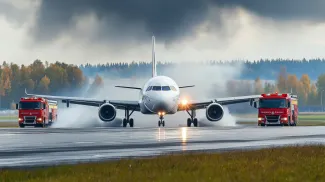
DALLAS, United States - A routine approach into Dallas turned alarming Friday evening when a passenger’s laptop overheated and caught fire in the rear cabin of an American Airlines flight, prompting pilots to declare an emergency as flight attendants worked to contain the device.
American Airlines Flight 2398 was traveling from Hartsfield-Jackson Atlanta International Airport to Dallas/Fort Worth International Airport on Aug. 21 when the fire broke out during the landing phase, according to the BBC. The Airbus A321, carrying 133 people, landed safely and continued under its own power to a gate at Terminal C.
Initial reports from the cockpit indicated that the laptop’s owner and three to four nearby passengers may have suffered burn injuries. American Airlines later confirmed that one passenger was treated by medical personnel at the airport and released, according to Simple Flying.
That difference matters. The crew’s early report reflected conditions inside a smoky cabin while the event was still unfolding; the airline’s later account reflected the medical response after landing. Either way, a burning laptop is nobody’s idea of a pleasant end to a nearly three-hour flight.
Fire Breaks Out During Flight 2398’s Approach to DFW
Flight 2398 departed Atlanta at around 5:20 p.m., the BBC reported. As the aircraft approached DFW near the end of the flight, pilots notified air traffic control of a cabin fire in the back of the airplane.
Flight attendants attempted to extinguish and contain the overheating laptop while the pilots coordinated the emergency landing. The crew subsequently advised the airport tower that the fire was under control, but requested medical assistance because of the possible burn injuries.
Emergency personnel were waiting when the aircraft arrived at DFW. Despite the cabin incident, the plane landed without further reported trouble and taxied to Terminal C rather than stopping on a runway or requiring evacuation.
American Airlines said the smoke came from a customer’s device and that the crew successfully contained it. The carrier also praised the crew’s professionalism and prompt response, according to the BBC.
Why Cabin Crews Want Lithium Batteries Within Reach
Lithium battery fires present an awkward challenge aboard aircraft because an overheating device can produce intense heat and smoke in a confined space. In this case, the problem developed while the airplane was already approaching one of the country’s busiest airports, leaving the crew to manage both the cabin emergency and the landing.
American Airlines flight attendants have containment bags intended to cool and smother overheating electronic devices while depriving a fire of oxygen, the BBC reported. If such a bag isn’t available, Federal Aviation Administration guidance recommends dousing and submerging an overheating device in water.
That may sound counterintuitive to anyone taught to keep water away from electronics, but the immediate problem in an aircraft cabin is heat. Cooling the battery can help prevent the event from escalating while the crew contains the device.
The incident also helps explain why airlines don’t want certain battery-powered items buried where nobody can reach them. Power banks must not be packed in checked luggage and shouldn’t be stored in overhead bins, according to the BBC. Electronic devices should remain accessible so passengers and flight attendants can respond quickly if one becomes unusually hot, begins smoking or catches fire.
The problem isn’t merely theoretical. FAA data cited by Simple Flying recorded 58 confirmed incidents in 2026 involving lithium batteries on aircraft that produced smoke, fire or extreme heat. Lithium batteries over 160 watt-hours are generally prohibited entirely on passenger aircraft, according to FAA guidance cited in the research.
The Crew Response Is the Reassuring Part
From an airline safety perspective, the most important detail is that the device was detected and contained in the cabin. That’s precisely why battery rules can feel fussy at the gate but make sense once the doors close. A laptop within reach gives trained flight attendants a chance to act; a battery hidden in checked baggage is a much more troublesome proposition.
Travelers don’t need to respond by leaving every electronic device at home. They should, however, treat battery placement as a safety issue rather than another packing technicality. Keep laptops and power banks accessible, never place a power bank in checked luggage, and don’t bury one in an overhead bin where heat or smoke might go unnoticed.
It’s also worth paying attention to a device that feels unusually hot. The facts of Flight 2398 show how quickly an ordinary piece of travel gear can become the crew’s top priority. Waiting to see whether the smell or heat goes away isn’t a particularly clever strategy at 30,000 feet.
The reported injuries are concerning, especially the cockpit’s initial estimate that four to five passengers may have been burned. Still, the aircraft landed safely, the fire was contained, and the only passenger American Airlines confirmed as receiving medical treatment was released at the airport. That doesn’t make the event minor, but it does suggest the emergency procedures worked when they were needed.
A Useful Reminder Before the Next Flight
Most passengers carry several lithium-powered devices without giving them much thought. Phones, laptops and power banks have become as ordinary as boarding passes. Flight 2398 is a sharp reminder that ordinary doesn’t mean risk-free.
For travelers, the sensible response is simple: follow battery rules, keep devices where they can be reached, and alert the crew promptly if something starts overheating or smoking. Cabin crews train for exactly this sort of emergency. Giving them quick access to the problem can make the difference between a contained device and a far more serious flight disruption.
More travel news
Storm Snarls Northeast Air Travel With 153 Cancellations
NEW YORK, United States - A major storm disrupted Northeast and Mid-Atlantic travel, hitting JFK hardest as flooding, wind and thunderstorms slowed flights.
US and Canada Raise Travel Alerts Across Key Hotspots
Washington, United States - Updated North American travel advisories sharpen warnings for Tanzania and South America, with localized risks requiring closer trip planning.

American Bumps Miles Family From Business for Pilots
MIAMI, United States - A family says American Airlines moved them out of business class for deadheading pilots, raising questions about award-ticket priority and refunds.
A&K Launches First Private Jet Trip to 7 Continents
CHICAGO, United States - Abercrombie & Kent’s first seven-continent private jet journey will combine a Boeing 757, private vessels and rare site access.
About the Author

Bob Vidra
Bob Vidra, based in scenic Tahoe, is an esteemed tech editor known for his deep understanding of the dynamic intersection of technology, travel, and the outdoors.