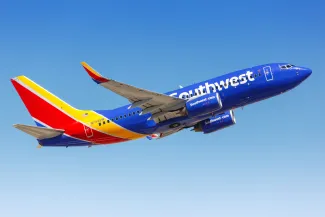
Stay current with our airline news coverage.
ST. LOUIS, Mo. — A sudden internet outage forced Southwest Airlines to halt departures across its network on Thursday, leaving gates crowded, inbound crews out of position, and travelers in St. Louis—and throughout the airline’s vast domestic schedule—scrambling to adjust. St. Louis figures prominently in the chain of delays, and the incident offers a case study in how quickly a digital glitch can ripple through U.S. air travel.
The Southwest Airlines internet outage: What happened
Shortly after morning pushback began at St. Louis Lambert International Airport, Southwest’s operations technology lost connectivity. According to passenger accounts, boarding doors had already closed on several flights when the carrier initiated a systemwide “ground stop,” meaning no Southwest jet could depart until data links were restored. The outage persisted long enough that some aircraft remained parked on taxiways with the crew waiting for clearance, while others, still at the gate, were boarded and then unloaded. “We were about to take off, and then it was delayed,” Amy Webber said at the St. Louis terminal, her comment echoing across social-media timelines nationwide.
Delays stretched beyond two hours
Flight-tracking services and airport boards began recording rolling delays that frequently exceeded 2 hours. One traveler, Robbie Kohart, received a text message saying his flight to Cleveland would push back “about an hour,” but subsequent notifications kept adjusting the time. A quirk of Southwest’s timetables added confusion: monitors often displayed both the original and revised departure times in the same column, so some travelers did not realize the significance of the delay until announcements were made at the gate.
Nearly 40% of Southwest’s schedule was affected
By midday, data from flight-status aggregator FlightAware showed that almost 40 percent of all Southwest departures nationwide had been delayed. While the carrier lifted the ground stop once the network link was re-established, the cascading effect of crew-rest rules, aircraft rotations, and airport congestion meant operations did not return to normal immediately. In a statement, the airline acknowledged the disruption and pledged to focus on safety and recovery. “We apologize to our Customers,” the company said in its prepared remarks. As of 2 p.m., the core system was back online, allowing dispatchers to release flights, but the backlog continued into the late afternoon bank.
Why an internet outage paralyzes an airline
Southwest relies on constant data exchange between its Dallas operations center, air traffic control, and every aircraft nose number in service. The link carries weight-and-balance figures, final flight plans, weather updates, and crew assignments. Without real-time connectivity, dispatchers cannot legally release a flight, even if the airplane is fueled and passengers are seated. Because the outage occurred during peak connecting hours, aircraft scattered across the country waited for clearances simultaneously, creating a bottleneck. Although the technical failure originated in a single operations system, the universal nature of Southwest’s point-to-point network amplified the impact.
How St. Louis passengers experienced the disruption
Lambert’s C Concourse, one of Southwest’s busiest Midwest nodes, became a seeing-is-believing lesson in operational resilience. Uniformed staff paced between gates, updating handheld devices as fresh departure times trickled in. Conflicting information on overhead screens led to clusters of passengers approaching podiums to verify schedules in person. Cecilia George, bound for Washington, D.C., summarized the mood: the cascading delays would make her arrival “very, very late,” she said near Gate C9, her seat assignment lingering on the monitor even as the timeline kept moving. Concessionaires benefited from the captive audience, with lines at coffee counters stretching past seating areas.
Recovery timeline and knock-on effects
Although the software link came back at 2 p.m., Southwest still had to reposition aircraft and crews whose duty-time clocks were expiring. In practice, this meant pockets of cancellations in outstations where fresh pilots and flight attendants were not immediately available. Travelers holding later-day tickets noticed pushbacks creeping into evening slots, especially on transcontinental pairings. Airports such as Chicago Midway, Denver, Dallas Love Field and Phoenix Sky Harbor felt heavier traffic in the re-sorting phase, and luggage was occasionally rerouted because bag-tag scanning depends on the same network link that failed.
What today’s outage teaches travelers
Digital hiccups are as disruptive as weather events—and perhaps less predictable. To avoid being blindsided, regular Southwest flyers can adopt several best practices:
- Enable flight notifications for every traveler in your party. A single booking update will not propagate to multiple confirmation numbers unless each passenger registers a contact method.
- Keep the Southwest mobile app and a third-party flight tracker side by side. Dual-source verification reduces confusion when the airline’s display boards lag behind actual status.
- Build slack into tight connections. While Southwest does not offer traditional interline connections, many travelers self-connect to cruises, events, or international legs. Consider at least a four-hour buffer when schedules involve another carrier or long-distance ground transport.
- Know your waiting-area rights. Southwest provides meal vouchers after a delay of three hours that is within its control, but you must approachthe gate or customer-service desks to obtain them.
- Save boarding passes offline. If the airline’s app becomes glitchy, a screenshot can serve as temporary proof of gate access.
Tips for Travelers: reclaiming flexibility
When an outage disrupts hundreds of flights simultaneously, phone queues swell. Instead of joining the call center backlog, use these alternatives:
- Direct-message Southwest on social platforms. Experience shows their social-media team often rebooks customers faster than telephone agents.
- Stand in two lines at once: physically queue at a gate while using the online self-service tool to explore same-day standby options.
- Check nearby airports. If St. Louis or another hub is snarled, Kansas City, Springfield, Missouri, or even Indianapolis may have inventory you can grab with no fare difference during a waiver period.
FAQ: Southwest internet outage
Was safety compromised? No. The Federal Aviation Administration requires a legal release before takeoff; without operational data, the airline must hold departures, which it did.
Will travelers get compensation? Southwest provides meal vouchers and hotel rooms for delays within its control exceeding 3 hours and overnight disruptions, respectively. Claim through the app or a customer-service desk.
How to track checked bags? Use the mobile app’s “Bags” tab; if the system is down, baggage offices at destination airports can scan tags manually.
Could this happen again? Any carrier can suffer IT outages, though large incidents are rare. Maintaining updated contact details and a backup plan helps minimize inconvenience.
Does travel insurance cover these delays? Most comprehensive policies reimburse meals and lodging after a specified waiting period; verify your policy’s clause for carrier-caused delays.
Lessons from the St. Louis incident
The St. Louis ground stop underscores that in 2024, digital infrastructure is as critical to flight operations as fuel and runway space. Travelers who assume blue-sky days guarantee smooth journeys may be unprepared for the dominoes that fall when a server loses connection. By staying alert to real-time updates, maintaining flexible itineraries, and knowing the airline’s obligations, passengers can mitigate the discomfort of even a 40 percent network delay. So next time you board a Southwest jet from St. Louis—or any other station—keep notifications on, power banks charged, and a backup plan in mind. Your trip will be smoother for it, no matter how the data flows behind the scenes.
More travel news
Southwest Drops Free Bags as Major Overhaul Begins
DALLAS, Texas - Southwest Airlines scraps decades-old policies on seating and baggage while reshaping its executive team, marking the carrier's biggest strategic pivot in years.
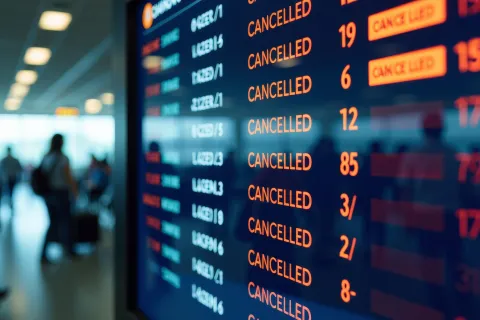
Massive Flight Chaos Hits USA With 4,508 Delays
NATIONWIDE - A single-day disruption on June 2, 2026, left thousands of passengers stranded as 4,508 flight delays and 85 cancellations swept across major U.S. carriers and states.
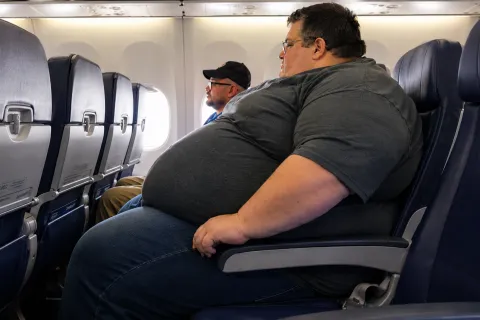
Southwest Reverses Plus-Size Seating Policy After Fury
Dallas, Texas - Southwest reverses a four-month-old policy that required plus-size travelers to purchase additional seats, backing down after sustained customer criticism.
Southwest Struggles With Boeing 737 First Class Retrofit
DALLAS - Southwest Airlines is chasing premium travelers with new fare types and extra-legroom seats, but its all-economy cabins leave billions in revenue on the table.
About the Author

Bob Vidra
Bob Vidra, based in scenic Tahoe, is an esteemed tech editor known for his deep understanding of the dynamic intersection of technology, travel, and the outdoors.