Stay current with our airline news coverage.
When High-Tech Border Control Goes Low-Tech
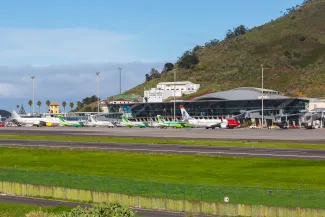
TENERIFE, Spain — You know things have gone sideways when airport queues literally can't fit inside anymore. That's exactly what's happening at one of Tenerife's main international airports, where the EU's shiny new Entry/Exit System has hit a spectacular wall. Of the 36 biometric eGates installed back in November, only five are actually working. That's right: 15%. The result? Waiting times topping 90 minutes and frustrated passengers snaking out of the terminal and onto the tarmac itself, which is not exactly where you want to be standing after a long flight.The Math Doesn't Add Up
Let's do some quick arithmetic here. The EU's Entry/Exit System was supposed to streamline border crossings by using biometric passport control machines to scan facial images and fingerprints of non-EU travelers. Faster, more secure, more efficient; that was the pitch. But when 31 of your 36 machines aren't functioning, you're not streamlining anything. You're creating a bottleneck of epic proportions. According to local media sources, the technical failures have been plaguing these eGates since they were installed in November. We're talking door malfunctions, connectivity issues, the works. And here's the kicker: they're still out of service. So passengers arriving in Tenerife, many of them on holiday, are getting an unexpectedly lengthy welcome to the Canary Islands.What's Actually Going Wrong
The Entry/Exit System itself isn't a bad idea in theory. It's designed to replace manual passport stamping with automated biometric checks, making it easier to track who's overstaying their 90-day limit in the Schengen zone. For an island destination like Tenerife that depends heavily on tourism from outside the EU, smooth airport operations aren't just nice to have; they're essential. But installation is one thing, and functionality is another. These eGates have been sitting there for months, most of them essentially expensive decoration. Door malfunctions sound minor until you realize they can bring an entire queue to a halt. Connectivity problems? Even worse, because biometric systems need real-time data access to work properly. And while we don't have official statements from airport authorities yet, the fact that waiting times are consistently exceeding 90 minutes tells you everything you need to know about how well this rollout is going.The Passenger Experience
Imagine landing in Tenerife after a several-hour flight, excited to start your vacation or get home, only to find yourself standing in a line that extends out of the building. It's frustrating enough when queues are long inside an air-conditioned terminal; it's another level entirely when you're outside on the tarmac. This isn't just an inconvenience for travelers. Airlines face knock-on delays when passengers can't clear immigration promptly. Tour operators worry about missed transfers. Hotels deal with late check-ins. The whole tourism ecosystem takes a hit when the first experience visitors have is standing in a barely moving queue for an hour and a half.A Broader EU Challenge
Tenerife isn't alone in struggling with the Entry/Exit System rollout. The program has faced repeated delays across the EU, with technical readiness varying wildly from airport to airport. But having only 15% functionality months after installation is particularly stark. It raises real questions about whether the infrastructure was properly tested before deployment, and whether sufficient support and maintenance resources are in place. The EU has invested significant resources in this system, betting that biometric automation will improve both security and efficiency at borders. When it works, it probably will. But "when it works" is doing a lot of heavy lifting right now, at least in Tenerife.What Happens Next
For now, passengers heading to Tenerife should plan for extended wait times at immigration. Factor in at least an extra 90 minutes if you're arriving from outside the EU, maybe more during peak travel periods. That might mean adjusting your onward plans, whether that's a rental car pickup or a connecting bus. Airport authorities will presumably be working to get more of these eGates operational, though the fact that they've been down for months doesn't inspire immediate confidence. Technical issues don't fix themselves, and whatever's causing these failures seems to be persistent rather than a simple bug. In the meantime, travelers are paying the price for a system that was supposed to make their lives easier. It's a reminder that new technology only improves things when it actually functions; otherwise, you're better off with the old method, even if it's slower. At least passport stamps didn't malfunction and spill queues onto the tarmac.More travel news
Spain Tightens Money Checks for Non-EU Visitors
MADRID, Spain - New entry requirements now require non-EU travelers to demonstrate stricter financial means before entering Spain, raising concerns among backpackers and budget travelers.

Spain Heatwave Forces Tourists to Scramble for Shade
MADRID, Spain - Popular tourist destinations across Spain face unusually high temperatures as the state weather service warns visitors to brace for extreme heat from Andalusia to the Mediterranean Coast.

EU System Meltdown Strands Travelers at Lisbon Airport
LISBON, Portugal - CNN correspondent shares video of chaos at Humberto Delgado International Airport as biometric border checks create hours-long waits and missed connections.

Sweden Spain Launch Truecaller eSIM for Roaming Relief
STOCKHOLM, Sweden - Sweden and Spain jointly push Truecaller's new travel eSIM across 29 countries, aiming to end the roaming-fee headache that drains budgets the moment travelers land.

About the Author

Bob Vidra
Bob Vidra, based in scenic Tahoe, is an esteemed tech editor known for his deep understanding of the dynamic intersection of technology, travel, and the outdoors.