Stay current with our airline news coverage.
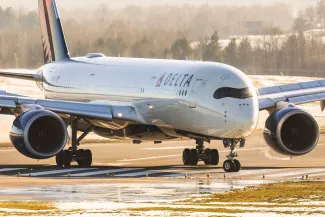
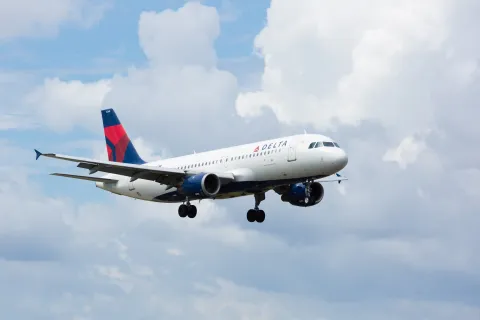
A flight to Rome became an unexpected overnight stay in Newfoundland after a Delta Air Lines Airbus A330-300 developed an engine-related mechanical issue roughly four hours into its transatlantic journey.
Delta Flight 182 departed New York's John F. Kennedy International Airport at 5:43 p.m. on Sunday, Aug. 23. The aircraft was bound for Rome Fiumicino Airport on a flight scheduled to take approximately eight and a half hours.
Instead, the wide-body jet diverted to St. John's International Airport, landing at 11:15 p.m. Emergency services met the aircraft on arrival, and all 267 passengers and 13 crew members exited without incident.
That safe landing was the most important part of the story. The less dramatic, but still deeply inconvenient, part came next: hotel rooms, meal vouchers and a trip back to New York before passengers could continue toward Italy.
Delta Flight 182 Diverts After Engine-Related Issue
Delta told Simple Flying that the crew followed standard procedures and diverted because of a mechanical problem involving one of the aircraft's engines. The airline characterized the decision as safety-driven and apologized to affected customers while recognizing the work of the flight crew and ground team.
The aircraft involved was registered N823NW, an Airbus A330-300 configured with 293 seats. It was carrying 267 passengers, leaving 26 seats unoccupied, according to Simple Flying. The plane first flew on Jan. 12, 2015, and was delivered to Delta on Aug. 26, 2015.
An engine-related warning over the North Atlantic isn't something a crew brushes aside. Diverting to a suitable airport allows the aircraft to land where emergency crews, runway capacity, and ground support are available. It may create a logistical tangle, but caution is exactly what passengers should want when a mechanical concern appears several hours from the original destination.
St. John's is particularly important in that equation. Simple Flying noted that the airport is a common diversion point for transatlantic flights because it is the closest major North American airport for many aircraft crossing the North Atlantic. Mechanical problems and medical emergencies can both bring Europe-bound flights into the Newfoundland airport.
Hotels, Meal Vouchers and a Replacement Airbus
Once everyone was safely off the aircraft, Delta provided passengers with local hotel accommodations and meal vouchers. That addressed the immediate overnight needs, but getting 267 people back on their way required another airplane and a round of rebooking.
Delta sent replacement aircraft N428DX to St. John's the next morning. The aircraft departed Newfoundland at 9:50 a.m. on Aug. 24 and arrived at JFK at 11:07 a.m., Simple Flying reported.
Rather than continuing directly from St. John's to Rome, the replacement flight carried the passengers and crew back to New York. Delta subsequently rebooked the affected travelers onto new flights to Italy.
For passengers, that distinction matters. A diversion is one disruption; returning to the original departure airport before trying again is another. Even with hotels and food covered, the lost time was substantial.
Still, the response followed a recognizable pattern for a long-haul irregular operation: land at an appropriate alternate airport, accommodate passengers overnight, position another aircraft, and rebuild onward itineraries. None of that is especially glamorous. Then again.
Why This Diversion Is a Useful Travel Reminder
Transatlantic trips can look simple on a booking screen, but the operational reality is more complicated. A mechanical issue midway through an approximately eight-and-a-half-hour flight can affect hotel reservations, airport transfers and any separately booked plans waiting at the destination. In this case, passengers needed an overnight hotel stay, a replacement aircraft and new flights to Italy.
My advice for travelers is fairly basic: keep essential medication, chargers, identification and one change of clothing in your carry-on. That won't fix an aircraft, obviously, but it can make an unplanned night at a diversion airport considerably less miserable. It also helps to keep hotel and transportation confirmations easy to reach while an airline works through rebooking.
There is also a case here for leaving some breathing room after arrival, particularly when connecting to a cruise, train journey or separately ticketed flight. Flight 182's passengers did not simply arrive a few hours late; their journey was rerouted through St. John's and then back through New York. Tight, independent connections offer little protection against that kind of disruption.
Delta's response provided the key pieces travelers would expect after an overnight diversion: hotel rooms, meal vouchers, a replacement aircraft and rebooked travel. Whether that felt adequate to each passenger is a more personal question. A missed day in Rome is still a missed day in Rome.
But the aircraft landed safely, all 280 people aboard exited without incident, and the crew put the mechanical concern ahead of the schedule. Frustrating? Absolutely. Yet when an engine-related issue emerges over the North Atlantic, an unscheduled night in St. John's is far preferable to pressing on and hoping for the best.
More travel news
FAA Rule Clears First Class Cups Before Pushback
Washington, United States - Stricter FAA enforcement means airline-provided cups must disappear before pushback, complicating a familiar premium-cabin perk.
Storm Snarls Northeast Air Travel With 153 Cancellations
NEW YORK, United States - A major storm disrupted Northeast and Mid-Atlantic travel, hitting JFK hardest as flooding, wind and thunderstorms slowed flights.
Airlines Seize Carry Ons While Overhead Bins Sit Empty
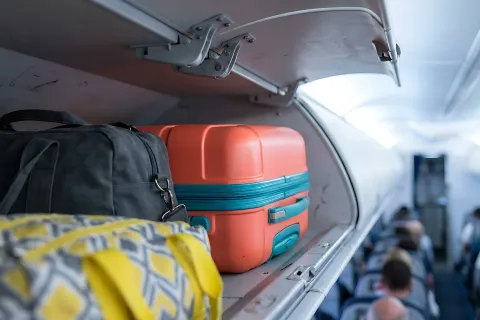
New York, United States - Complaints involving American, Delta and United highlight preemptive gate checking, where departure efficiency can trump passengers' access to open bins.
Delta Unveils First Austin Paris Nonstop for 2027
AUSTIN, Texas - Delta's first long haul route from Austin will add daily seasonal flights to Paris, new European connections and a 281-seat Airbus A330-900neo.
About the Author

Bob Vidra
Bob Vidra, based in scenic Tahoe, is an esteemed tech editor known for his deep understanding of the dynamic intersection of technology, travel, and the outdoors.