Stay current with our airline news coverage.
What Is TSA ConfirmID?
Think of ConfirmID as a backup plan you have to pay for. It's an optional alternative identity verification process designed for travelers who don't have a REAL ID or one of the other forms of identification that TSA accepts at checkpoints. You won't just waltz through security with a smile and a story about leaving your wallet at home; you'll need to handle this ahead of time and bring proof of payment. "TSA ConfirmID will be an option for travelers that do not bring a REAL ID or other acceptable form of identification," the agency announced, according to Travel. "Impacted travelers will have the option to pay $45 and use the TSA ConfirmID process. This fee ensures that non-compliant travelers can still board their flights without unnecessary delays." It's worth noting that this isn't meant to replace REAL ID. The TSA is still very much encouraging everyone to upgrade their driver's license or state-issued ID before the May 7 enforcement date. ConfirmID is more like an emergency exit; useful in a pinch, but not a solution you want to rely on regularly.How to Use ConfirmID in 3 Steps
If you find yourself in need of this workaround, here's what you'll need to do:Step 1: Check Your ID Before You Travel
Take a look at your driver's license or state ID. If it has a star in the upper right corner, you're good to go; that's the REAL ID marking. If it doesn't, or if you're planning to use another form of identification, make sure it's on TSA's list of acceptable documents. You can find the full list at tsa.gov/ConfirmID, according to Travel.Step 2: Pay the Fee Online
If you don't have an acceptable ID, head to tsa.gov/ConfirmID before your trip and pay the $45 fee. You'll receive a payment receipt by email from pay.gov, according to Travel. Don't skip this step; you can't pay at the airport and expect things to go smoothly.Step 3: Bring Your Receipt to the Airport
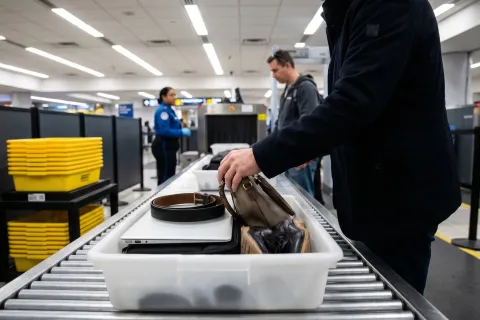
At the checkpoint, you'll need to show your pay.gov receipt. Print it out or have it ready on your phone; either works, according to Travel. TSA agents will use this receipt as part of the alternative verification process to clear you for boarding.Is ConfirmID Worth It?
Let's be honest: $45 isn't pocket change, especially if you're a frequent flyer. For most people, it makes more sense to just get a REAL ID-compliant license now and avoid the hassle altogether. Depending on your state, upgrading your ID might cost anywhere from $10 to $30, and it'll be valid for years. But if you're in a bind; maybe you lost your wallet right before a trip, or your REAL ID application is stuck in processing limbo; ConfirmID could save the day. It's a safety net, not a long-term strategy. There's also the question of what happens after May 7. Once REAL ID enforcement kicks in fully, will ConfirmID become a more permanent fixture at checkpoints? Or will it fade into the background as more people upgrade their IDs? The TSA hasn't said much about the long-term vision for this program, but for now, it's a temporary bridge over a potentially stressful gap.What This Means for Travelers
The rollout of ConfirmID suggests the TSA is well aware that not everyone will have their REAL ID sorted by the deadline. Whether that's due to state DMV backlogs, personal procrastination, or just plain confusion about the requirements, the agency seems to be preparing for a messy transition period. For travelers, the takeaway is simple: don't count on ConfirmID as your plan A. Get your REAL ID now if you can. But if life throws you a curveball and you end up at the airport without compliant identification, at least you'll have an option. Just make sure you've got $45 and a little extra time to spare at security. Starting February 1, ConfirmID will be available at airports nationwide. Whether it becomes a widely used tool or just a footnote in TSA history remains to be seen. For now, it's one more thing to keep in mind as the REAL ID deadline looms ever closer.Explore more North America travel →
More travel news
Uganda Remains Under U.S. Level 4 Do Not Travel Advisory
The June 4 advisory remains in effect despite Uganda declaring its Ebola outbreak over; Americans with safari bookings should confirm how their policy treats Level 4 travel.

TSA CT Scanners Can Damage Undeveloped Film and May Not Fit Bulky Bags
At TSA CT lanes, laptops and 3-1-1 liquids may stay packed, but travelers with undeveloped film should request a hand inspection; approval is not guaranteed, and some bulky bags may not fit.
CDC flight attestation starts Nov. 3 for flights to U.S. from abroad
Passengers and crew on flights departing foreign countries for a U.S. airport at or after 11:59 p.m. EST Nov. 3 must attest to no DRC presence in the prior 21 days unless exempt.
Iraq Travel Advisory Remains at Level 4 Do Not Travel
The Oct. 23 update did not change Iraq’s warning level: U.S. citizens are advised not to travel, while those there should prepare independent departure plans.

About the Author

Bob Vidra
Bob Vidra is News Editor at Jetsetter Guide, covering airlines, airports and the travel industry since 2023.