Why This Keeps Getting Extended
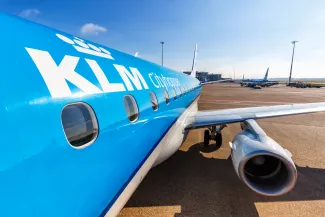
Here's the frustrating part: these cancellations weren't supposed to last this long. KLM initially suspended these routes through early March, then pushed the deadline to March 28, then May 16. Now it's June 14. Each time, the airline has framed the decision as precautionary, and each time, the situation on the ground has failed to stabilize enough to justify resuming service. "The safety of our passengers and crew is always our top priority," the airline noted in its communications to travelers. "This decision is purely a precautionary measure due to the current geopolitical situation." What that means in practice is that KLM is actively avoiding airspace over Iran, Iraq, Israel, and several Gulf countries. The detours required to navigate around those zones don't just add time and fuel costs; they introduce operational complexity that makes certain routes economically and logistically impractical right now.What Newcastle Travelers Need to Know
Newcastle International Airport doesn't have direct flights to the Middle East, so most UK travelers heading to Dubai or Saudi Arabia rely on European hubs like Amsterdam. KLM operates regular service between Newcastle and Amsterdam Schiphol, and for years, that connection has been a gateway to the airline's broader intercontinental network. Right now, that gateway just got narrower. If you had a Newcastle-Amsterdam-Dubai itinerary booked, you're looking at either a full rebooking or a refund. According to Chronicle Live, KLM has confirmed that flights to and from Dubai, Riyadh, and Dammam are suspended up to and including Sunday, June 14, 2026. The airline is offering affected passengers free rebooking or full refunds, which you can arrange through the My Trip portal on KLM's website or via the airline's mobile app. That's better than being left holding a worthless ticket, but it's still a headache if you've already coordinated hotels, tours, or time off work around those dates.Your Alternatives Aren't Great Either
So what are your options if you still need to get to the Middle East? You could rebook through a different European hub; Lufthansa, British Airways, and Turkish Airlines all serve the Gulf, though their own route networks are subject to similar airspace constraints. You might find availability, but you're probably not finding a bargain. You could also look at carriers based in the region itself. Emirates and Qatar Airways have continued operating to Europe, though they've adjusted flight paths and extended some routes to avoid conflict zones. The catch is that you'll likely need to position yourself to a major UK gateway like London Heathrow or Manchester, which adds another layer of logistics if you're starting from Newcastle. None of this is ideal. What was supposed to be a straightforward one-stop journey has turned into a multi-leg puzzle with higher costs and longer travel times.What Changed the Calculus
This isn't just KLM being overly cautious. The broader aviation industry has been recalibrating Middle East operations for months as the geopolitical landscape has shifted. US military deployments, Iranian warnings, ongoing conflicts involving Israel, and attacks on commercial shipping by groups like the Houthis have all contributed to a risk environment that airlines are taking seriously. Flying around conflict zones isn't new; carriers routinely avoid active war zones and areas with unstable air defense systems. But the scale and duration of these diversions are starting to add up. Longer routes mean higher fuel costs, tighter crew schedules, and reduced profitability on routes that were already margin-sensitive. At some point, it makes more financial sense to suspend service temporarily than to operate at a loss while hoping conditions improve. For Newcastle travelers specifically, the impact is magnified by geography. You're already starting from a regional airport that depends on hub connectivity. When one of those hubs pulls back on a major market, your options shrink fast. And when the uncertainty drags on for months, it becomes harder to plan around. If you've got travel booked through mid-June, don't wait to see if KLM changes its mind. Reach out now, explore your alternatives, and build in some flexibility. The situation could stabilize sooner than expected, but recent history suggests airlines are going to stay conservative on Middle East routes until they see a clear and sustained de-escalation. For now, that means fewer seats, fewer options, and more planning required if the Gulf is on your itinerary.More travel news
Major Airlines Cancel Dozens of Japan Flights in 2026
TOKYO, Japan - ANA, Air Canada, KLM, Jetstar, and Skymark grounded 17 flights across Japan's busiest airports, disrupting major routes to Toronto, Amsterdam, and key domestic cities.
Middle East Tourism Collapses Amid Regional Conflict
DUBAI, United Arab Emirates - Iran joins Israel, Saudi Arabia, UAE, Qatar, Iraq, Bahrain, Jordan, Syria, Egypt, and neighboring countries in an unprecedented tourism collapse, losing $600 million daily as conflict reshapes the region's travel landscape.

Florence Woman Quarantined After Hantavirus Flight
FLORENCE, Italy - Italian health authorities place woman in isolation following exposure on KLM flight, despite low transmission risk cited by WHO and ECDC.

Health Ministry Rules Out Hantavirus Pandemic Risk
ROME, Italy - Health officials dismiss pandemic concerns as four tracked passengers on KLM flight remain symptom-free weeks after brief contact with Hantavirus victim from Antarctic outbreak.

About the Author

Wilson Montgomery
Wilson Montgomery is a British-born travel writer who has carved a niche for himself with his compelling narratives about African travel and safari experiences.