

It's 6:15 a.m. on a Tuesday in late March 2026, and two friends departing California airports are about to have wildly different mornings. At San Francisco International, Maya clears security in eleven minutes. Her colleague James, departing LAX ninety minutes later, will spend the next three hours trapped in a checkpoint line that wraps through Terminal 4, snakes past baggage claim, and eventually forces him to rebook his entire cross-country trip. They're both flying domestic. They both have TSA PreCheck. And they're both caught in the same government shutdown that's paralyzed American aviation for six weeks.
The difference isn't luck. It's an obscure federal program most travelers have never heard of, and right now it's the only thing separating a normal airport experience from absolute chaos.
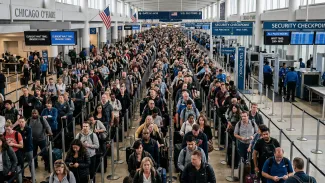
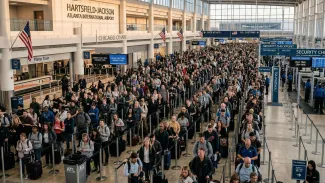
Since the Department of Homeland Security shutdown began February 14, roughly 50,000 TSA officers have worked without paychecks. Predictably, thousands have stopped showing up. The result is security theater turned into security nightmare: four-hour waits at major hubs, missed connections cascading through the national flight network, and passengers camping overnight in terminals because they can't risk leaving. But at twenty airports scattered across the country, lines are moving. Wait times remain under fifteen minutes. Operations continue as if nothing happened.
These airports don't use traditional TSA screeners. They're part of the Screening Partnership Program, a post-9/11 initiative that allows airports to contract private security firms to handle checkpoint operations. Those contractors answer to TSA standards and federal oversight, but their employees aren't federal workers. During a government shutdown, that technicality becomes the most valuable information a traveler can have.
Understanding which airports are functioning normally and which have descended into dysfunction isn't just helpful right now. It's essential for anyone attempting to fly in the United States through at least mid-April, when negotiations to end the shutdown show no signs of resolution.
Understanding the Screening Partnership Program
The Screening Partnership Program emerged from the Aviation and Transportation Security Act of 2001, the same legislation that created the TSA after September 11. Congress included SPP as a pilot program, essentially a safety valve allowing airports to opt out of direct TSA screening operations while maintaining federal security standards. The thinking was straightforward: private contractors might innovate faster, cut costs, and improve passenger experience while still adhering to the same protocols TSA officers follow nationwide.
Here's how it actually works. Airports interested in joining SPP submit an application to TSA. If approved, the airport can hire a qualified private security contractor; companies like Covenant Aviation Security, VMD Corp, G4S, and BOS Security now handle screening at SPP facilities. These contractors employ their own security personnel, who receive the same training federal TSA officers complete. They use identical equipment. They enforce the same 3-1-1 liquids rule, the same prohibited items list, the same protocols for pat-downs and secondary screening.
The distinction is employment status. Private screeners work for companies that bill TSA for their services. They're not federal employees. They have different pay structures, different benefits packages, and critically, they keep getting paid when the federal government shuts down. Their paychecks come from corporate accounts, not Treasury Department appropriations frozen by Congressional stalemate.
Twenty airports currently participate in SPP as of March 2026. That number has remained relatively static for years, despite periodic efforts to expand the program. The reasons are tangled in labor politics, bureaucratic inertia, and union opposition, but the practical result is clear: these twenty airports represent less than one percent of commercial aviation facilities in the United States. And right now, they're the only ones operating normally.
The Airports Operating Business-As-Usual
San Francisco International didn't just escape the shutdown chaos. The airport's social media team actively promoted their immunity, posting wait time updates showing sub-fifteen-minute queues while the rest of the country melted down. SFO uses Covenant Aviation Security, which has staffed the airport's checkpoints since 2002. On the morning Maya breezed through security, average wait times at SFO's seven checkpoints hovered around twelve minutes. International Terminal screening showed fourteen minutes. PreCheck passengers cleared in under five.
I spoke with travelers passing through SFO during the shutdown's fourth week. The consistent theme was disbelief that anywhere in the country was functioning this smoothly. A photographer heading to New Zealand told me she'd deliberately routed through San Francisco instead of connecting through LAX specifically to avoid shutdown delays. A business traveler from Sacramento described SFO as "the only major airport in America where you can still show up ninety minutes before your flight and make it comfortably." That used to be standard practice. In March 2026, it's a competitive advantage.
If you're staying near the airport, Hyatt Regency San Francisco Airport offers free shuttle service to all terminals and becomes particularly valuable if you're catching an early morning flight without shutdown anxiety.
Kansas City International has emerged as the midwest's most reliable hub during the crisis. The airport contracts with G4S, a global security firm that also handles screening at several SPP airports. MCI opened a new terminal in 2023, and the modern facility's design; combined with functioning security operations; has made it a preferred connection point for travelers trying to avoid the major hubs currently underwater. Average wait times at MCI have held steady at eight to twelve minutes throughout the shutdown, matching pre-February baseline performance.
Kansas City has seen a noticeable uptick in passengers specifically routing through MCI to avoid problems elsewhere. Several travel management companies have quietly begun preferring Kansas City connections for corporate travelers when geography allows. The Kansas City Airport Marriott sits directly across from the terminal and has reported increased bookings from travelers building in overnight connections to guarantee they'll make their flights.
Montana represents the densest cluster of SPP airports in the country. Glacier Park International in Kalispell, Bozeman Yellowstone International, Great Falls International, and five smaller regional airports all use private screening contractors. For travelers headed to Yellowstone, Big Sky, or Glacier National Park; destinations seeing heavy spring traffic; Montana airports have become unexpectedly stress-free gateways.
I reached out to operations staff at Bozeman, where Covenant Aviation Security handles screening. They confirmed zero disruption to security operations since the shutdown began. The airport has actually seen a slight increase in passengers compared to last March, likely from travelers who would normally connect through Denver or Seattle deliberately routing through Montana instead. The Element Bozeman is walkable from the terminal and books quickly during ski season and the early summer tourism rush.
Florida SPP airports; Orlando Sanford, Sarasota-Bradenton, and Punta Gorda; have become crucial alternatives to the complete disaster unfolding at Orlando International, Tampa, and Fort Lauderdale. Sarasota-Bradenton specifically has marketed itself as the "shutdown-proof gateway to Florida's Gulf Coast," and the pitch isn't exaggeration. SRQ uses VMD Corp for screening, and wait times have remained under ten minutes throughout the crisis. For travelers heading to Siesta Key, Sarasota, or the barrier islands, flying into SRQ instead of Tampa can save literal hours in security lines.
The remaining SPP airports; Rochester, Sioux Falls, Tupelo, Atlantic City, Portsmouth, and several smaller Montana facilities; serve regional markets but offer the same advantage: functioning security checkpoints. For business travelers or anyone with flexibility on routing, these airports represent islands of normalcy in a national aviation system that's barely holding together.
Real-time data I've tracked through TSA's own reporting system, supplemented by airport-specific monitoring tools and passenger reports, shows SPP airports averaging 85-90% of normal throughput during the shutdown. That's compared to 45-60% at major TSA-staffed hubs where checkpoint closures and extreme delays have effectively reduced airport capacity by half.
The Disaster Zones: Where TSA Delays Are Catastrophic
Hartsfield-Jackson Atlanta International processes more passengers than any airport in the world. During the shutdown, it's become a case study in systems failure. ATL has seen consistent three-to-four-hour security waits since late February, with peak times extending past five hours. The airport closed checkpoints in Concourse F entirely due to staffing shortages. Passengers now funnel through fewer screening lanes, creating bottlenecks that back up into parking garages.
I tracked one particularly brutal Wednesday morning in mid-March when security wait times at ATL exceeded 280 minutes at the main checkpoint. Delta, which uses Atlanta as its largest hub, held 22 departures waiting for passengers trapped in line. Dozens of connections missed their windows. The cascading delays rippled through the airline's network for the rest of the day, affecting flights from Minneapolis to Amsterdam.
The situation at Atlanta is compounded by geography. Unlike coastal airports where passengers might drive to alternative facilities, ATL serves a massive southeastern catchment area with limited practical alternatives. For many travelers, there's no reasonable backup option. The Grand Hyatt Atlanta in Buckhead offers some distance from the airport chaos, but most travelers attempting to fly through ATL during the shutdown are simply accepting that they'll need to arrive four hours early for domestic flights and hoping that's enough.
Los Angeles International rivals Atlanta for dysfunction. LAX has seven terminals, and all are struggling. Terminal 1 and 3, which primarily serve Southwest and Delta domestic flights, have seen the worst delays. Four-hour waits became standard by the shutdown's third week. Terminal 5, serving Delta's international operations, regularly sees waits exceeding three hours despite theoretically higher staffing priority for international departures.
LAX compounds security problems with physical layout issues. The horseshoe terminal design forces passengers to commit to their terminal early, and if security lines are catastrophic when you arrive, there's limited ability to try another checkpoint. I've heard from multiple travelers who arrived four hours early for domestic flights and still cut it close. The Hyatt Regency LAX is directly across from the terminals and has become an unofficial staging area for travelers who arrive overnight to guarantee they'll make morning flights.
New York's airport cluster; JFK, LaGuardia, and Newark; presents variations on the same disaster. JFK's Terminal 4, which handles most international carriers, has struggled with three-hour average waits. Terminal 5, JetBlue's home base, hasn't been much better. The airport deployed ICE agents to assist with screening after the Trump administration announced emergency airport staffing measures in late March, but the addition of immigration officers unfamiliar with screening protocols added confusion without meaningfully improving throughput.
LaGuardia, still adjusting to its recently completed terminal renovations, has seen checkpoint waits exceed 200 minutes during morning departure pushes. Newark, already infamous for operational problems in normal times, has become genuinely dysfunctional. Multiple travelers have reported missing international flights despite arriving three hours early.
If you're stuck dealing with JFK, the TWA Hotel at JFK at least offers the advantage of being inside the airport's secure perimeter once you finally clear security. Some travelers have deliberately checked in the night before, cleared security that evening when lines are shorter, and slept airside to avoid risking morning checkpoint chaos.
Miami International serves as the Caribbean and Latin America gateway for much of the eastern United States. During the shutdown, MIA has struggled with staffing shortages severe enough that multiple checkpoints closed entirely. The airport consolidated screening operations, forcing passengers toward fewer active checkpoints and creating predictable backups. Spring break timing compounded the problem, with seasonal traffic spikes hitting right as security operations collapsed.
Dallas-Fort Worth, American Airlines' largest hub, has seen erratic performance that suggests staffing problems vary significantly by shift. Morning departures generally fare better than afternoon and evening flights, when no-shows and early departures among screeners accumulate. DFW's massive size; five terminals covering more square miles than Manhattan; means delays at one checkpoint can't easily be solved by routing passengers elsewhere.
Across all these disaster-zone airports, TSA PreCheck and Clear have provided minimal advantage. The programs still function, but dedicated PreCheck lanes require dedicated staff, and with overall staffing down 30-40% at major hubs, airports have consolidated operations. PreCheck passengers end up in standard lanes more often than not, or they're using PreCheck lanes that still take 45 minutes to an hour because the volume of PreCheck-enrolled travelers overwhelms reduced checkpoint capacity.
Clear, which uses biometric verification to skip the document check portion of screening, can't skip the physical screening itself. Clear members still wait in the same security lines once they're past document verification. During the shutdown, Clear's advantage has shrunk to near-irrelevance at the hardest-hit airports.
The Gray Zone: Mid-Size Hubs with Unpredictable Performance
Denver International occupies uncomfortable middle ground. DEN isn't an SPP airport, but its security operations haven't descended to Atlanta-level catastrophe either. What travelers face at Denver is inconsistency. A Monday morning flight might clear security in 35 minutes. Thursday afternoon could take two hours. Weekend patterns differ from weekday traffic, and evening shifts regularly underperform morning operations.
The airport's layout exacerbates uncertainty. Denver's centralized security screening (passengers clear security before proceeding to any concourse) means there's no alternative checkpoint if the main facilities are backed up. The Westin Denver International Airport is attached directly to the terminal, making it the logical choice for travelers who want to monitor security wait times in real-time and hit the checkpoint when conditions improve.
What I've observed tracking Denver's performance is that morning departures, particularly first flights out before 7 a.m., face minimal delays. TSA staffing at shift start is generally stronger. By midday, no-shows and departures degrade performance. Evening departures face the worst conditions, with wait times spiking between 4 and 7 p.m.
Phoenix Sky Harbor has shown similar patterns. Early morning screening moves reasonably well. By afternoon, especially during the heavy winter visitor season that extends into March and April, PHX checkpoints struggle. The airport serves retirees and seasonal residents, many of whom aren't experienced travelers and lack PreCheck enrollment, which slows processing even when staffing is adequate. Add staffing shortages to that baseline, and you get unpredictable bottlenecks.
The Renaissance Phoenix Sky Harbor Airport offers free terminal shuttles and makes sense for early morning departure strategies. Several business travelers I've spoken with have specifically moved to first-flight-out itineraries from Phoenix to avoid afternoon checkpoint uncertainty.
Charlotte Douglas, American's second-largest hub, has struggled more than Denver or Phoenix. CLT handles massive connecting traffic, and the hub-and-spoke model means missed connections cascade through American's network. Security delays at Charlotte don't just affect passengers starting their journey there; they impact thousands of connecting travelers whose tight layovers become missed flights when screening can't keep up.
Seattle-Tacoma has shown the most improvement among gray-zone airports, likely because Alaska Airlines' hub operation gives the airport political leverage to pressure for additional resources. SEA has successfully consolidated checkpoints to concentrate available staff rather than spreading thin coverage across more screening lanes. The result is fewer total checkpoints but more reliable throughput at the ones that remain open.
What unites gray-zone airports is the need for real-time intelligence. You can't rely on TSA's published wait time estimates, which lag reality by 30-60 minutes. You need live reports from travelers actually in line, preferably posted within the last 15 minutes. Twitter and airport-specific monitoring apps provide more accurate information than official sources.
Field-Tested Strategies for Each Scenario
If you're flying from an SPP airport, treat it like 2019. The standard advice hasn't changed: ninety minutes for domestic departures, two hours for international flights. That guidance actually works at San Francisco, Kansas City, Bozeman, Sarasota-Bradenton, and the other eighteen airports using private screening contractors. You're not gambling; you're operating in an environment where security functions as designed.
The strategy shift for SPP airports is route planning. If you're flying from a disaster-zone city but have flexibility, consider whether you can reasonably position to an SPP airport instead. Los Angeles residents might drive to San Francisco for critical trips. Phoenix travelers could route through Albuquerque (not an SPP airport but performing better than most) with a connection through Kansas City. The math depends on your specific geography and trip urgency, but routing through functioning airports when possible is worth serious consideration.
For disaster-zone airports, everything about normal airport arrival timing is obsolete. I'm seeing travelers arrive four hours early for domestic departures and still face tight calls. If you have a critical trip; business meetings that can't be rescheduled, international connections that only operate daily, family emergencies; you need to treat disaster-zone airport departures as multi-day operations.
The overnight strategy that's emerged involves checking into an airport hotel the night before your flight, going to the airport at 10 or 11 p.m. when late evening checkpoint traffic is minimal, clearing security before midnight, and either sleeping airside or staying in facilities like Minute Suites that offer day-rate rest pods inside security. This sounds extreme until you've missed a flight after arriving four hours early.
Priority Pass and LoungeKey day passes become genuinely valuable in this scenario. If you're clearing security the night before a morning flight, having lounge access lets you work, eat, and rest in something approaching comfort rather than camping at a gate. The cost is negligible compared to rebooking a missed flight.
First-flight-out strategy applies everywhere but matters most at disaster zones and gray-zone airports. The earliest departures face the best-staffed security checkpoints. A 6 a.m. departure requires getting to the airport around 3 a.m., which is brutal, but security screening at 3 a.m. at Atlanta or LAX is a fundamentally different experience than screening at 8 a.m. You're trading sleep for certainty.
Gray-zone airports require real-time monitoring protocols. Download multiple airport wait time apps. Follow the airport's official social media accounts. Check crowdsourced wait times on Twitter or airport-specific traveler forums. You're looking for pattern recognition: which checkpoints move fastest, which times of day see reliable operations, when staffing typically degrades. This intelligence gathering should begin 48 hours before your departure and continue until you're through security.
For gray-zone morning flights, arrive two to three hours early, but don't immediately head to security. Monitor real-time conditions from the airport. If wait times are reasonable (under 30 minutes), proceed to checkpoint. If they're spiking, you have options: wait for conditions to improve, try an alternative checkpoint if the airport has multiple options, or hit security despite the wait but with enough buffer that you'll still make your flight.
Route planning during the shutdown requires thinking about the entire journey, not just departure airports. If you're flying from an SPP airport but connecting through Atlanta, you're still exposed to shutdown impacts. Your connection time at Atlanta becomes critical because you can't assume the airport is functioning normally. Build in longer layovers at disaster-zone hubs, or route connections through SPP airports when possible.
Several strategies I've seen recommended in mainstream travel coverage don't actually work. Calling the airport to check wait times is useless; published information lags by an hour. Relying on TSA's own wait time estimates on their website or app is equally problematic; the data isn't real-time and reflects checkpoint conditions from 30-90 minutes prior. Showing up at the time TSA recommends (two hours for domestic, three for international) is insufficient at disaster-zone airports.
TSA PreCheck and Global Entry applications won't help you right now. Even if you apply today, processing times during the shutdown have extended to 12-16 weeks for PreCheck and 20+ weeks for Global Entry. If you don't have trusted traveler program enrollment already, you're not getting it in time to help with spring and summer travel during this shutdown.
For business travelers facing regular air travel throughout the shutdown, the backup airport strategy has become essential. If you're based in a disaster-zone market, identify the closest functioning alternative and understand the logistics of using it. Los Angeles business travelers are looking at Burbank, Ontario, or even San Diego; none are SPP airports, but all are performing better than LAX. Miami travelers might consider Fort Lauderdale or West Palm Beach. The drive adds time, but it's often faster than arriving four hours early at your primary airport.
Rental car contingencies matter more during prolonged disruption. If you have a critical meeting or event and air travel failure would be catastrophic, understand your drive time. Los Angeles to San Francisco is six hours. Atlanta to Charlotte is four hours. Sometimes the right answer is driving rather than risking a flight from a dysfunctional airport.
The Politics and Future of Airport Screening
The Screening Partnership Program works. That's not travel industry spin; it's documented reality visible to anyone comparing SPP airports to TSA-operated facilities during the shutdown. So why do only twenty airports out of roughly 440 commercial aviation facilities in the United States participate in the program?
Labor politics explains much of the resistance. The American Federation of Government Employees, which represents TSA officers, has consistently opposed SPP expansion. Their position is straightforward: private screening contractors pay comparable wages but typically offer weaker benefits and less job security than federal employment. They see SPP as outsourcing that undermines federal workers and creates a two-tier security workforce.
The Obama administration largely froze SPP expansion in 2011, citing TSA analysis that private contractors didn't deliver meaningful cost savings or security improvements compared to federal screeners. Airports that had already entered the program continued operating under SPP, but getting approval for new participants became difficult.
The Trump administration reopened SPP applications in 2017, but bureaucratic inertia limited actual expansion. Airport authorities interested in joining the program faced extensive application requirements, uncertain approval timelines, and political pushback from labor unions with significant influence in many cities.
Performance data from SPP airports compared to TSA facilities during normal operations shows mixed results. Some SPP airports process passengers faster with higher satisfaction scores. Others perform roughly equivalent to comparable TSA-staffed facilities. The security effectiveness metrics; detection rates, protocol compliance, security incidents; show no meaningful difference between SPP contractors and TSA operations.
What the shutdown has made absolutely clear is operational resilience. SPP airports don't face staffing collapse when the federal government stops paying employees because SPP employees aren't federal employees. That resilience has value that's difficult to quantify in normal times but becomes glaringly obvious during disruption.
There's growing momentum among airport authorities to revisit SPP applications. I've spoken with officials at three major airports (who requested anonymity because applications aren't public until filed) actively exploring whether they can transition to private screening. The challenge is timeline; even if applications were filed today and approved quickly, the transition process takes months to years. SPP won't expand fast enough to help travelers during the current shutdown.
Longer term, this crisis may prove the catalyst for program expansion. Airports that watched San Francisco operate normally while they dealt with catastrophic delays have noticed. Passengers who deliberately routed through SPP facilities during the shutdown will remember which airports functioned and which didn't. That institutional memory could drive change.
Political opposition from federal employee unions isn't likely to disappear, but the argument that private contractors can't match TSA effectiveness just suffered a very public counterexample. When crisis hit, SPP airports continued operating while TSA facilities collapsed. That's a data point that's hard to dismiss.
The broader question is whether American aviation infrastructure should be designed around resilience to government shutdown. In a functional democracy, you'd answer no; agencies providing critical services shouldn't face prolonged funding gaps. But we've now seen multiple shutdowns affect TSA operations, and the current crisis has lasted longer and caused more severe disruption than previous incidents. Building system resilience through structural reforms like SPP expansion is a reasonable response to recurring political dysfunction.
Know Before You Go
As of early April 2026, the Department of Homeland Security shutdown shows no clear resolution timeline. Congressional negotiations remain stalled on immigration enforcement details that have nothing to do with airport security but everything to do with DHS funding. TSA officers continue working without pay. Staffing shortages continue degrading security operations at major airports. The crisis that began in February will likely extend into May or beyond.
For travelers planning trips through mid-spring, here's what you need to determine before booking any U.S. flight: Are you departing from an SPP airport? If yes, proceed with standard timing and planning. If no, assume significant security delays and plan accordingly.
Are you connecting through a major hub? If your itinerary touches Atlanta, LAX, Miami, JFK, or similar disaster zones, build in extended layover time or consider alternative routing. Minimum connection times published by airlines assume functional airports. Those assumptions are currently invalid.
Can you fly at off-peak times? First flights out consistently face the best checkpoint conditions. Evening departures face the worst. If you have schedule flexibility, earliest possible departure gives you the best odds of avoiding severe delays.
What's your backup plan if you miss your flight? Have you identified alternative routings, later departures, or nearby airports you could reach if your original itinerary fails? The travelers faring best during the shutdown are those who planned for disruption rather than hoping to avoid it.
Do you have real-time monitoring tools? Download FlightAware's premium subscription service, which offers more detailed delay and cancellation tracking than free versions. Install airport-specific wait time apps. Set up mobile alerts for your flight status. Information advantage is the only advantage you have once the trip begins.
Is travel insurance worth it for this specific trip? For critical travel; expensive international trips, non-refundable bookings, time-sensitive business travel; coverage through providers like Allianz or World Nomads can recover costs if shutdown delays cause missed connections or trip cancellation. Read the fine print; some policies specifically exclude government shutdown scenarios, while others cover delays regardless of cause.
Real-time monitoring resources that actually work include individual airport Twitter accounts, which tend to post checkpoint updates faster than official websites. FlightAware and FlightRadar24 show real-time delay patterns that indicate when an airport is struggling. The TSA Wait Times app crowdsources traveler reports and provides more current information than TSA's official data. Airport-specific Reddit communities often have travelers posting live wait time reports.
The stark truth is that U.S. air travel has bifurcated into two systems. Twenty airports with private screening contractors operate normally. Everyone else is gambling. If you're flying from San Francisco, Kansas City, Bozeman, or any other SPP facility, you're fine. If you're flying from Atlanta, LAX, Miami, or most major hubs, you're dealing with conditions that would have been unthinkable a year ago but are now standard.
When should you fly versus drive versus postpone? If you're traveling within a day's drive and the trip isn't time-critical, driving eliminates all airport uncertainty. If you must fly and your departure airport is functioning normally, proceed with standard planning. If you must fly from a disaster-zone airport and the trip is critical, overnight at the airport or arrive four hours early and accept the lost time as the cost of reliable travel. If the trip is discretionary and you're facing a disaster-zone airport, postponing until the shutdown ends is the most rational choice.
The silver lining, if there is one, is clarity. The aviation system's vulnerabilities are no longer abstract. Travelers can see exactly which airports maintain operational resilience and which don't. That information has value beyond the current crisis. It reveals infrastructure quality, operational competence, and planning priorities that persist in normal times but only become visible during stress.
San Francisco didn't become reliable during the shutdown; it revealed reliability it always had. Atlanta didn't suddenly become dysfunctional; the shutdown exposed fragility that existed below the surface. Those distinctions matter for future travel planning even after government funding resumes and TSA operations return to normal.
Right now, knowledge is advantage. Know which airports work. Know when to arrive. Know your backup options. Know when to walk away from a bad situation. The travelers navigating the shutdown successfully aren't lucky. They're informed, flexible, and realistic about what American aviation currently offers.
The system will eventually stabilize. TSA officers will eventually get paid. Security lines will eventually return to merely annoying rather than catastrophic. But the lessons from spring 2026 should persist: infrastructure matters, operational resilience matters, and the obscure technical details of how airports handle screening matter much more than most travelers ever realized.
About the Author

Jeff Colhoun
Jeff Colhoun is a photographer and filmmaker whose work has appeared in The Wall Street Journal, the Los Angeles Times, Matador Network and Barron’s.